





At around seven years old, you’re finally old enough to answer the question adults always ask:
“What do you want to be when you grow up?”
My answer was simple.
I wanted to open a doll shop, fill it with dolls I had sewn by hand, and hang a big sign above the door with my own name on it.
If that dream had come true, people probably would have congratulated me on making my childhood dream a reality.
But here’s the secret.
The truth was, I dreamed of marrying the owner of a doll factory—just so I could receive a new doll every day.
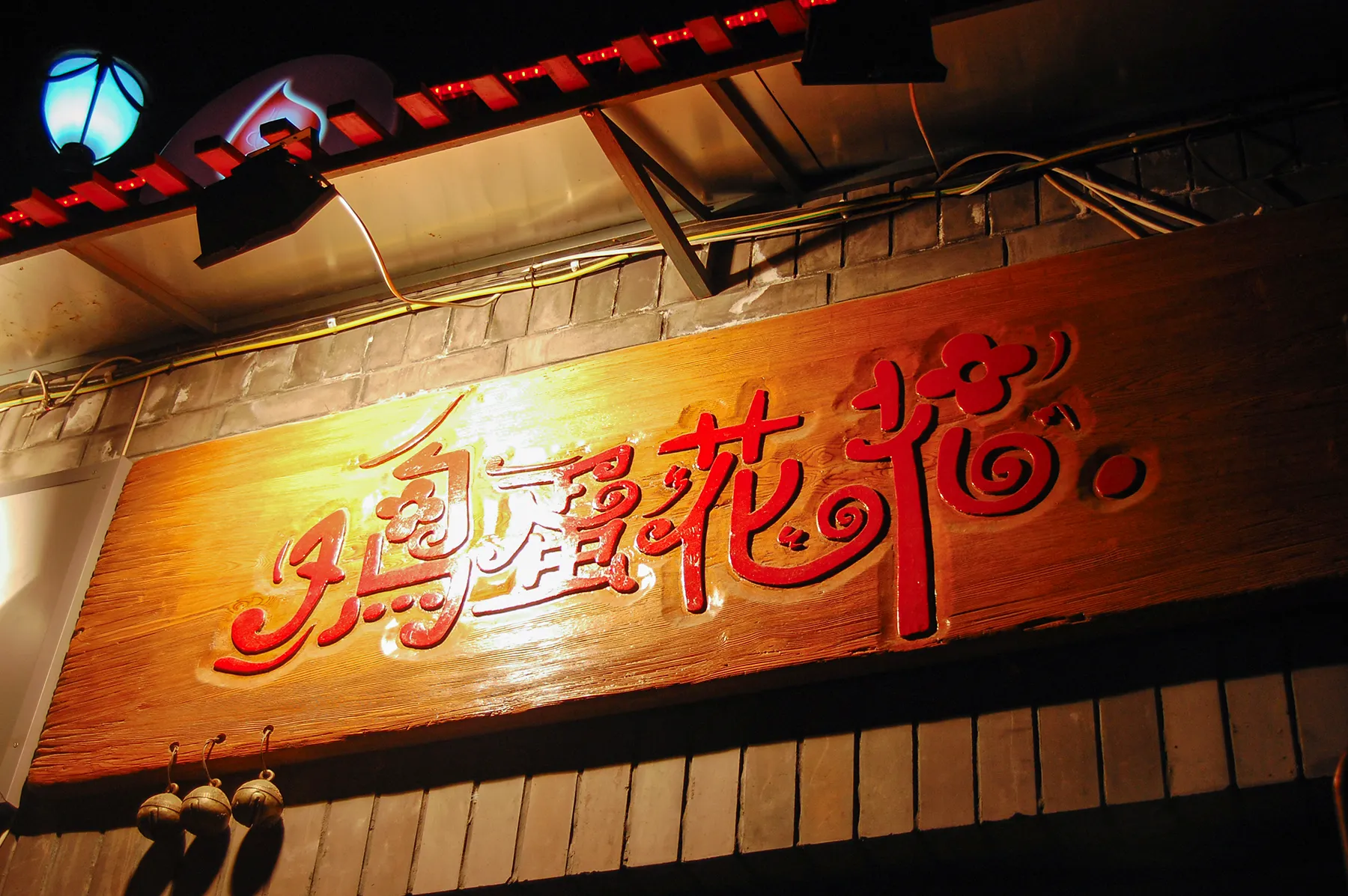
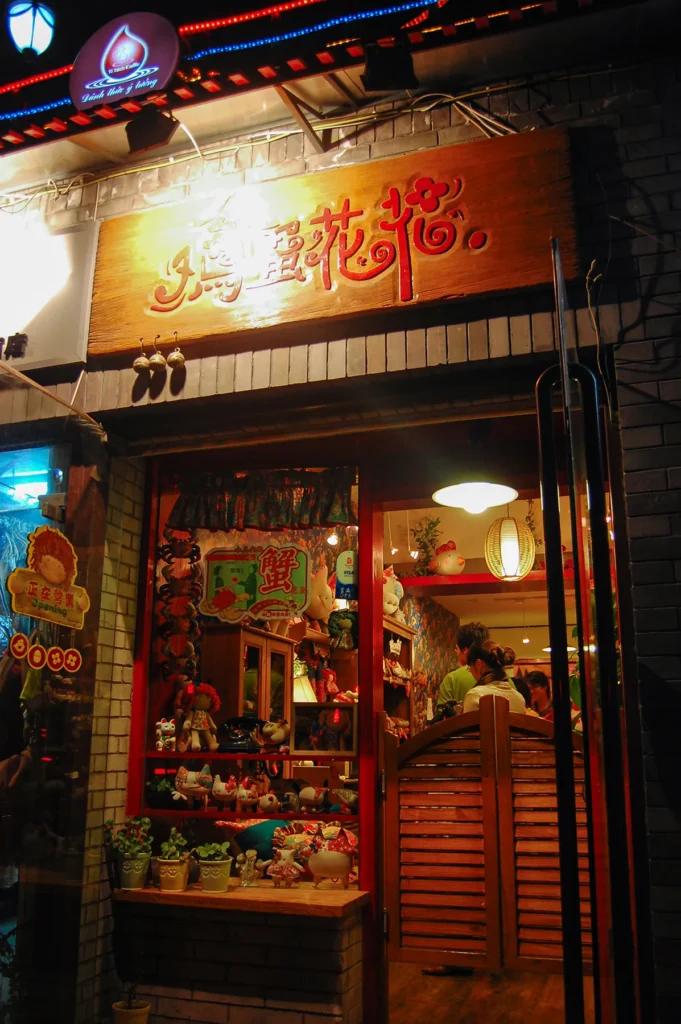
Then, in 2008—the year all eyes were on Beijing for the Olympic Games—I somehow found myself standing in front of a real doll shop with a sign that read Jidanwawa(鸡蛋花花).
Even I was surprised.
None of it would have happened without my friend 大觉觉, whom I met through our shared love of handmade dolls. She was a cheerful Beijing girl—round, lovable, and reminding everyone of a Cabbage Patch Kid doll.
She came all the way to Wuhan with an exciting idea.
The three of us (Eggshell included, of course) rented a little boat on East Lake. We immediately hit it off and happily decided to open a Jidanwawa Cloth Doll Shop in Beijing’s Nanluoguxiang.
It’s impossible to capture, in just a few paragraphs, the happiness of being completely immersed in that little shop.
Instead, I drew it.
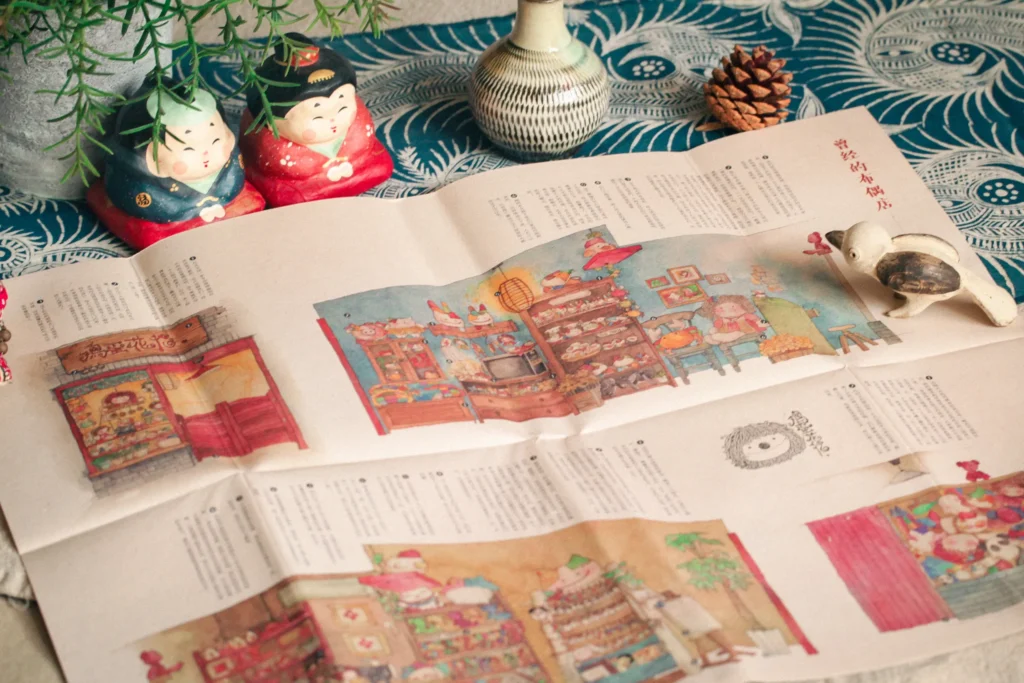
The illustration on the inside cover of Notes from a Handmade Book — The Jidanwawa Cloth Doll Workshoppreserves those memories.
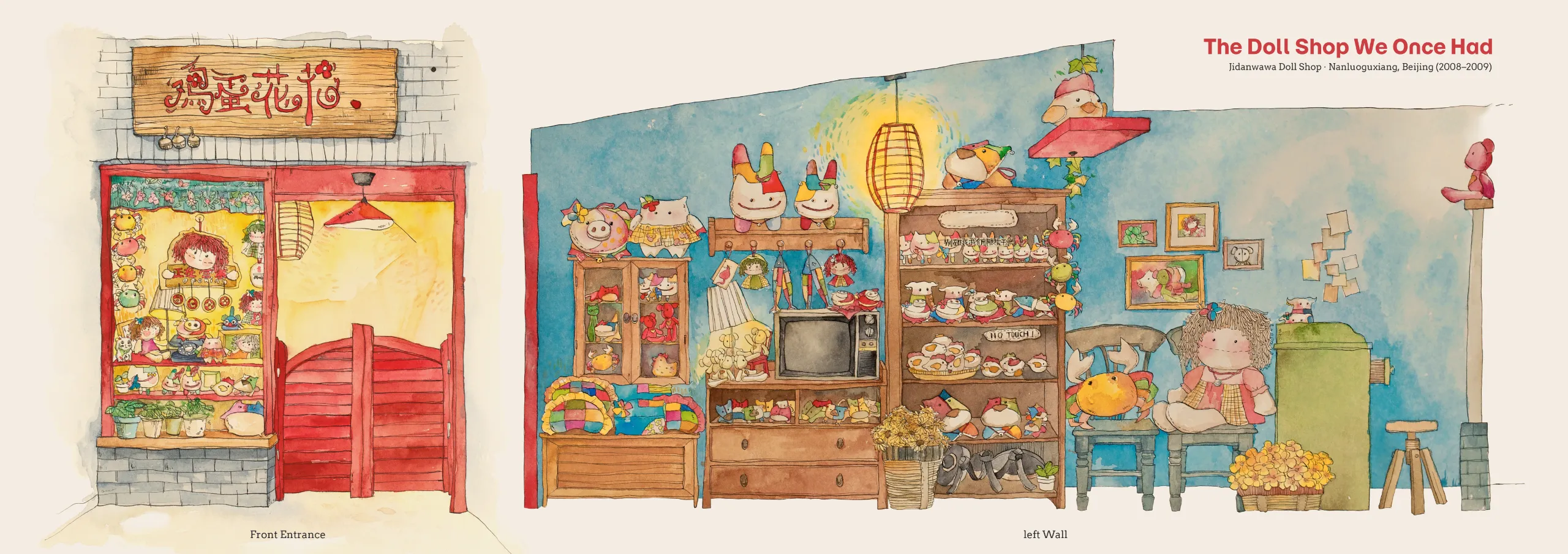
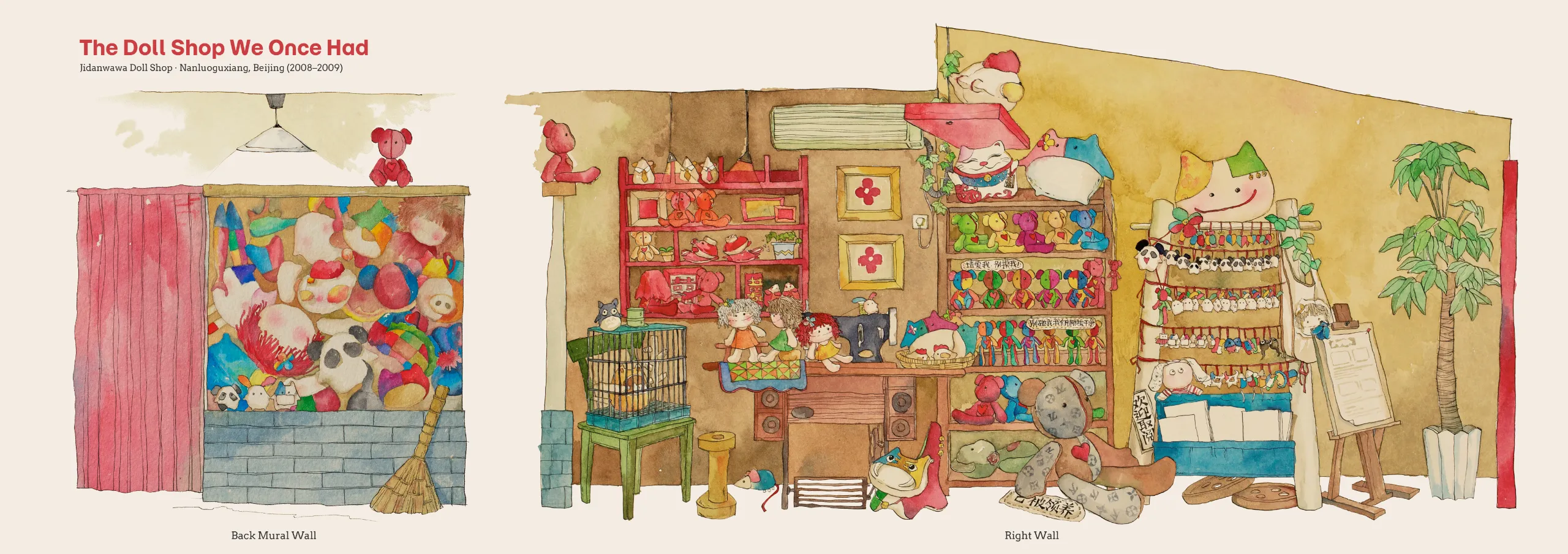
Every corner in the drawing once existed—the furniture, the tiny decorations on the shelves, the mural on the wall, the handwritten signs, every doll, and all the little stories shared by the three of us.
Back then, those densely packed notes were really just reminders to myself.
Looking at them today, they’ve become something else entirely:
a map of the little shop we once had.
So I won’t tell the story again here.
Instead, I’ll leave those pages exactly as they were.
1. The Signboard in Progress
Finding a workshop in Beijing that makes shop signs was not difficult.
Perhaps it was our slightly obsessive attention to detail, but we wanted every part of the sign to be just right.
The woodworker first enlarged the words “Jidanwawa” and placed a full-scale print against the wall so we could see how it would look in real space. Only after we confirmed the proportions did the actual production begin.
He then suggested carving the edges of the letters inward, creating a sunken effect to make the text stand out—also known as sunken relief.
Because we chose a particularly hard type of wood, the process was reportedly quite difficult. After that, we quietly decided we should probably stop giving craftsmen “creative suggestions.”
2. The Wind-and-Rain Bells
The bronze bells above the door were genuine antiques.
They had beautiful lotus patterns and a poetic name: “Wind and Rain Smooth” bells, symbolizing good weather and harmony.
They were chosen to echo the three small bells sewn onto our dolls.
Every day, the first thing Dajuejue did when opening the shop was to check whether the three bells were still intact.
Unfortunately, just a few days before we closed the shop, they were all stolen—cleanly cut away by someone who clearly knew what they were doing.
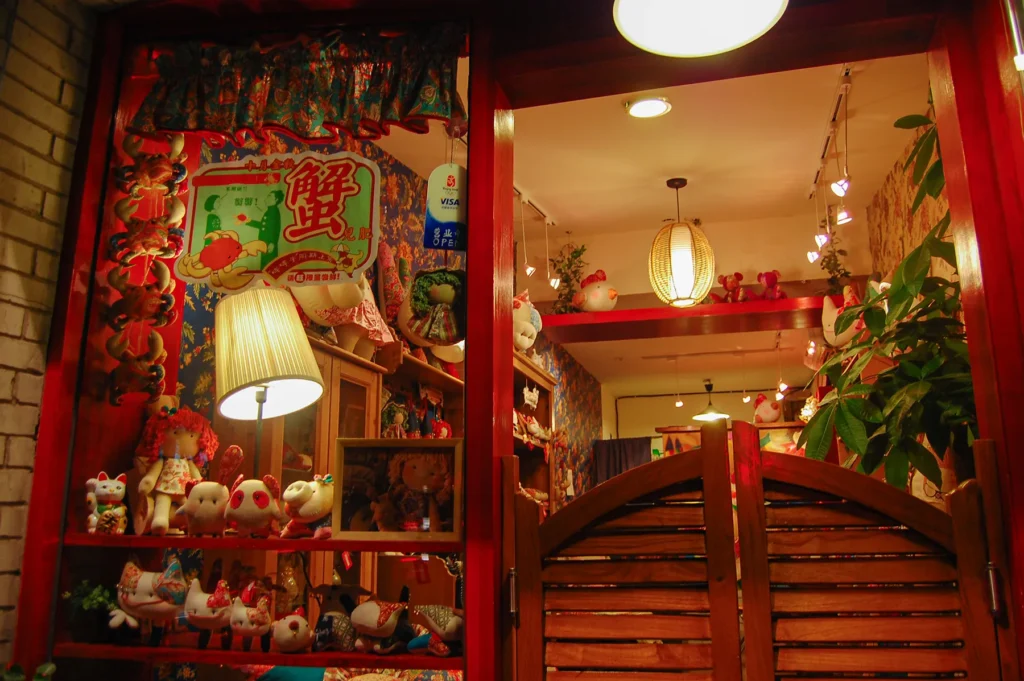
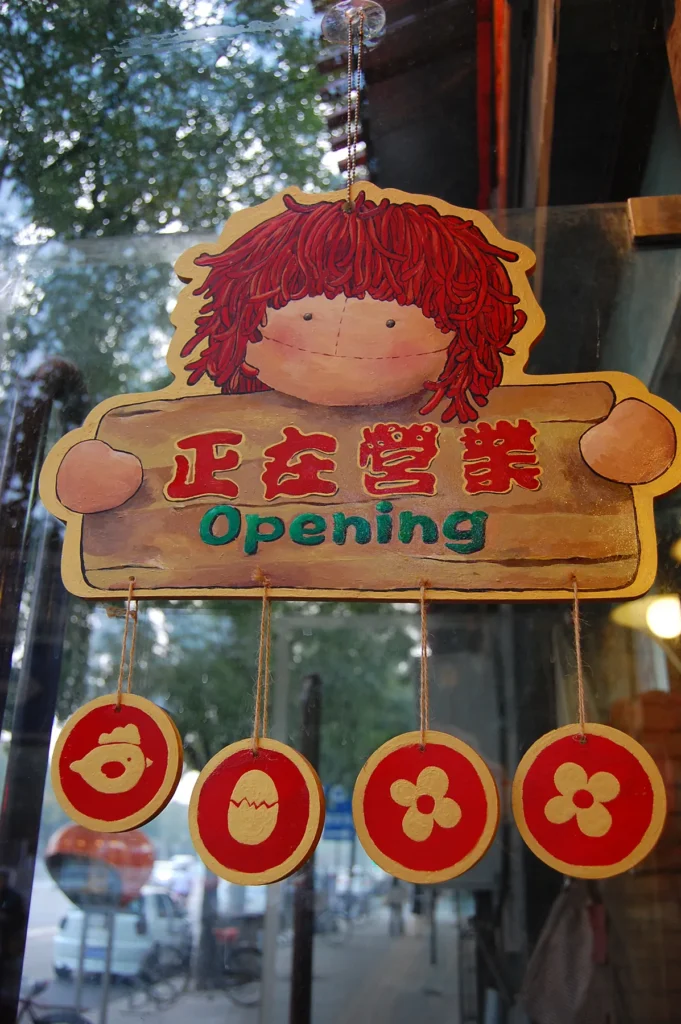
3. The Red saloon doors
The red saloon door was 蛋殼’s idea.
It brought a warm glow and a subtle sense of life from inside the shop, spilling gently into the street outside.
4. IKEA Furniture Disguised as “Handmade”
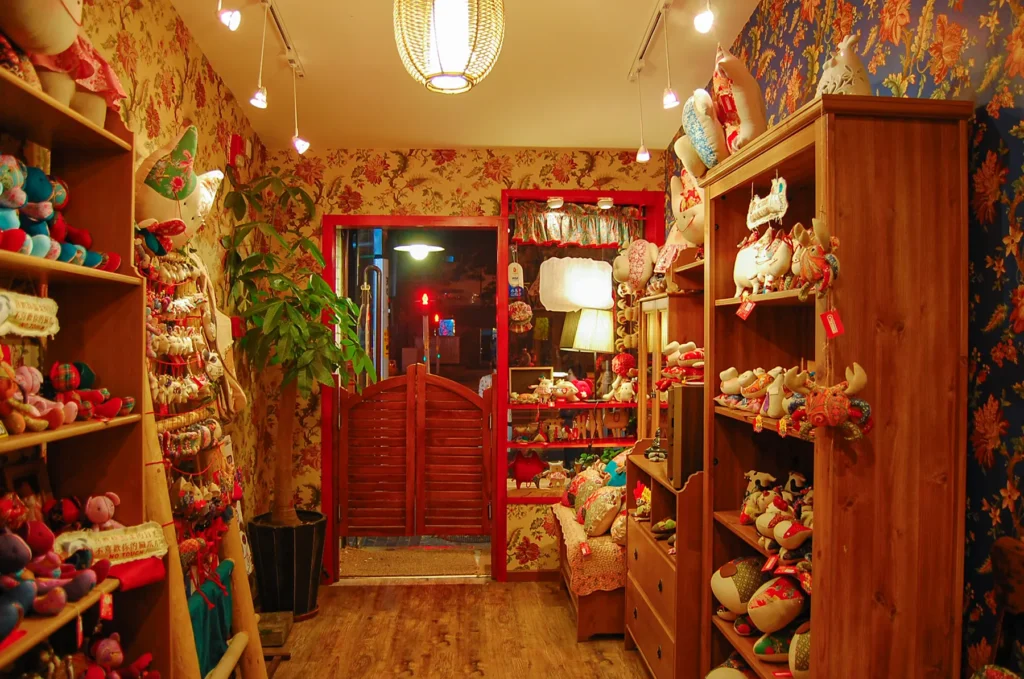
We actually wanted to customize some very special rural-style solid wood furniture.
But the three of us who ran the shop were basically broke kids.
大覺覺 used her wedding savings, and 蛋殼 used her dowry money, all poured into the shop.
In the end, we bought the most important furniture and display shelves we could afford.
Of course, anyone could recognize them immediately as IKEA.
5. The Blue Wallpaper That Caused Confusion
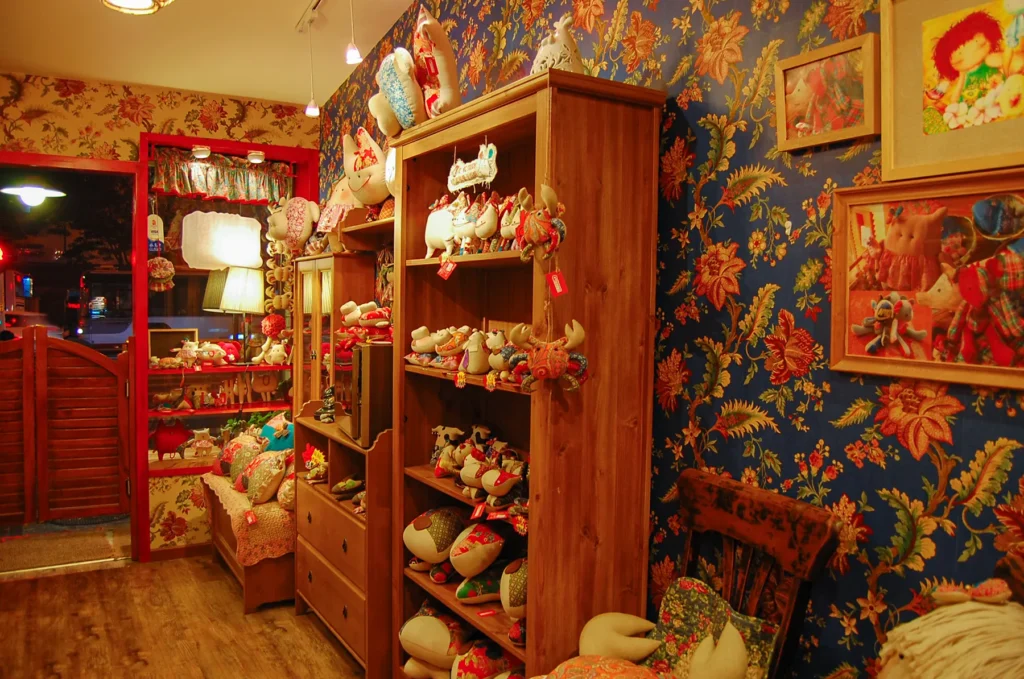
We were often asked by strangers half-opening the door:
“Is this a wallpaper shop?”
“Is this a flower shop?”
The most extreme question was:
“Is this a KTV?”
All because of this bright blue floral wallpaper covering the wall.
To avoid making the page visually overwhelming, I didn’t redraw the large flowers in detail—but anyone who visited the shop should remember them clearly.
Why did we choose this color?
Because the beige version we originally liked was sold out after we delayed payment by just two days.
We could only choose this blue one that no one else wanted.But in the end, we thought it looked surprisingly beautiful, especially with the old oak-colored furniture.
6. The Old Television
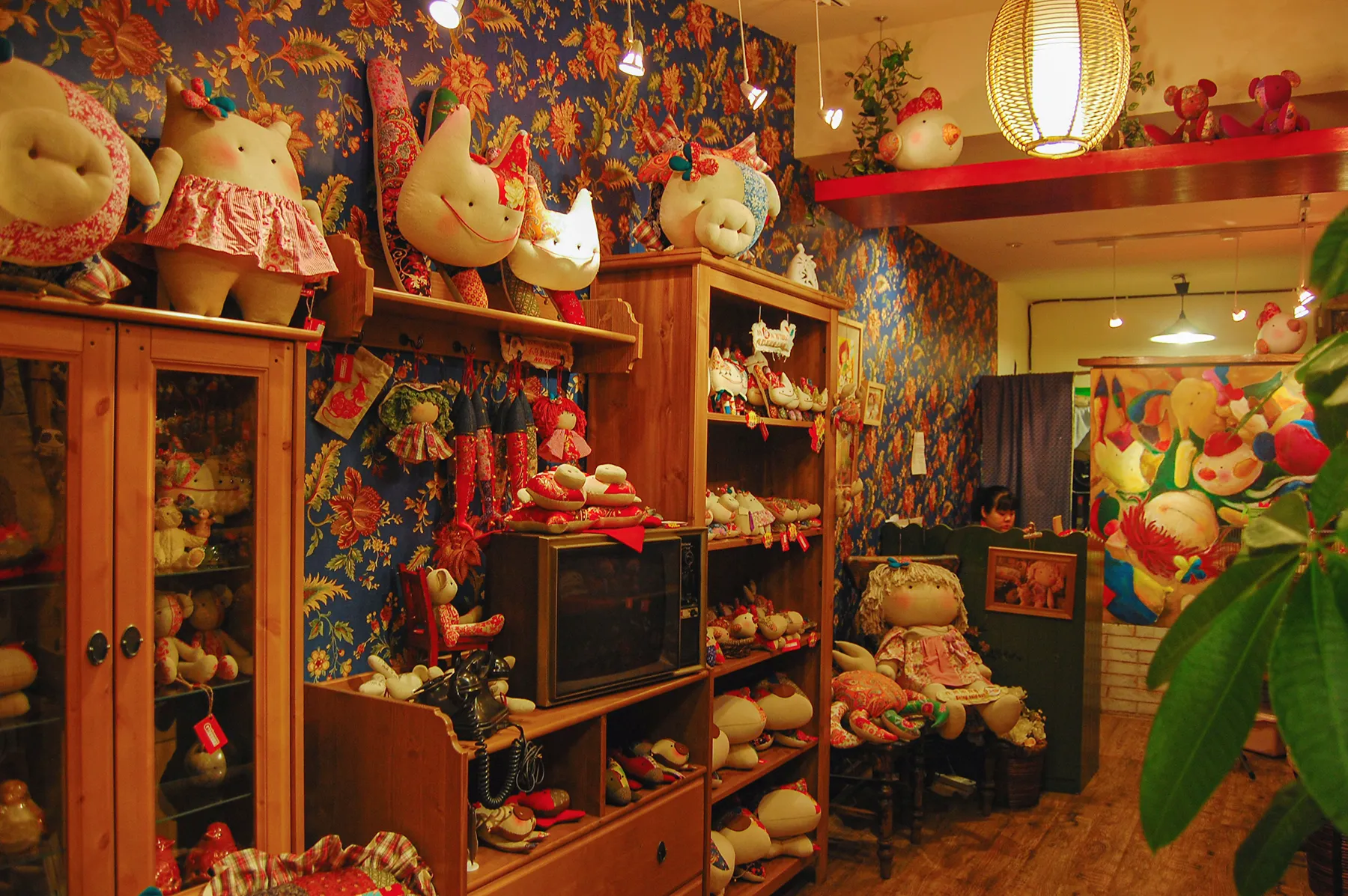
The old television was lent to us by a friend of 大覺覺.
It had a very calm presence.
It somehow held the energy of the bright floral wallpaper together, grounding the whole space.
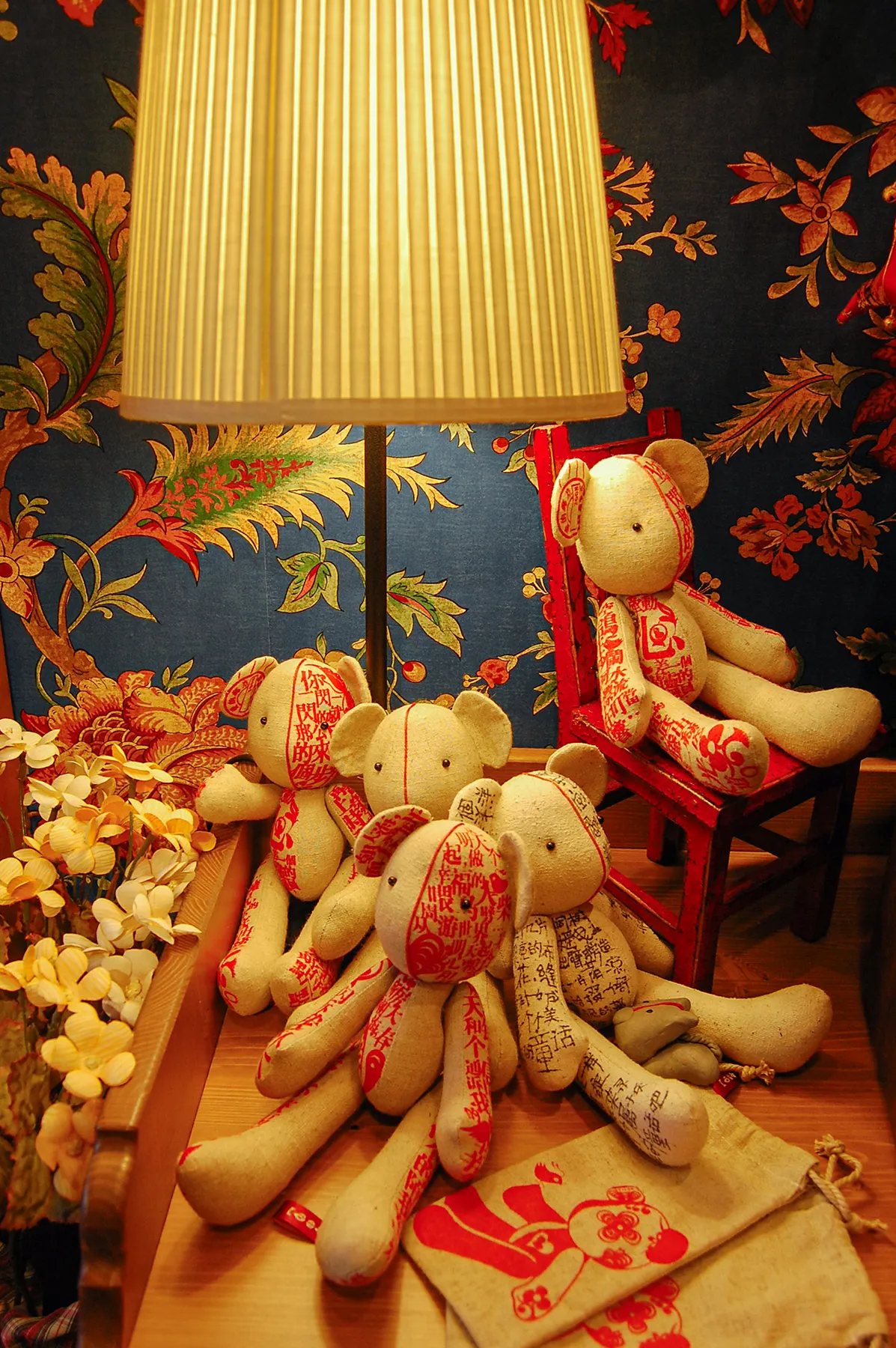
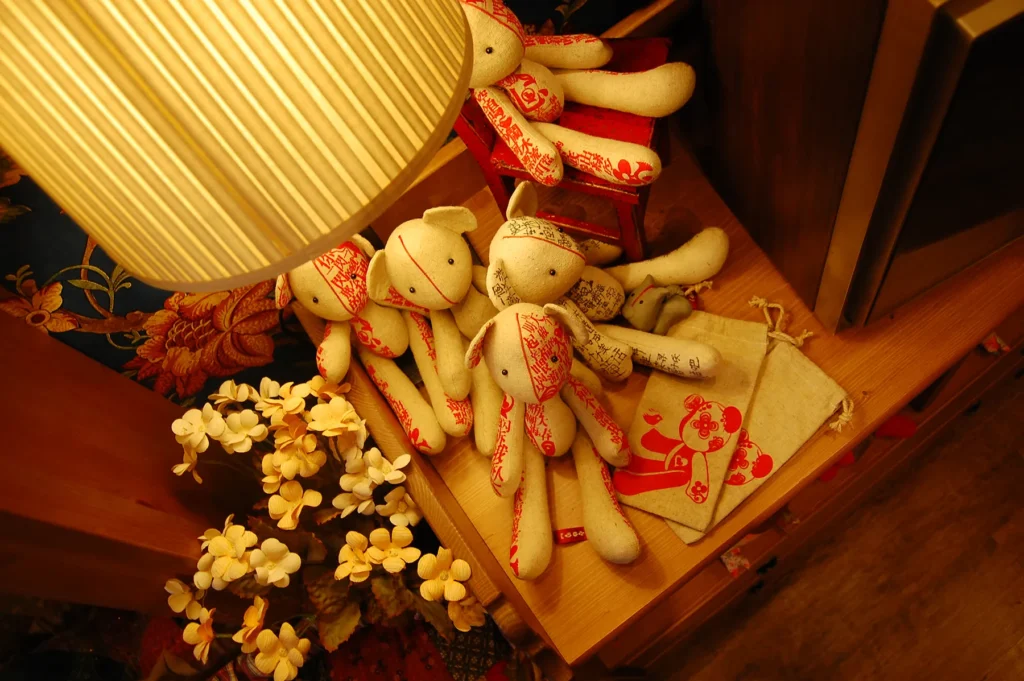
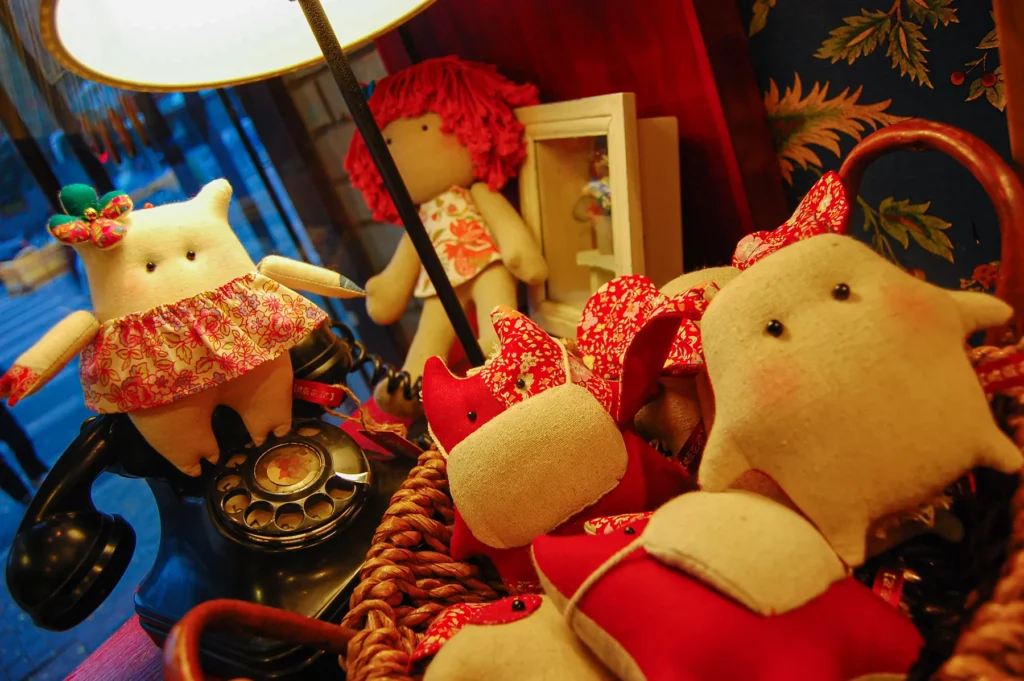
7. The Bear Corner
Under the table lamp sat a group of lovable “love letter bears.”
8. The Red Rattan Lamp and The Red Display Shelf
The rattan ceiling lamp was painted bright red by us.
It gave off a warm orange glow every day, making the whole shop feel incredibly cozy.
The red wooden display board was specially designed.
It was used to place large dolls so that passersby outside could immediately see them.
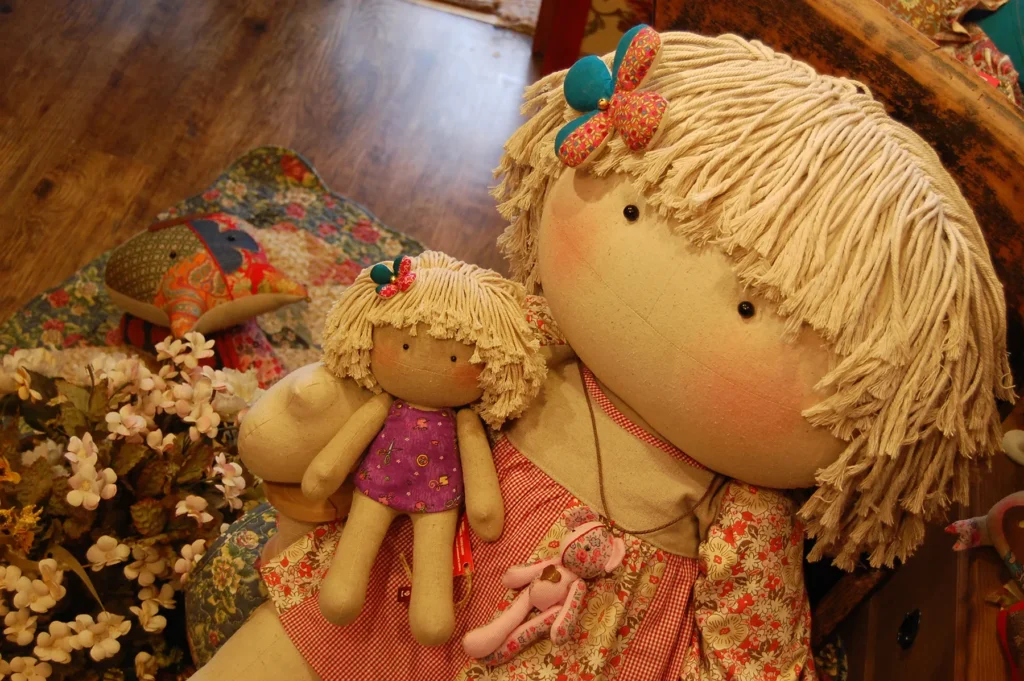
9. Big Nana(囡囡), the Shop Star
The two wooden chairs were found at a second-hand furniture market.
It was love at first sight.
No one was allowed to sit on them—only the two “resident stars” of the shop, Big Nana and Big Bear Baby.
Big Nana was specially made for the Beijing shop and personally owned by 大覺覺.
She was the happiest child in the shop—and the most photographed doll of all.
10. The Unfinished Mural
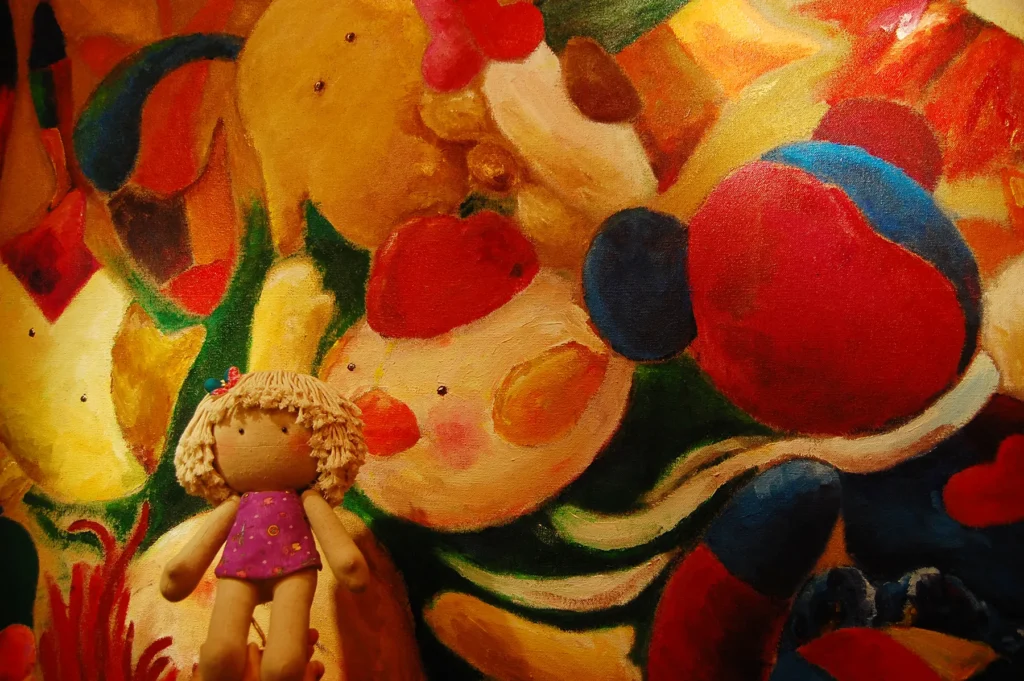
This large acrylic painting is actually an unfinished work.
Every time 蛋殼and I came to the Beijing shop, we would add a few brushstrokes to it.
It has always remained in a state of “not yet finished.”
And we all felt that this was perfectly fine.
Watching it slowly grow along with the shop—becoming fuller and more alive day by day—was something we enjoyed.
I remember one day, 大覺覺 carried this huge canvas frame all the way from the art museum by herself, with buckets of paint in her hands.
Both 蛋殼 and I were quite surprised.
That was how everything was done in the shop—we carefully chose, collected, and customized every small object together.
Little by little, the shop was built into what it became.
11. The Storage Behind the Curtain
Behind the fabric curtain is a small storage space of less than two square meters.
It is filled with dolls shipped from Wuhan.
They quietly wait there, waiting for space to open up in front so they can be carefully displayed.
And then, eventually, be chosen and taken home.
12. Nose Drip (Dajuejue’s Pet)
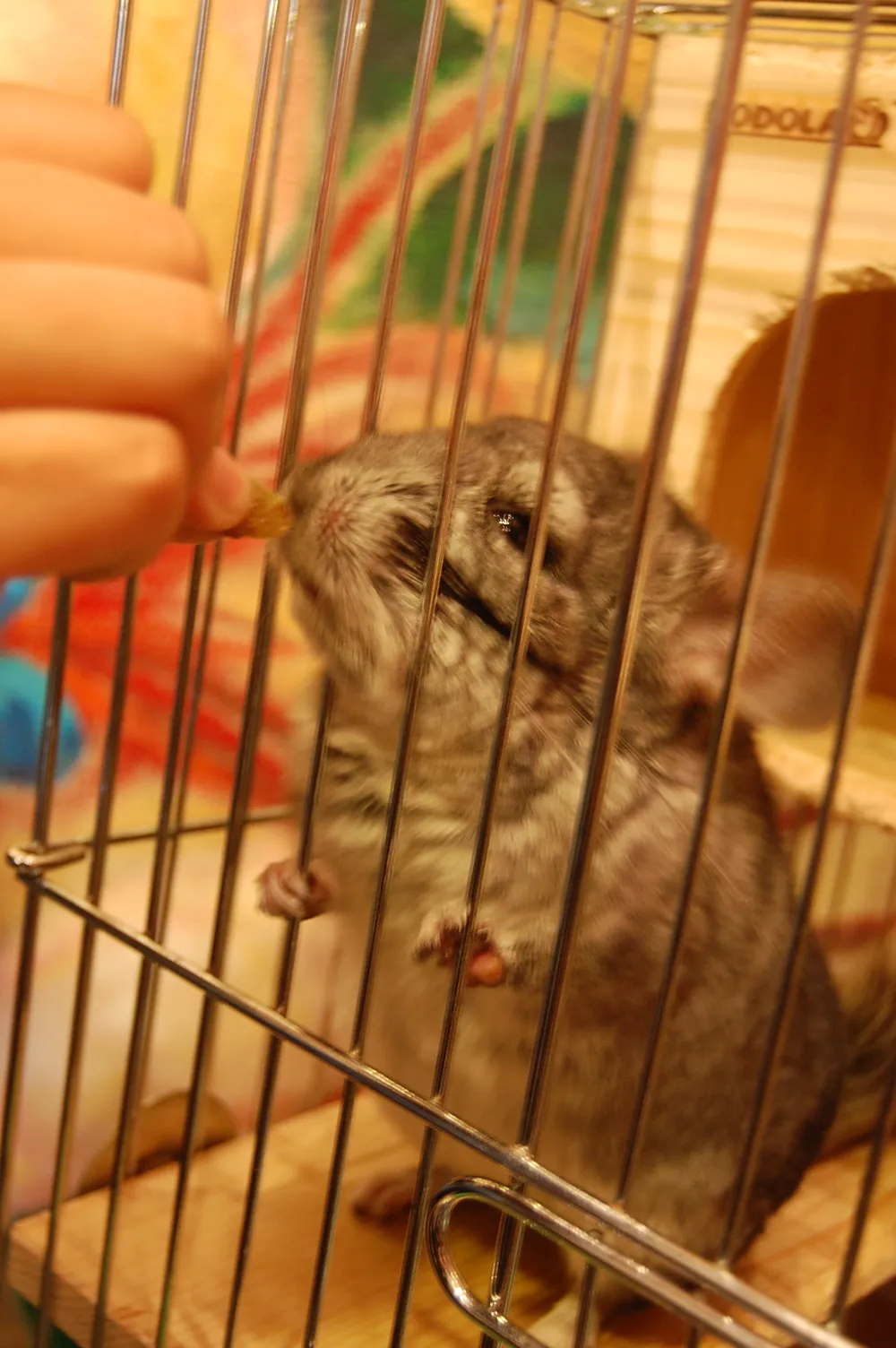
This is where 大覺覺’s little pet “Nose Drip” lives.
It is actually a small chinchilla.
Friends who visit the shop would always gently tease it.
13. The Red Display Cabinet
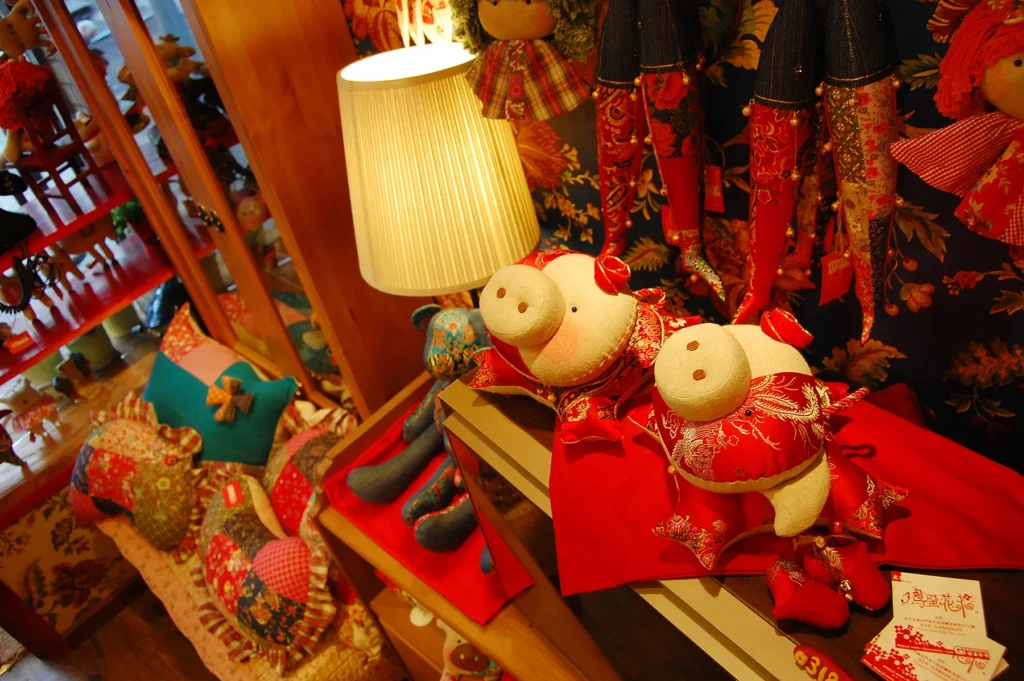
The large red built-in shelf is a display cabinet for special pieces.
It was used to showcase wedding bear couples, lucky pig dolls, and other festive characters.
We decorated it with red candles, “double happiness” frames, and sweet bear portraits.
14. The Unexpected Sewing Machine
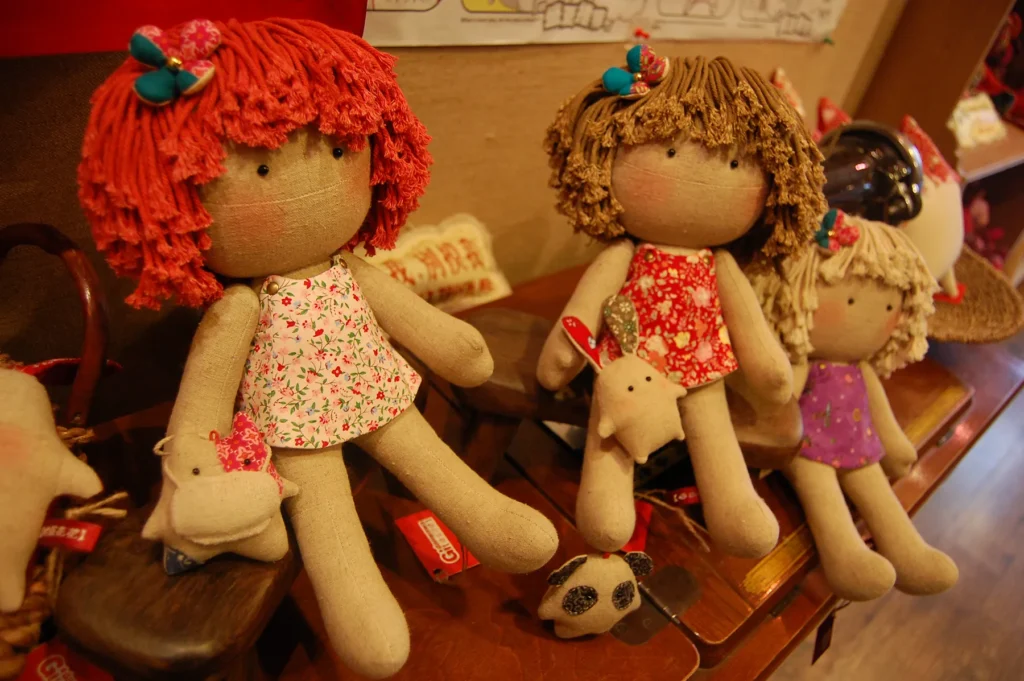
The shop had always been missing a sewing machine.
The day after we posted a notice asking for a used one, an elderly lady brought us this unexpectedly beautiful pedal sewing machine.
It was far more beautiful than we had imagined.
Later, it was naturally taken over by the three Hua Nana(花囡囡) sisters, who occupied the long worktable.
15. Oversized Wooden Buttons
To decorate the shop with a rural handmade feel, we specially commissioned oversized wooden buttons and thread spools from a carpentry workshop.
We originally planned to hang them on the wall.
Unfortunately, the building was too old, and the plaster walls simply could not support such heavy solid wood pieces.
16. The Bear Cabinet
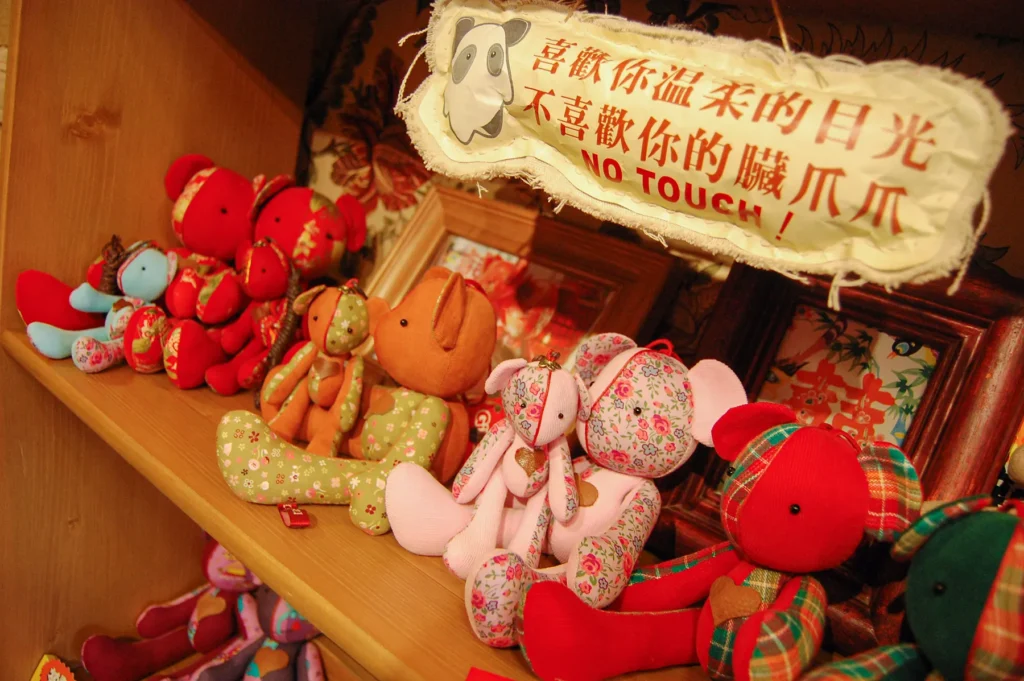
This cabinet was designed especially for bear lovers.
Small and large patchwork bears were packed closely together inside.
大覺覺 would rearrange their poses every day.
We designed our own fabric warning tags.
They politely reminded visitors not to touch the dolls too much.
But in reality, customers would read the words aloud while stroking the bears and praising how cute they were.There was nothing we could do about it.
17. The Stolen Big Bear
This big bear was originally one of my personal favorite pieces.
It was made using a piece of patterned fabric found at a local market, with a design inspired by luxury-style motifs.
I sent it to the Beijing shop as a special “store guardian” and told 大覺覺: “As long as the shop exists, the bear must stay.”
But about half a year later, it disappeared.
A foreign customer who did not understand the idea of “this item has been adopted” left money on the counter and simply took it away.
I still like to think he was completely charmed by it in that moment.
18. The Wooden Ladder Shelf
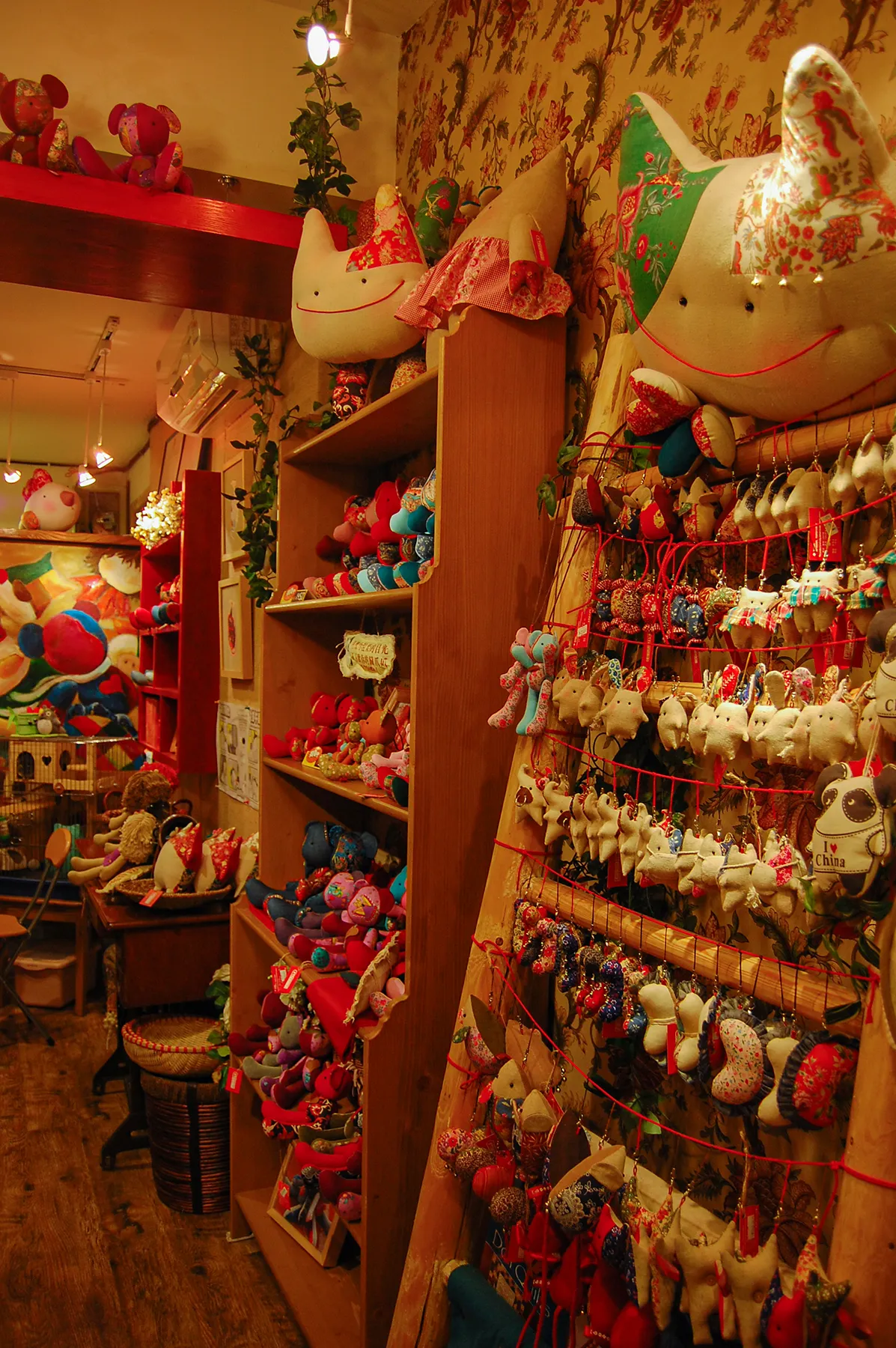
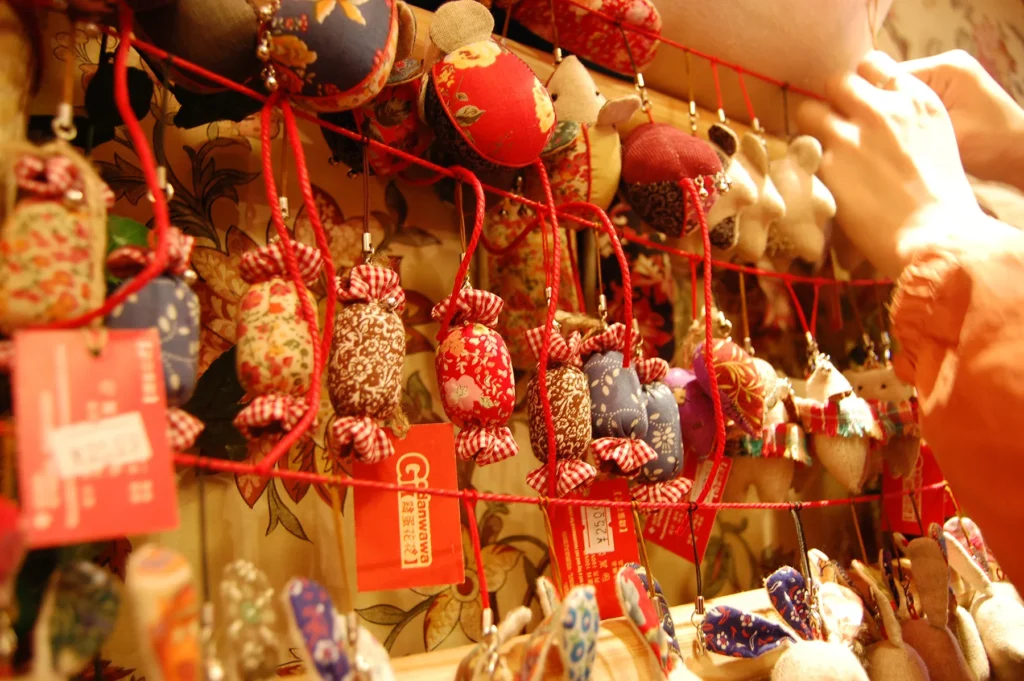
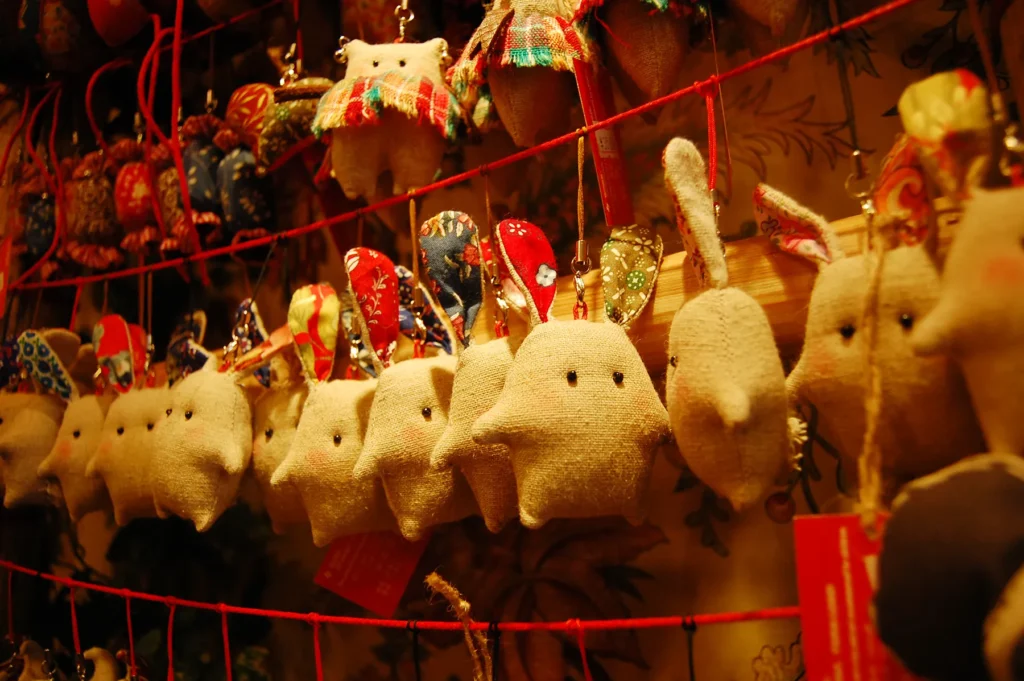
A specially designed wooden ladder shelf leaned against the wall.
It was quite distinctive.
Strings were tied across it, hanging with small doll accessories.
The bottom level was used to place newly released handmade magazines.
19. The Announcement Easel
A small painting easel was used as a notice board.
It displayed new doll arrivals, event updates, and DIY tutorials.
Every month, we designed and produced new posters for it.
20. The Prosperity Tree
A lucky plant was given to us at the shop’s opening by a friend from Taiwan, Mr. Wang.
It grew very well over the years, eventually reaching almost the ceiling.
Together with many small potted plants we collected, the tiny doll shop was always filled with greenery.
The shop remained open for only a year and a half.
It opened in 2008, the year Beijing hosted the Olympic Games.
Like many small shops in Nanluoguxiang, ours was affected by the changes that followed. The neighborhood was gradually redeveloped, and the southern entrance to the alley—where our little shop happened to stand—was transformed. Eventually, we had no choice but to close.
But I’ve never regretted it.
Having a doll shop of my own—even for a little while—was a dream come true, and that alone has made me feel incredibly fortunate.
This story is dedicated to everyone who owns a little shop,
once owned one,
or dreams of having one someday.
—— OVER ——