


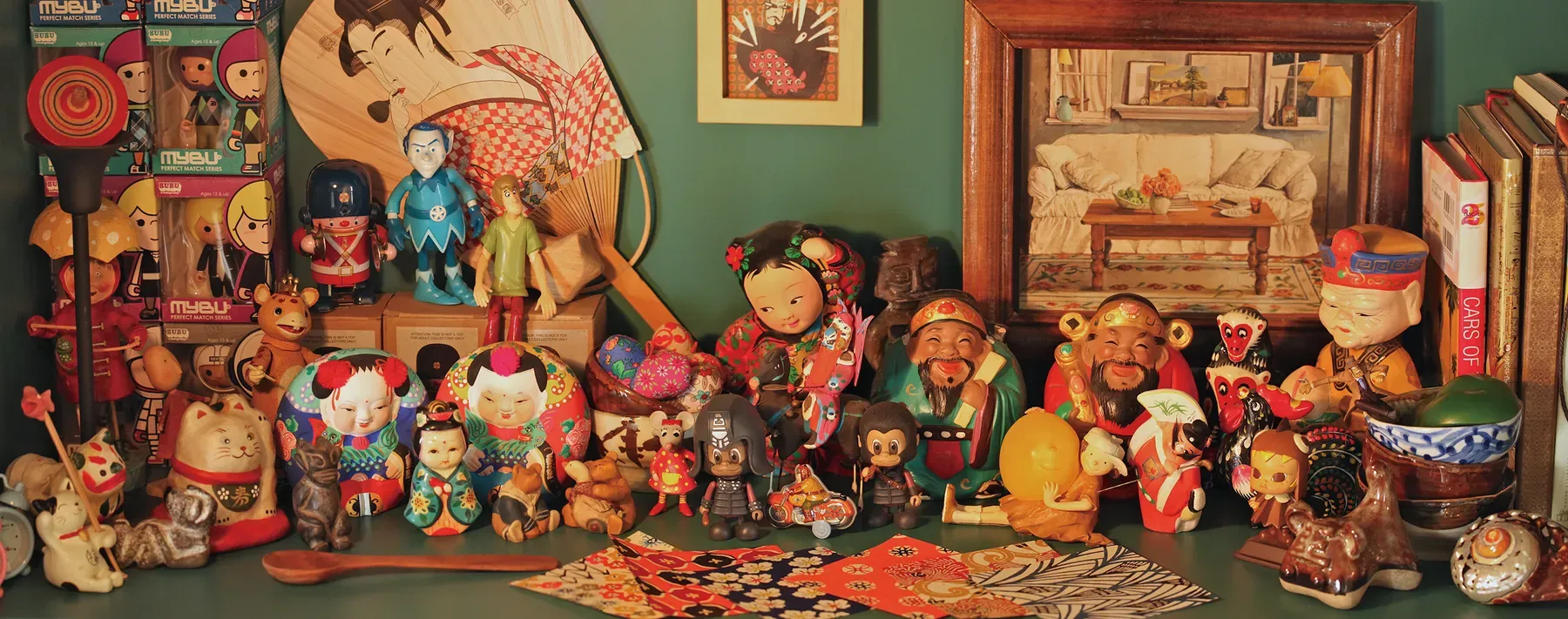
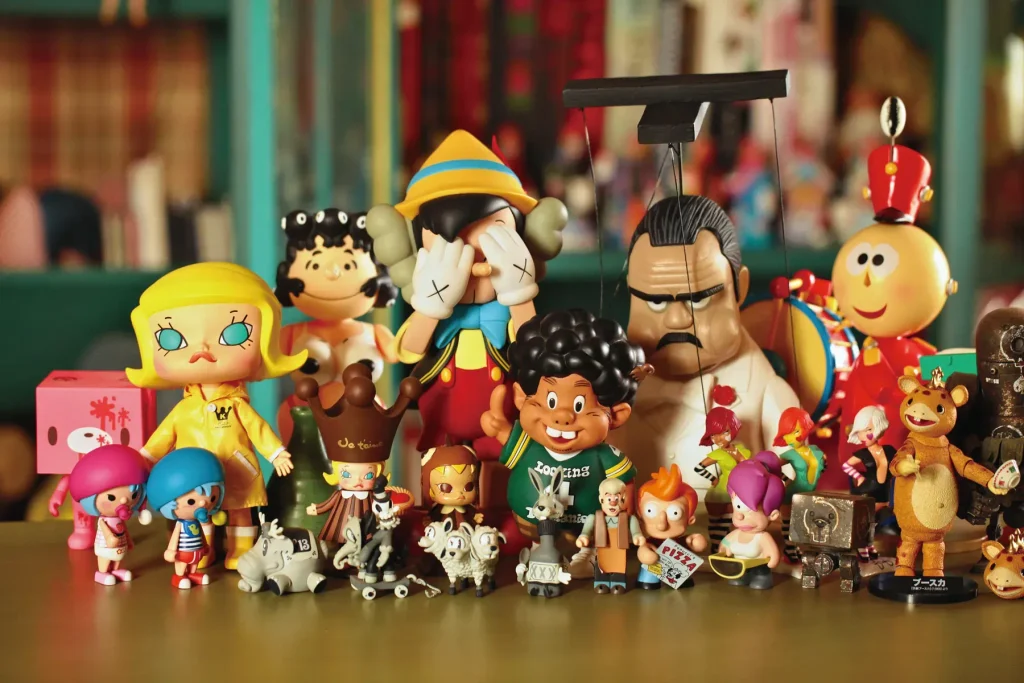
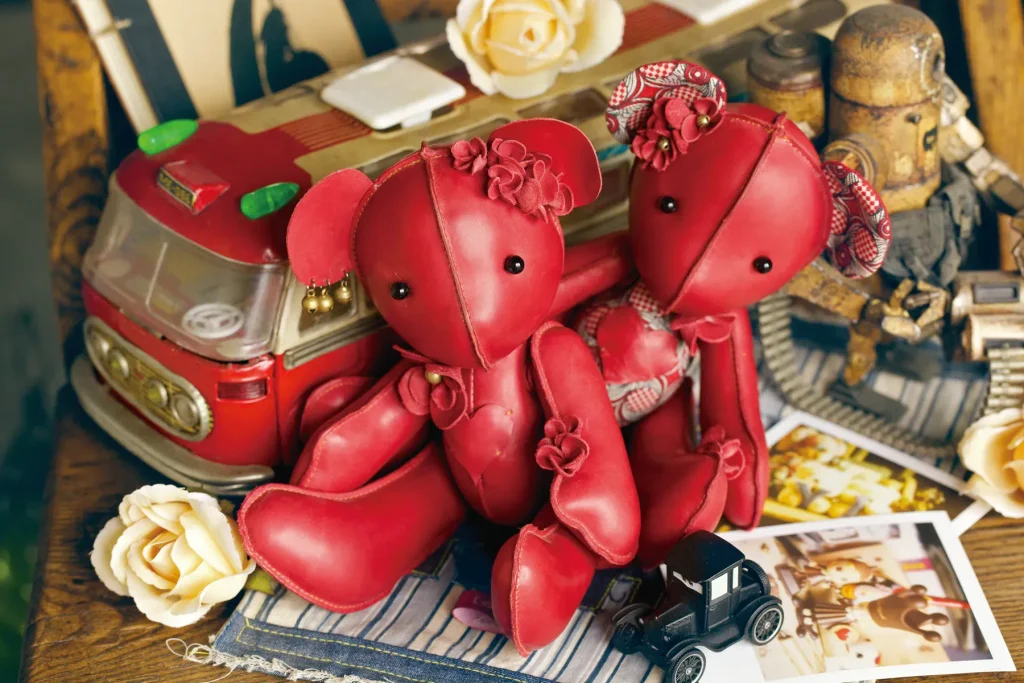
In 2011, I had a small studio of my own. The building was called Ant Workshop, so whenever I went there, I would tell my family, “I’m off to Little Ant.” It was a modest space, filled with toys brought home from my travels, alongside my own Jidanwawa fabric dolls. Clay figures, cloth toys, tin cars, designer toys, and all kinds of dolls lived together. They came from different times and looked nothing alike, yet they seemed perfectly at home with one another.
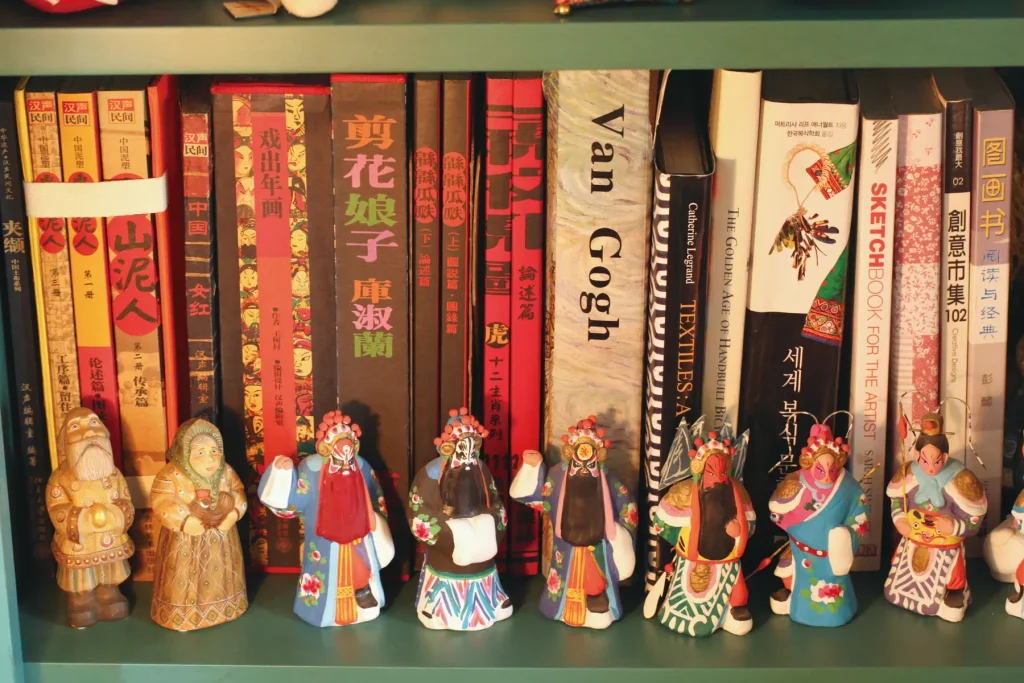
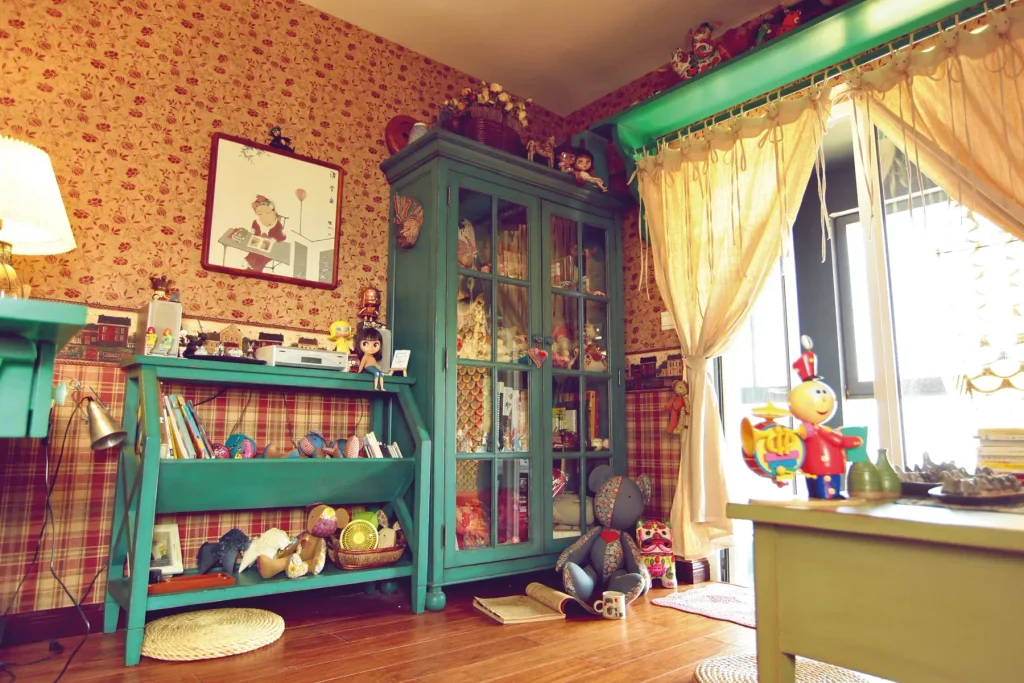
I loved my working days there. Making things, reading, listening to music, surrounded by these little treasures, I felt tucked inside a warm little universe of my own. Each toy had something that drew me in: an expression, a material, or a sense of familiarity I couldn’t quite explain. Bringing them home felt like an unspoken agreement between us. Over time, my affection for them never faded.
These days, there are more beautiful things than ever, but I find myself falling in love at first sight less often. When Tsutaya Books opened, I spotted a hand-modelled ceramic cat. I liked it very much, but told myself not to be impulsive. Every time I returned, it was still sitting in the same place, looking thoroughly displeased. After three years of these encounters, I finally decided to take it home. It now sits on my desk.
I also collected a clay figure of the God of Longevity, holding a peach in one hand and a gold ingot in the other, with a spring hidden inside its head. The slightest touch would set it bobbing for ages, its sidelong glance looking rather pleased with itself. We had a similar figure at home when I was a child, and seeing this one brought that familiarity rushing back. It wasn’t the work of a celebrated maker, but it had a simple, lively charm all its own.
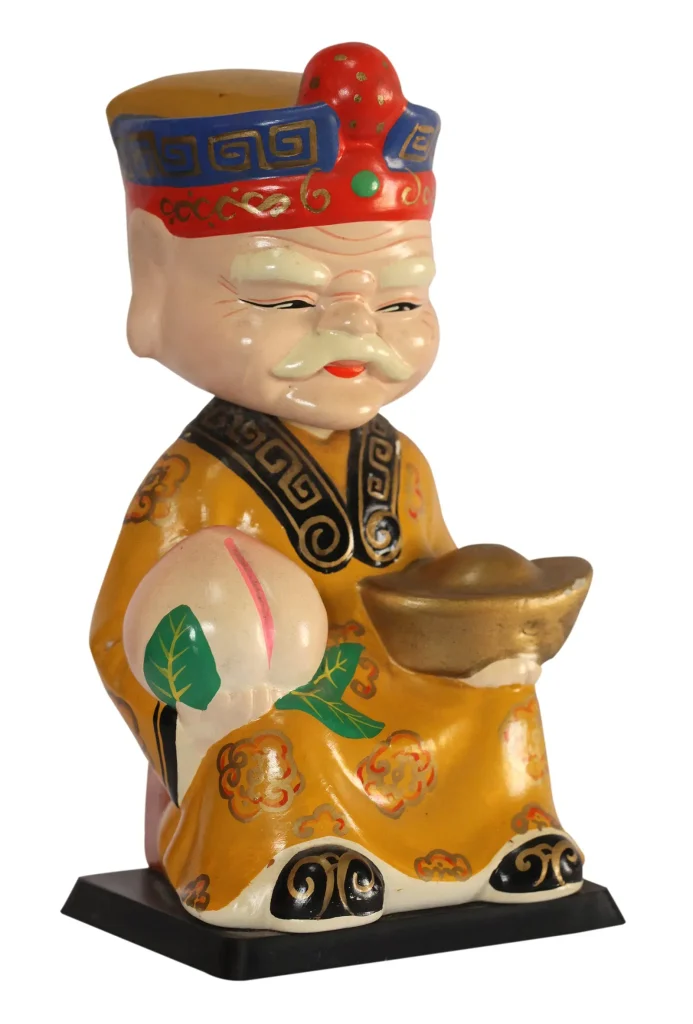
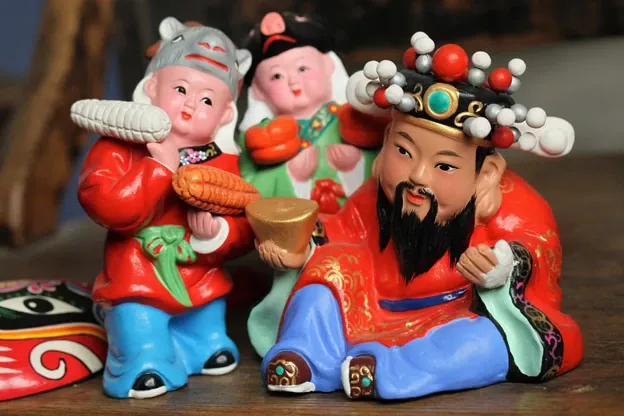
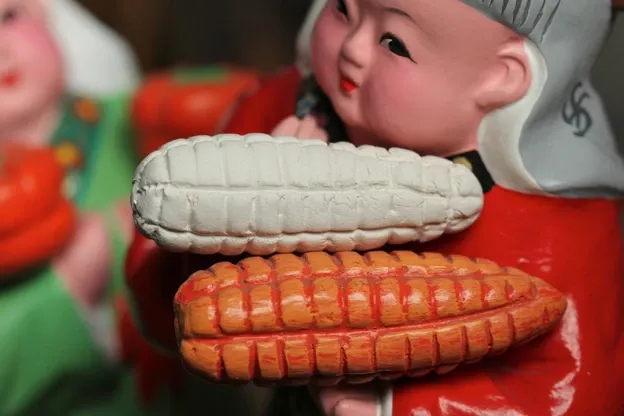
Some of the clay figures were already damaged when I found them. I would mend them with clay and repaint them,
slowly restoring their features.
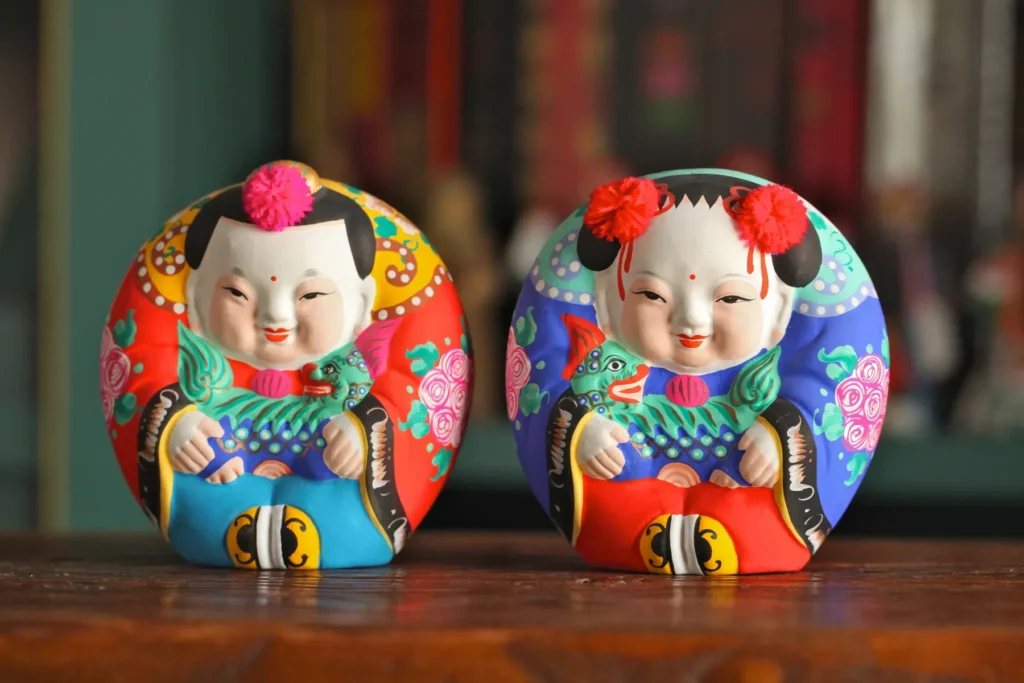
Folk toys are full of such endearing details. Clay figures, cloth toys, and paper sculptures are made from materials close at hand. Their forms are often simple and rounded, yet they hold a wealth of expressions and wishes. A pair of cheerful A Fu figures, symbols of good fortune, or a small animal with an auspicious meaning carries someone’s hopes for everyday life. The maker’s skill and feeling remain in these little forms, still reaching us across the years.
I also enjoy contemporary designer toys. They have distinct personalities: humorous, exaggerated, sometimes a little strange. A familiar character from a comic or a film, reimagined by a designer as a figure you can hold, takes on another layer of interest. I like looking closely at these different interpretations, seeing how a maker gives a figure something of their own understanding and temperament. To give an object its spirit and bring out all its charm: perhaps that is the pleasure that makes us smile in recognition.
Without my noticing, these collections have found their way into my work. When I love an object, its shape, character, materials, and craftsmanship quietly stay with me. I may not know what to do with those impressions at the time. Later, as I sketch, choose fabric, or sew, they surface of their own accord. There is a subtle, lasting connection between collecting and designing. Often, it is only when my hands begin to work that I realise it has been there all along.
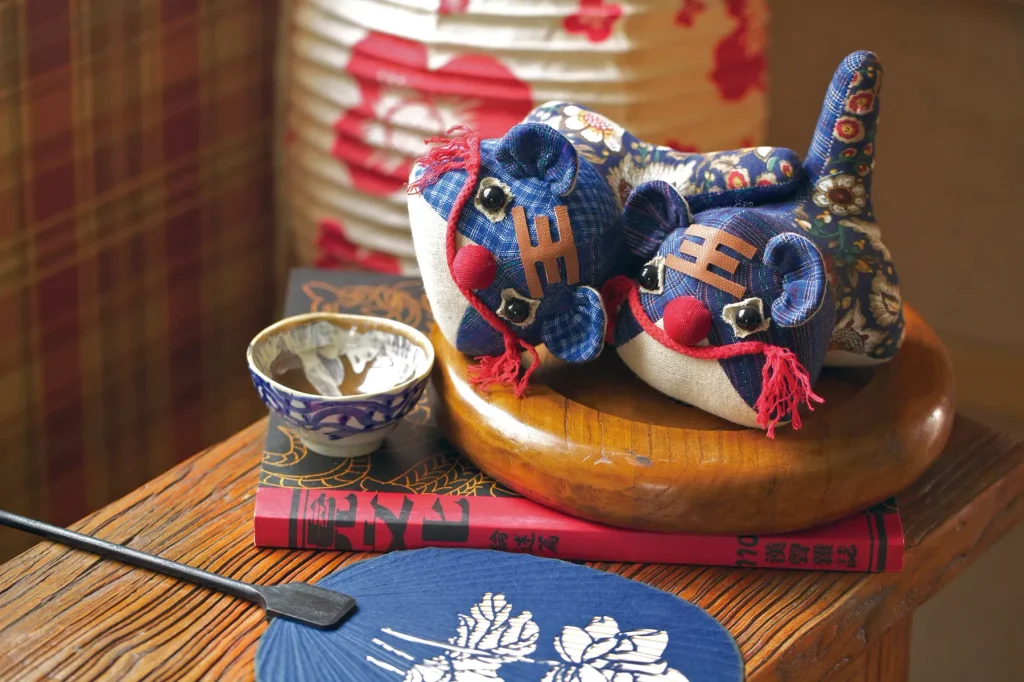
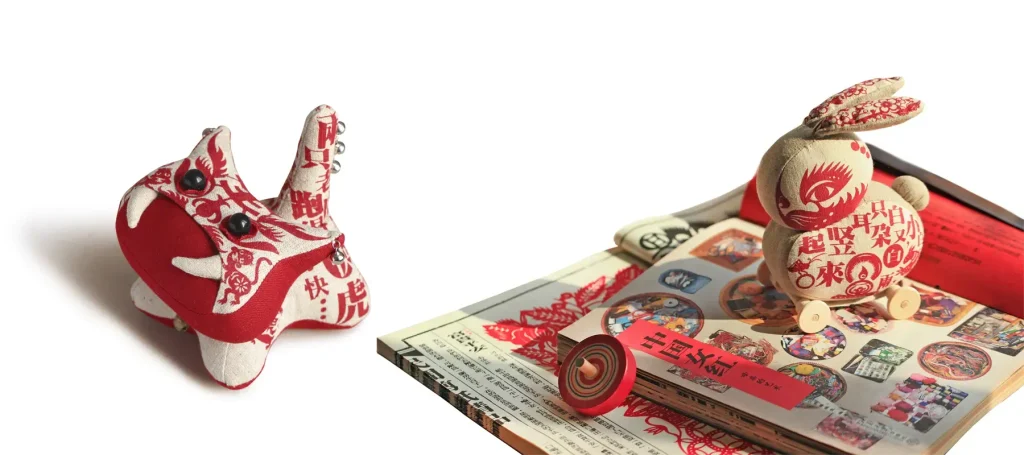
My zodiac dolls are one continuing thread. For the Nursery Rhyme Tiger, I screen-printed a nursery rhyme and paper-cut motifs onto simple cotton-linen fabric, then sewed it into a doll. The Lantern Rabbit reaches back to childhood: the rabbit lanterns I made had wheels underneath, so they could be pulled along. A familiar rhyme about a little white rabbit also became part of the doll’s printed design. Images from folk art and the remembered sounds of childhood gradually took on new forms through screen-printing by hand and sewing. Sometimes I find inspiration in the shapes of old toys; sometimes I am drawn to the humour and exaggeration of contemporary ones. Perhaps “heritage,” a word that can feel so weighty, lives in my daily work as these small details linked by memory, rippling from one toy into another creation.
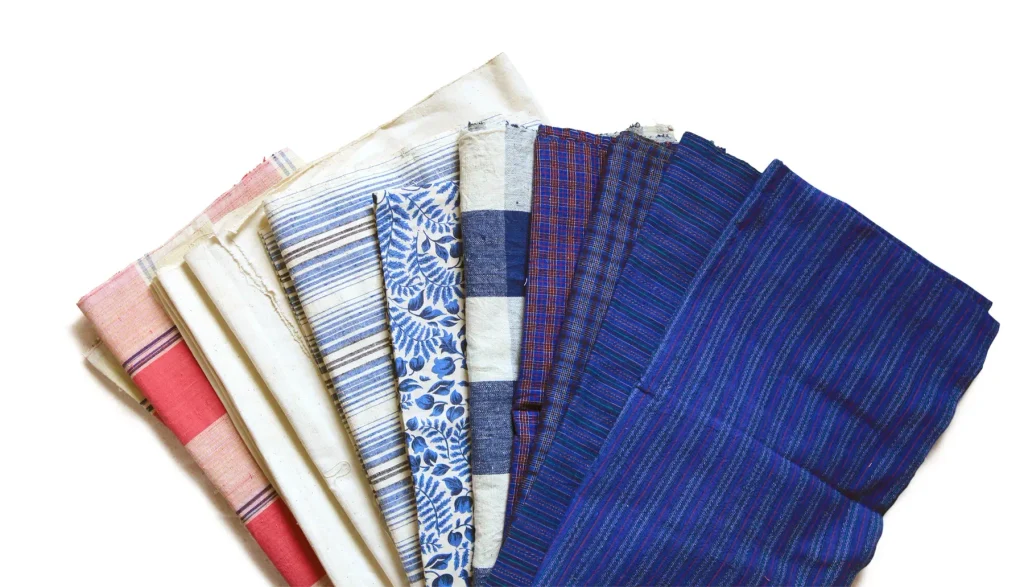
Fabric holds its own sense of time and warmth, too. I once gathered some handwoven cotton cloth in the village where my mother-in-law grew up. By the time of the interview, it was already some thirty years old. The entire journey from cotton to cloth had been slowly completed by one person’s hands. Its gentle feel captivated me at once. I also found blue checked handwoven cotton in Dongjiadu, Shanghai, each piece with its own arrangement of stripes and checks. Some pieces were too precious to use; simply keeping them and looking at them made me happy. Others gradually became dolls.
My handwork is also connected to the needlework my mother taught me. Making a fabric doll, from drawing and pattern-making to choosing materials and sewing, means trying things with my hands and learning through touch. The first of any design needs particular care: repeated adjustments, checking what still feels wrong when a shape on paper becomes three-dimensional. The softness or firmness of the fabric, the amount of stuffing, and the placement of each connection all affect its final character. Only by working through those seemingly ordinary steps, one by one, do I discover how many details need patient attention.
Looking back at the interview, I see that I was already speaking about making a zodiac doll each year and finding inspiration in folk art. Today, the series of screen-printed zodiac dolls continues. Reading those words again, I can see more clearly how early this thread began. The toys I collected, the fabrics I loved, the familiar rhymes, and the needle and thread in my hands had already come together in that little studio.
In 2011, Zhao Hua documented my toy collection and doll-making in an interview published in the Design Collection section of Zhuangshi, a Chinese art and design journal. Returning to those pages years later, the toys in the photographs and the details in the text bring Little Ant into focus again. Those few pages preserved something of the studio’s everyday life, and a moment in Jidanwawa’s creative journey.
Original interview
Zhao Hua, interview and text. “Tradition and Fashion of Toys: Jidanwawa Fabric Doll Designer Yang Liu and Her Toy Collection.” Zhuangshi, no. 6, 2011 (issue 218), pp. 44–47. Article title translated from Chinese.
DOI: 10.16272/j.cnki.cn11-1392/j.2011.06.049
—— over ——