





This story is also available in 繁體中文.
The First Zodiac Horse
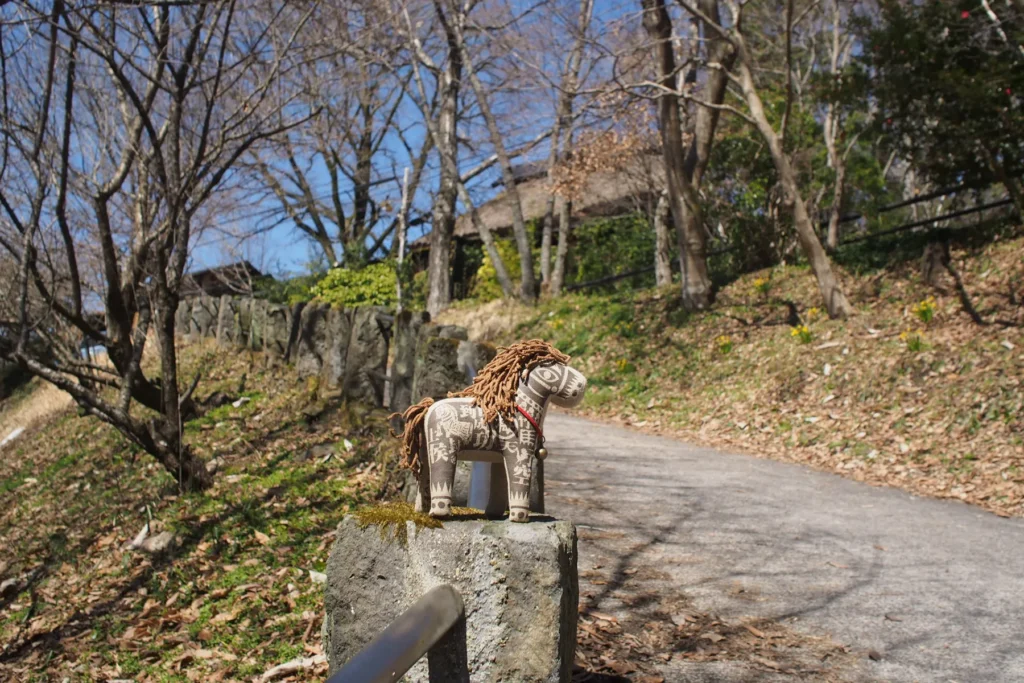
Twelve years ago, I took my first zodiac horse to Kurokawa Onsen in the mountains of Kumamoto, Japan.
Recently, I opened my old blog again and found fragments of the person I was back then.
“I truly miss the days of having a handmade workshop around me.
With sewing masters and craft makers nearby, I could create anything whenever I wished.
But now, I have tortured the horse in my mind over and over again, and still failed to make even one.”
Another note read:
“I carefully studied the leg structures used in plush four-legged animals and told myself I absolutely could not use those conventional patterns.
They felt too ordinary.
Eventually I experimented with a different structure and realized it was the most perfect way to express long-legged animals.”
And another:
“At first I really didn’t want to use braided doll hair for the mane.
It was far too troublesome.
In the end, I still used it.”
Reading those old entries now feels strangely moving.
Because twelve years later, I found myself standing once again before the same unresolved details.
A Horse That Finally Learned to Rock
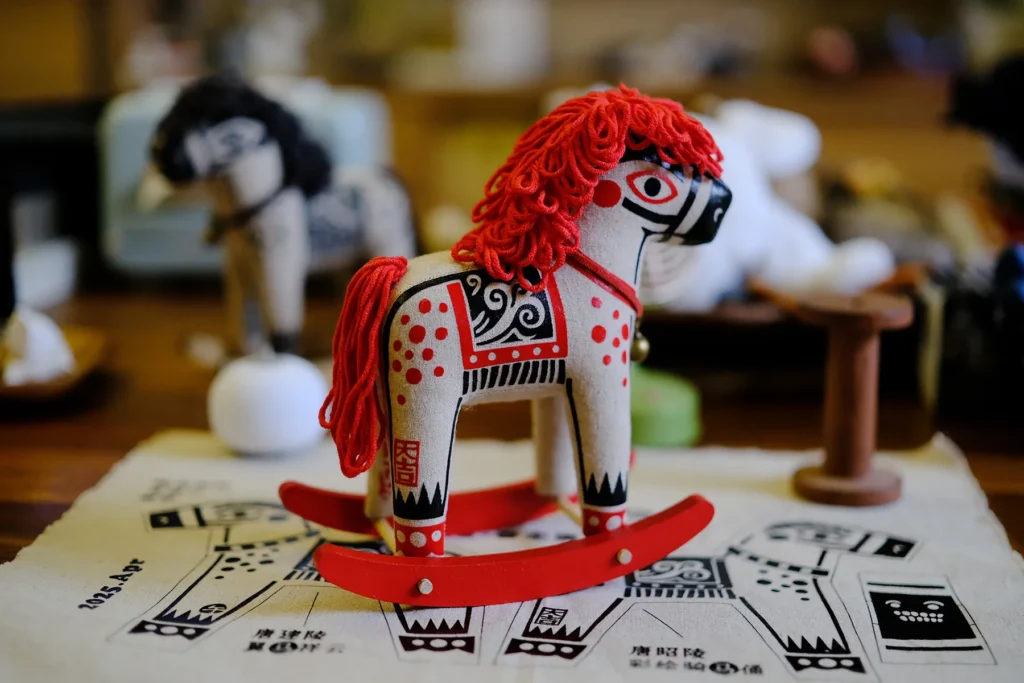
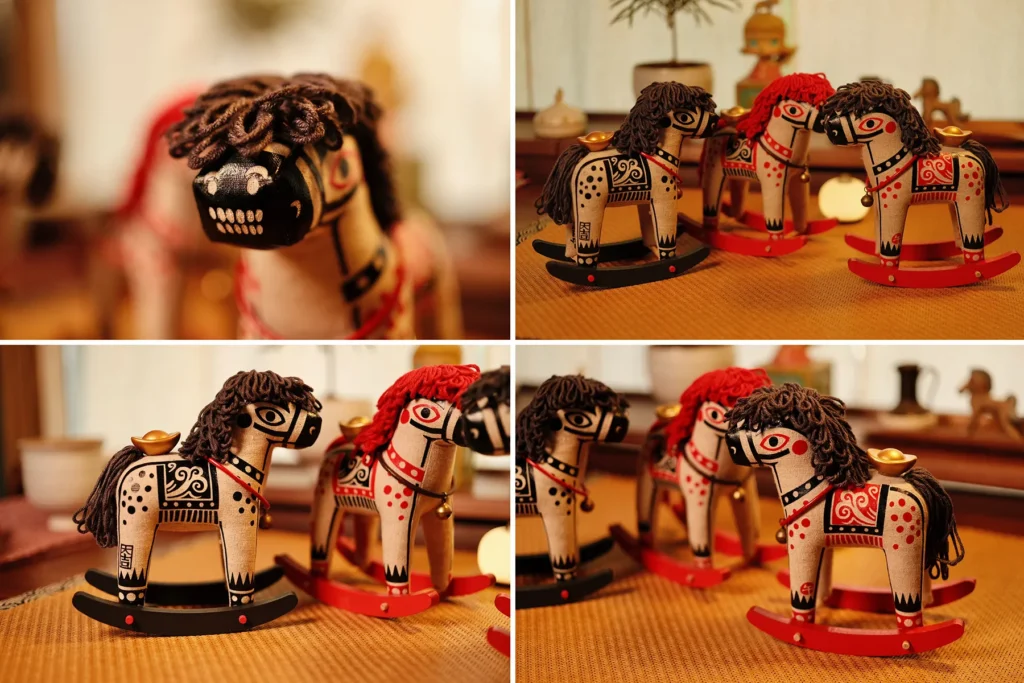
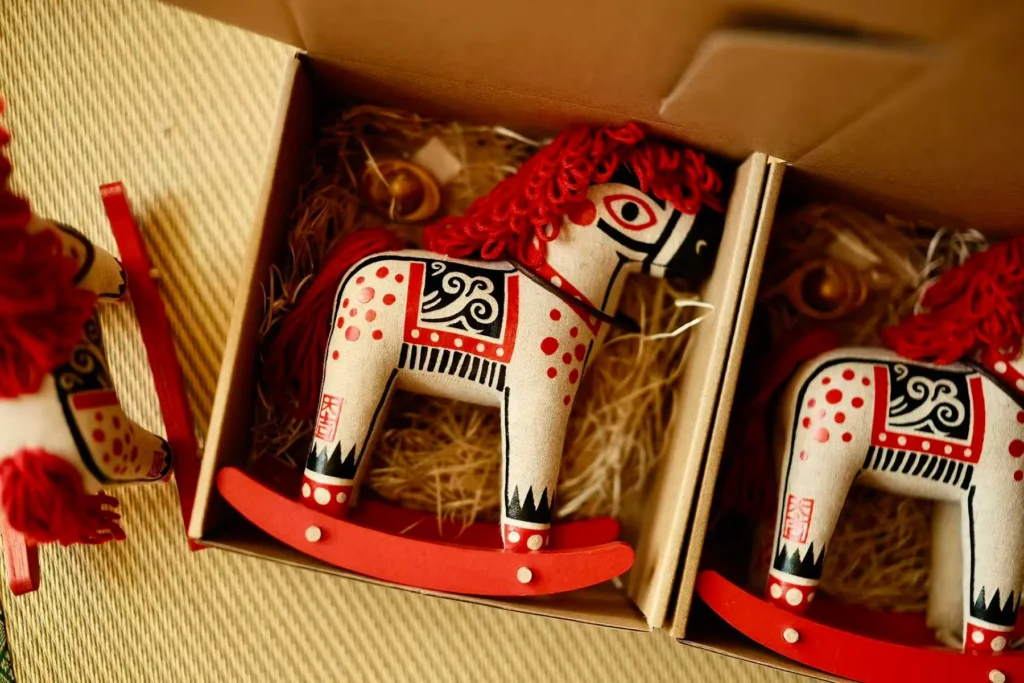
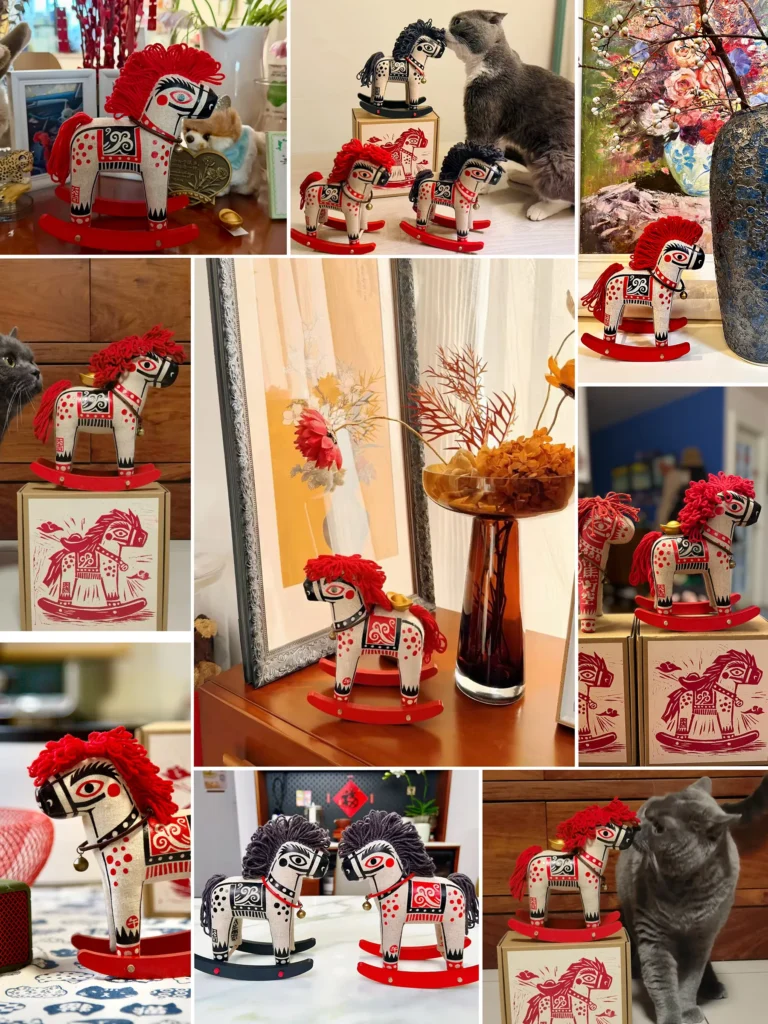
From the very beginning, I had wanted this zodiac horse to become a childhood rocking horse—the kind that once stood inside old photo studios.
But back then, I had no practical way to produce the curved wooden rocker base in small quantities.
Years later, while designing another zodiac creature called Gugu Chicken, I began experimenting with laser-cut wooden structures.
And suddenly, the solution appeared.
The next horse had to stand on a rocking frame.
A true rocking horse.
A happy one.
It solved another old problem too:
cloth horses rarely stand evenly on all four legs.
The rocker transformed instability into movement.
A flaw became part of the design.
The Mane Problem
I have always preferred natural materials:
cotton fabric, cotton rope, wood, metal.
But the mane of the earlier horse never satisfied me.
Dyed cotton rope faded under long exposure to light.
The twisted strands slowly unraveled over time.
I even experimented with crocheted loops made from cotton rope, but the material was stubborn and stiff.
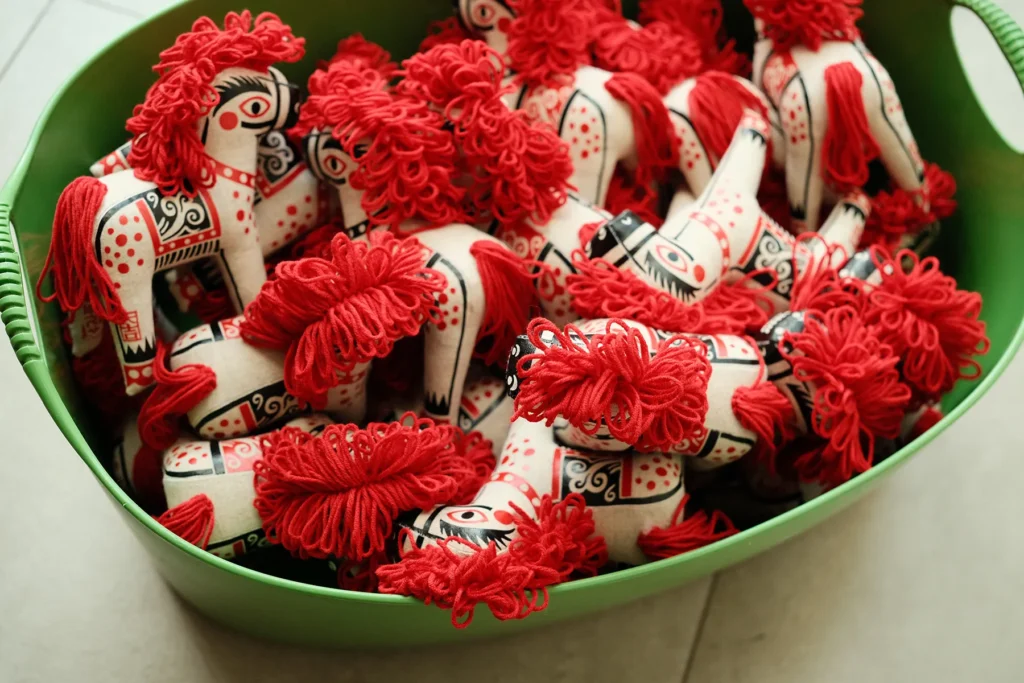
Eventually, I chose a softer yarn commonly used in crochet dolls.
Not perfectly natural—
but durable, vivid, and stable.
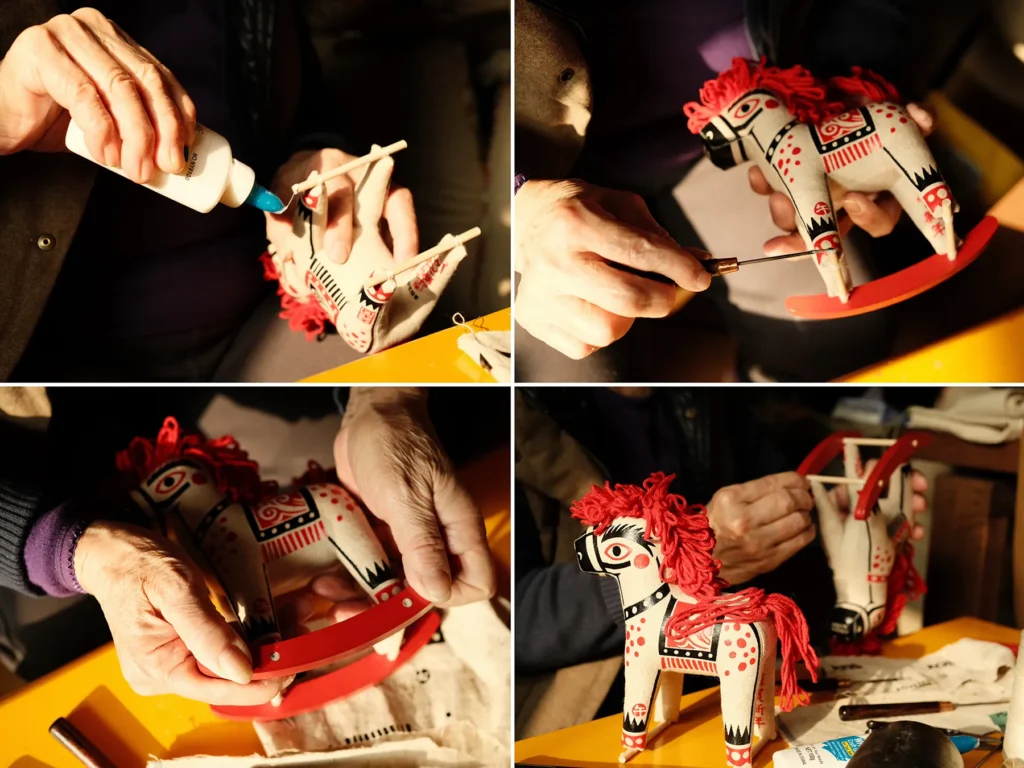
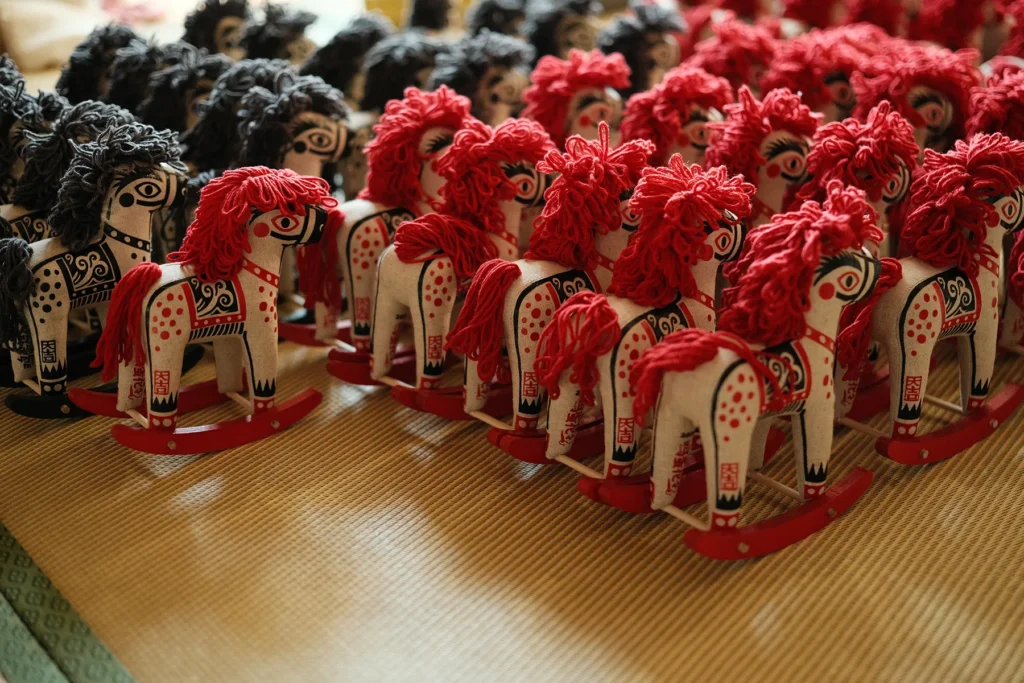
A single set of mane and tail curls requires at least forty minutes of crochet work.
Attaching them to the horse takes another forty.
Time is honest.
No stitch is wasted.
Letting Materials Keep Their Imperfections
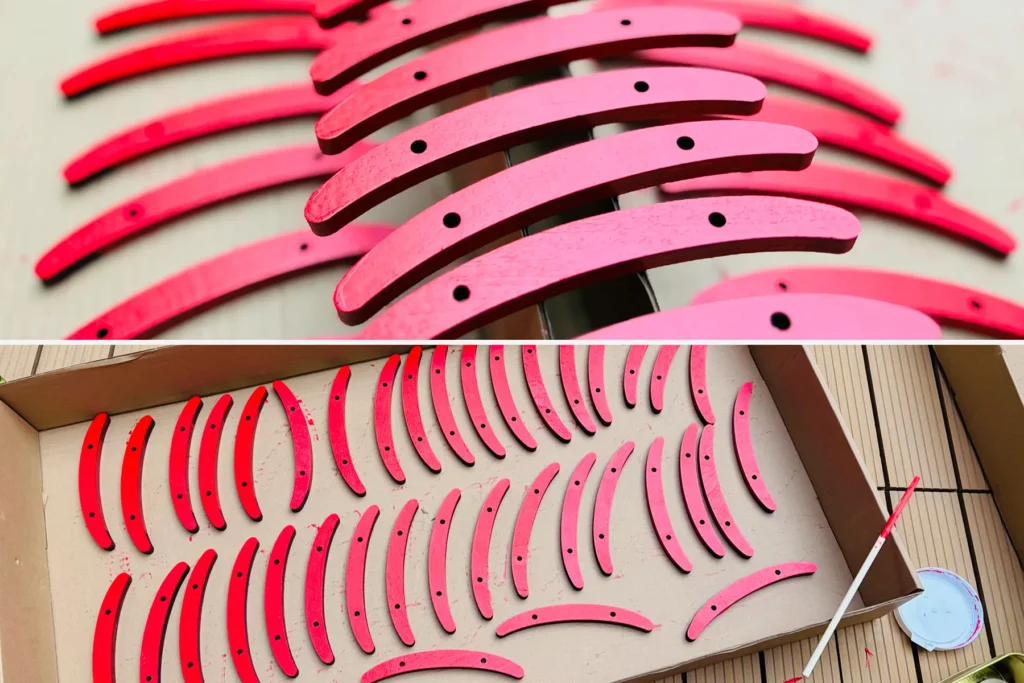
Painting the wooden rocker seems simple at first.
But it requires patience more than skill.
Layer after layer.
Slowly and evenly.
Sometimes air bubbles appear.
Sometimes one side of the wood becomes smooth while another remains rough.
Basswood absorbs paint unevenly along its edges, leaving marks that cannot be fully controlled.
Not everything becomes perfect.
And lately, in this era of industrial precision and AI perfection, I have started wanting to quiet the part of myself that constantly pursues flawlessness.
The bubbles.
The rough grain.
The uneven surfaces.
They are the material’s own story.
Together with the warmth of hands, the mood of weather, and the passing of time, they become part of the object itself.
Handmade work is never only about the final form.
It is a record of time and life.
Difficulty Is Not the Point
I once asked my mother (雞蛋奶奶, “Egg Grandma”):
“Where does the horse rank in difficulty among the twelve zodiac creatures?”
She paused, unsure how to answer.
So I asked again:
“Surely it’s less complicated than the dragon… but harder than Tongyao Tiger?”
She replied calmly:
“If you simply follow the steps one by one, there is no such thing as difficult or not difficult. I never think about that.”
And suddenly I understood something.
When people are deeply focused, they do not live inside the question of whether something is hard.
They live only inside the moment of making.
Horses from the Tang Dynasty
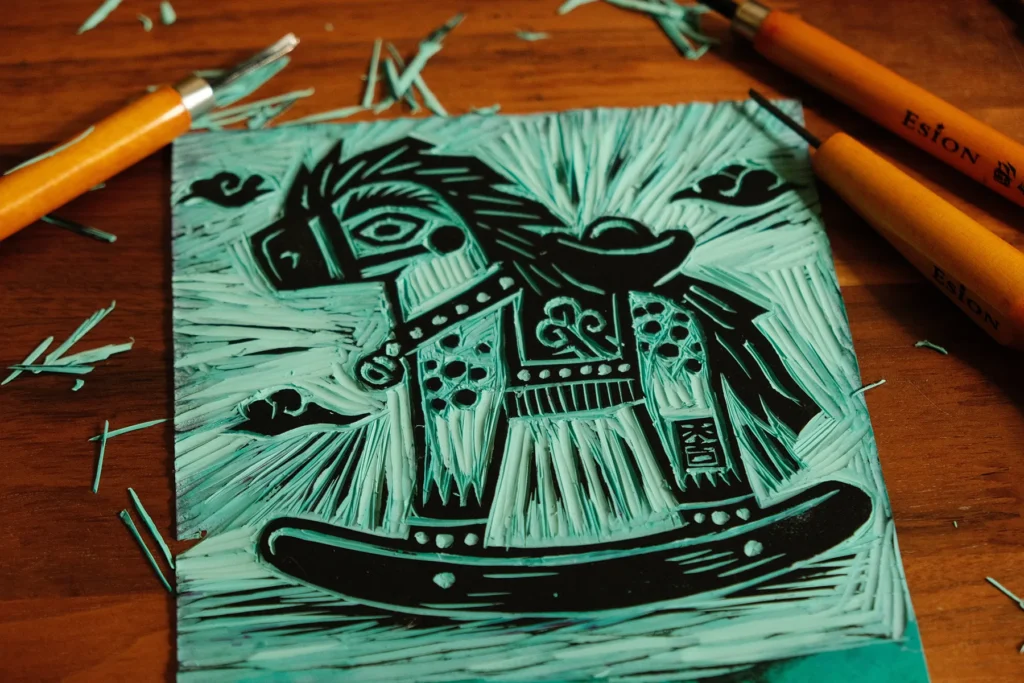
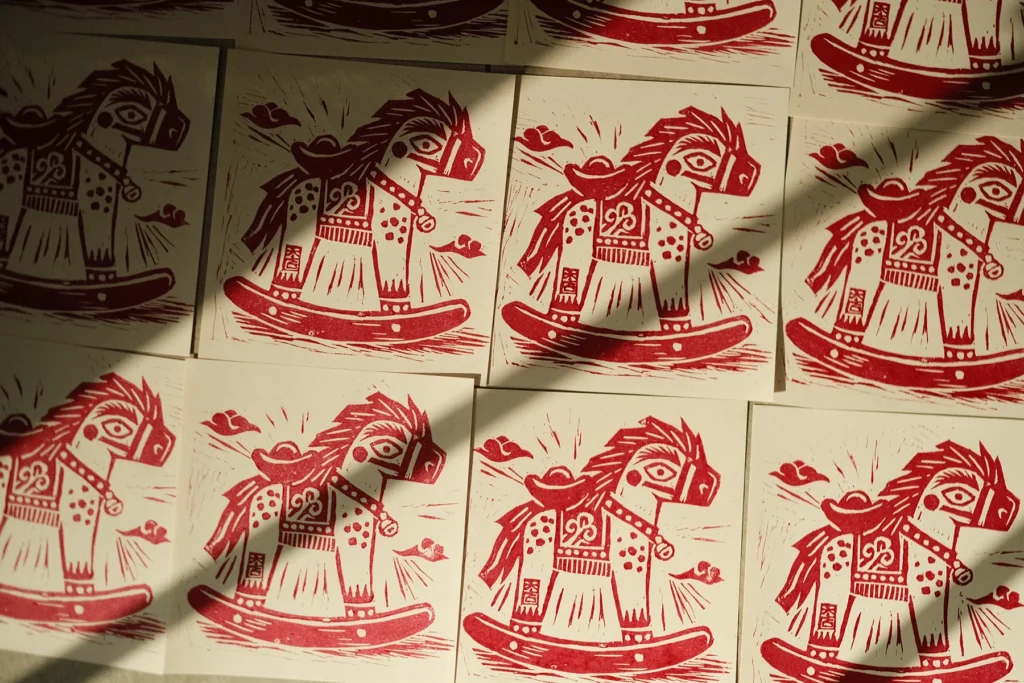
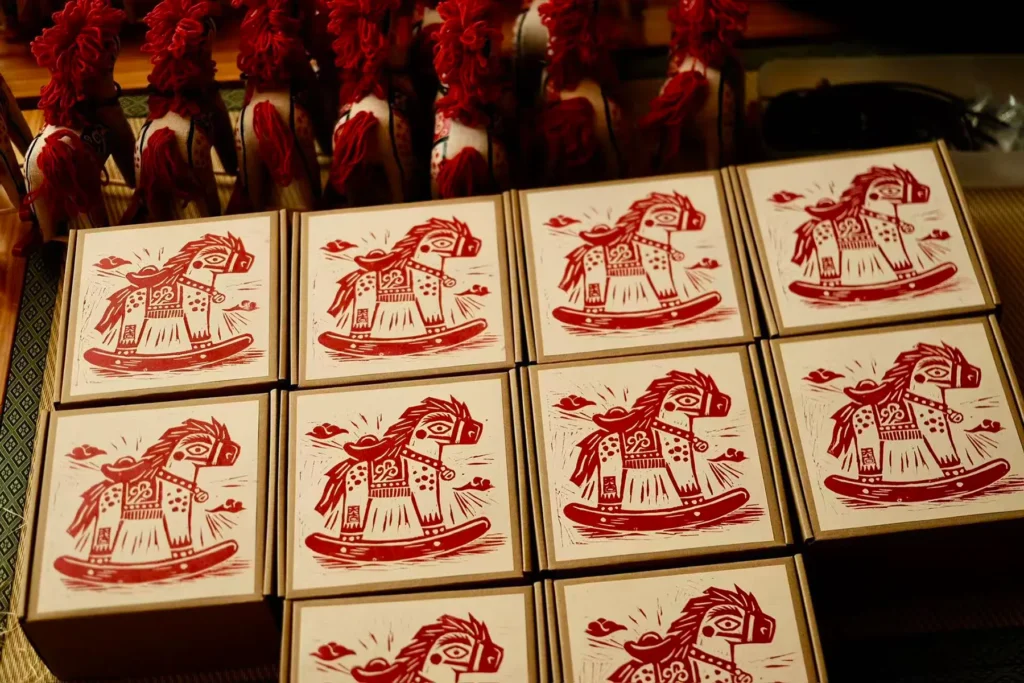
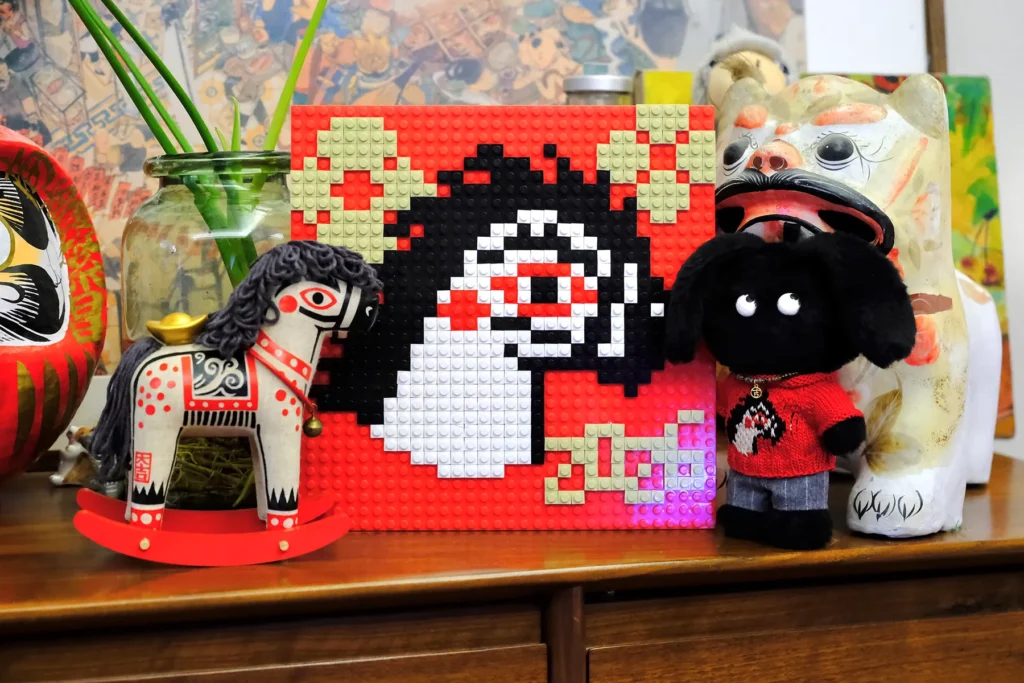
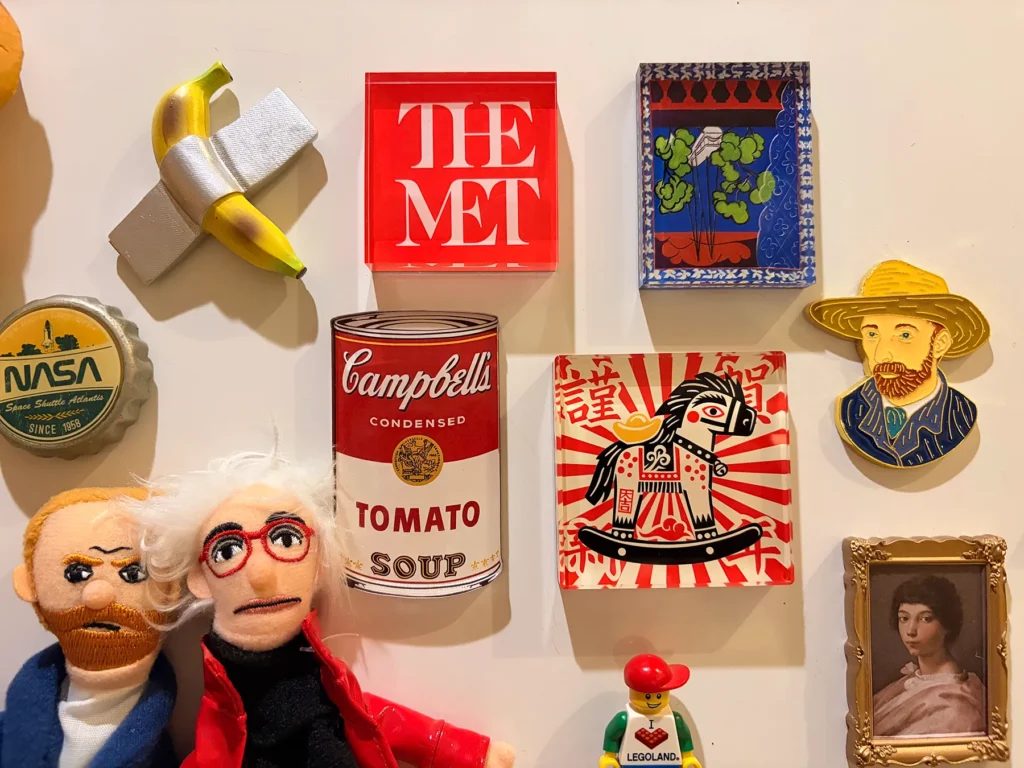
This year’s cover print was carved by one of my closest friends, a printmaking artist trained at the Hubei Institute of Fine Arts.
He complained jokingly that simple rubber block carving felt awkward compared to formal printmaking.
I told him not to carve too carefully.
I wanted the feeling of something spontaneous.
After all, I print rather casually too.
By the end of carving, he announced that his eyesight had officially entered the age of reading glasses.
This spring, I joined an art study journey through the Tang imperial mausoleums.
It fulfilled a promise first spoken nearly twenty years ago between old friends.
Some moments in life feel mysteriously destined.
Not because they happen quickly—
but because they quietly wait for us.
At the mausoleums, I finally stood before the stone horses, lions, and guardian figures I had seen for years in paintings and books.
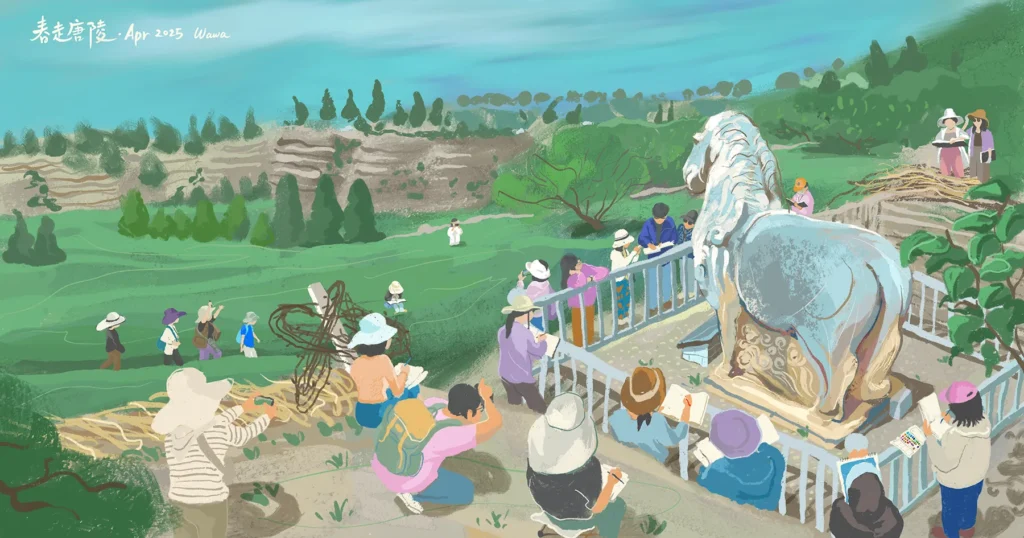
As I left Jianling Mausoleum, I stayed behind alone for a moment beside my favorite winged stone horse.
I took a photograph with nobody inside it.
Later at home, I edited each classmate from the journey back into the image one by one.
That journey also became part of the horse itself.
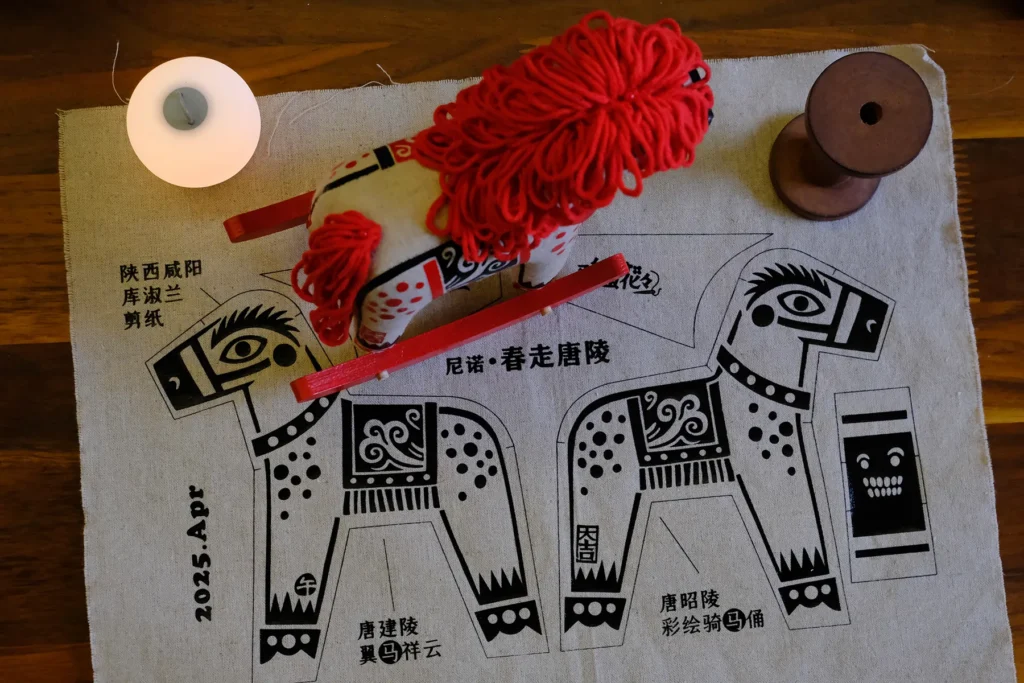
The cloud motifs on the saddle came from Tang dynasty winged horses.
The spotted markings were borrowed from painted ceramic horse figurines.
The horse’s eyes and brows still carried traces of the folk paper-cut horses I loved years ago.
And perhaps that is how inspiration truly works.
Not by endlessly searching for references—
but by suddenly encountering something that stands before you at exactly the right moment.
Something you fall in love with immediately.
Those encounters are the ones worth keeping.
Qianli Ma(千里馬)or Rocking Horse?
My friend Huazhuzhu and I originally gave this zodiac horse a grand name:
Qianli Ma — Thousand-Mile Horse.
A legendary horse capable of traveling immense distances.
But after finishing the rocker base, I joked with her:
“The ambitious thousand-mile horse has become a rocking horse that never leaves its place.”
If I had to explain it properly, perhaps it means:
Gathering strength quietly, while aiming far beyond the horizon.
Still, everyone kept asking:
“Has the rocking horse been finished yet?”
And honestly—
Rocking Horse feels closer in spirit to Tongyao Tiger, Lantern Rabbit, and Gugu Chicken.
Filled with childhood.
Filled with play.
Traveling Slowly
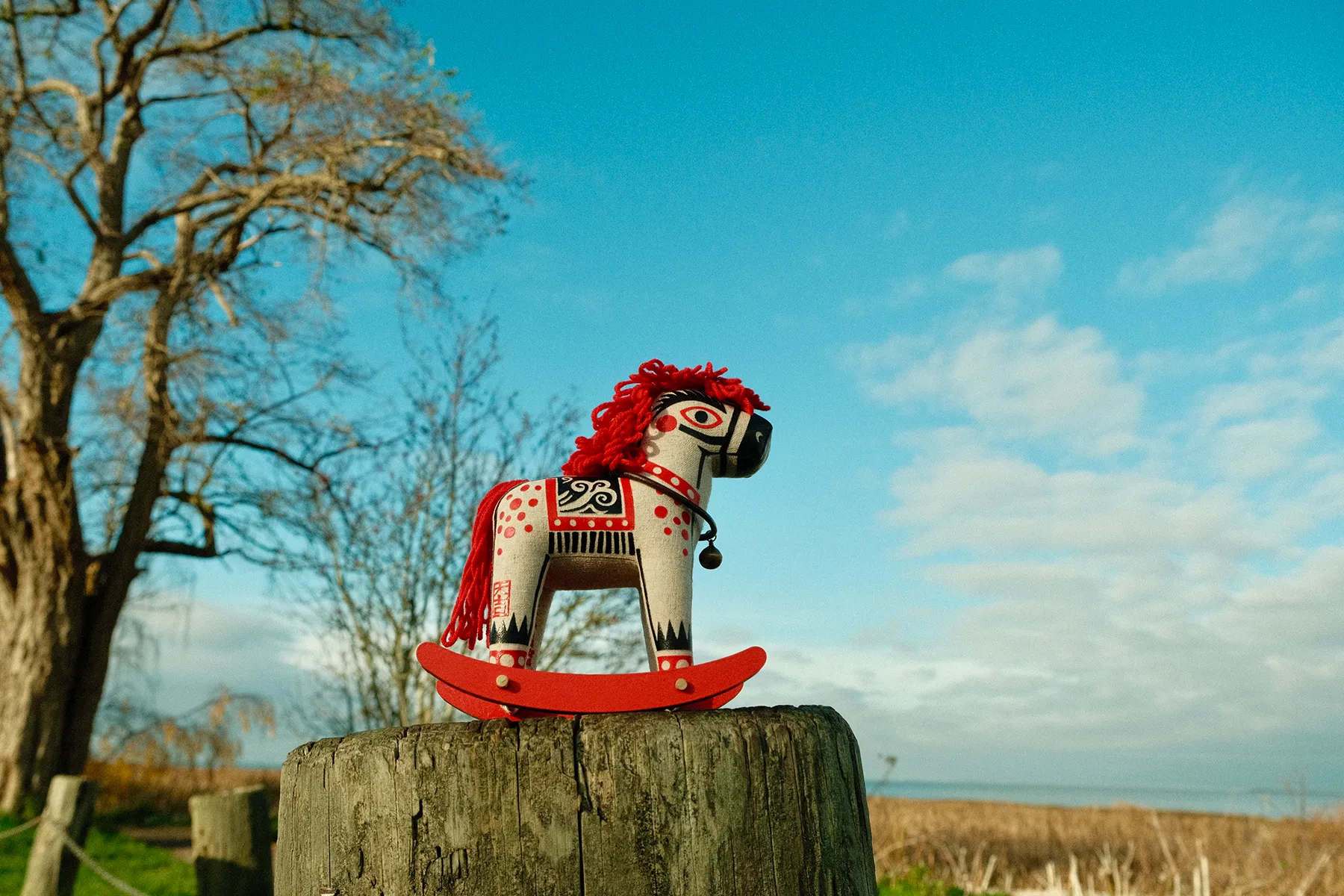
In the winter of 2025, I brought Rocking Horse to Canada.
It traveled beside the ocean and harbors of Vancouver, through Banff and Calgary, and into the first snowfall of the year.
A small New Year blessing carried far from home.
Perhaps that is what this horse was always meant to do.
Not race endlessly forward.
But rock gently in place—
waiting for the right moment to begin.
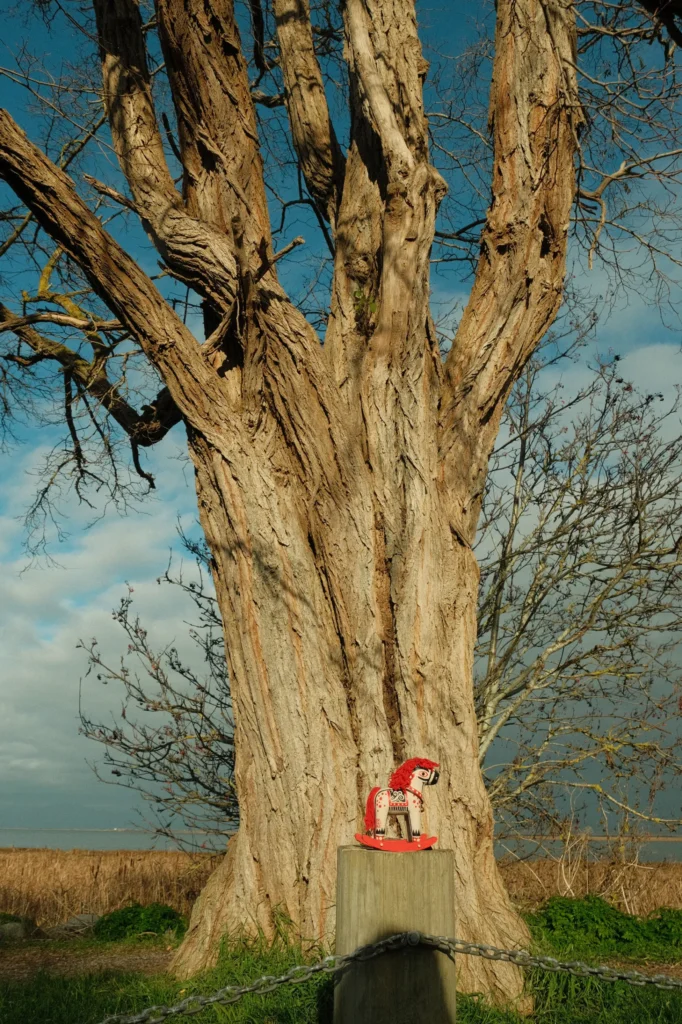
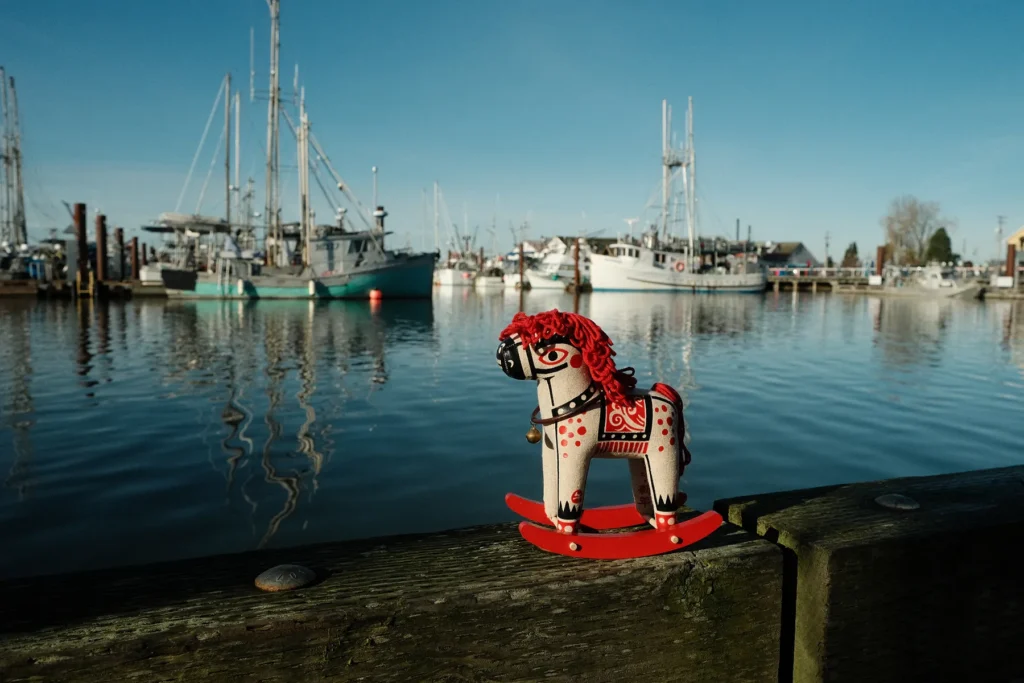
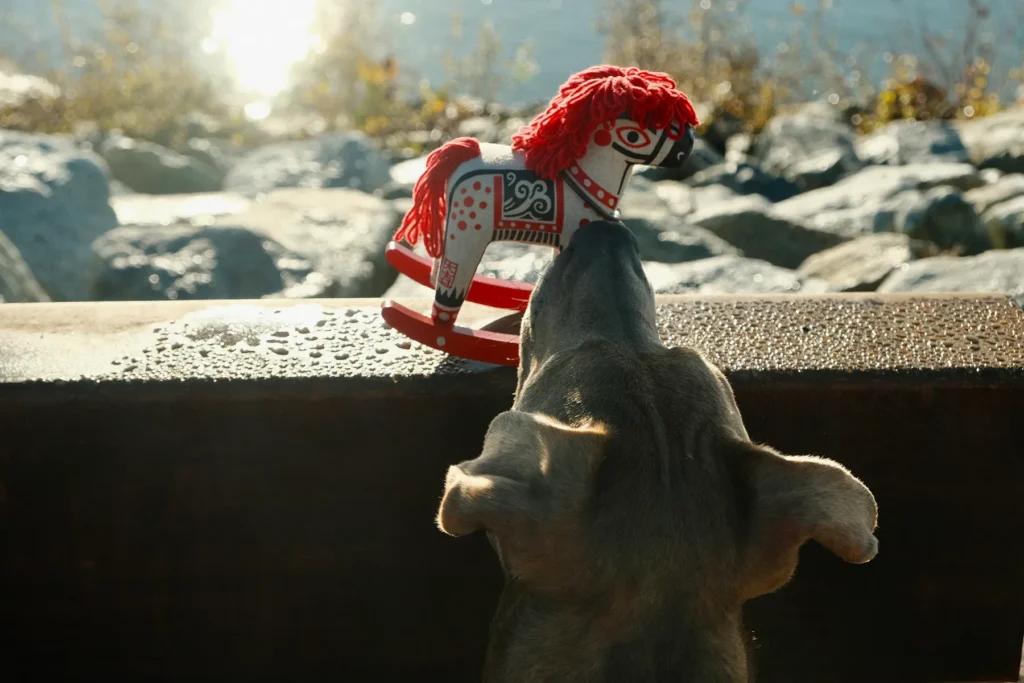
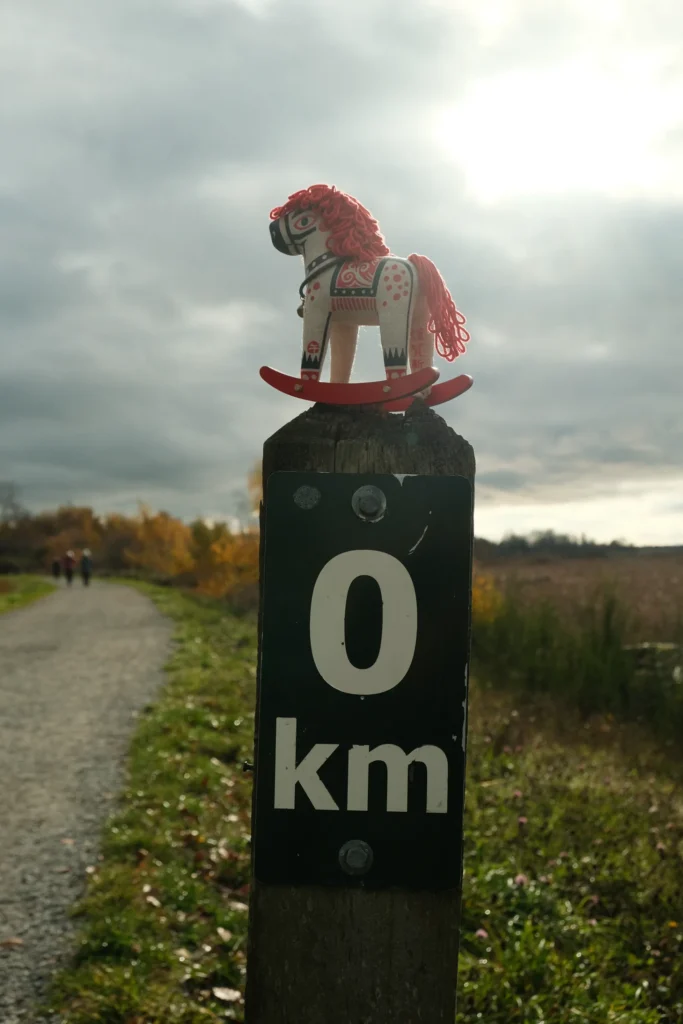
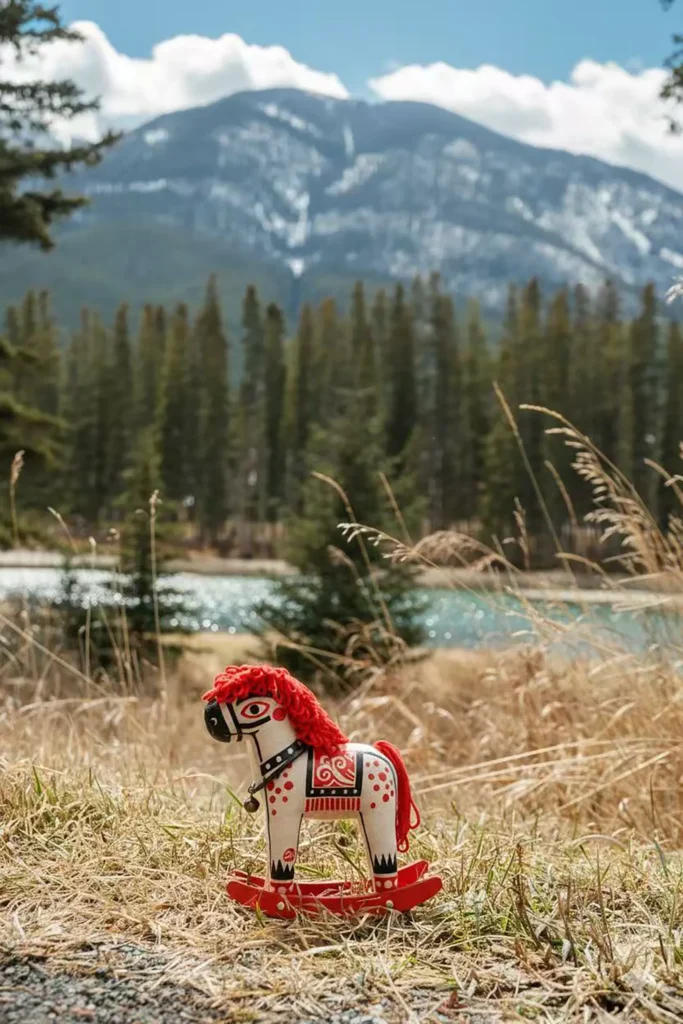
Photographed in Vancouver and Banff National Park.
Slowly.
Rock a little.
Move in your own rhythm.
Gathering strength quietly.
Aiming for a thousand miles.
—— OVER ——