





This story is also available in 繁體中文.
The Year When the Pig Turned Wild
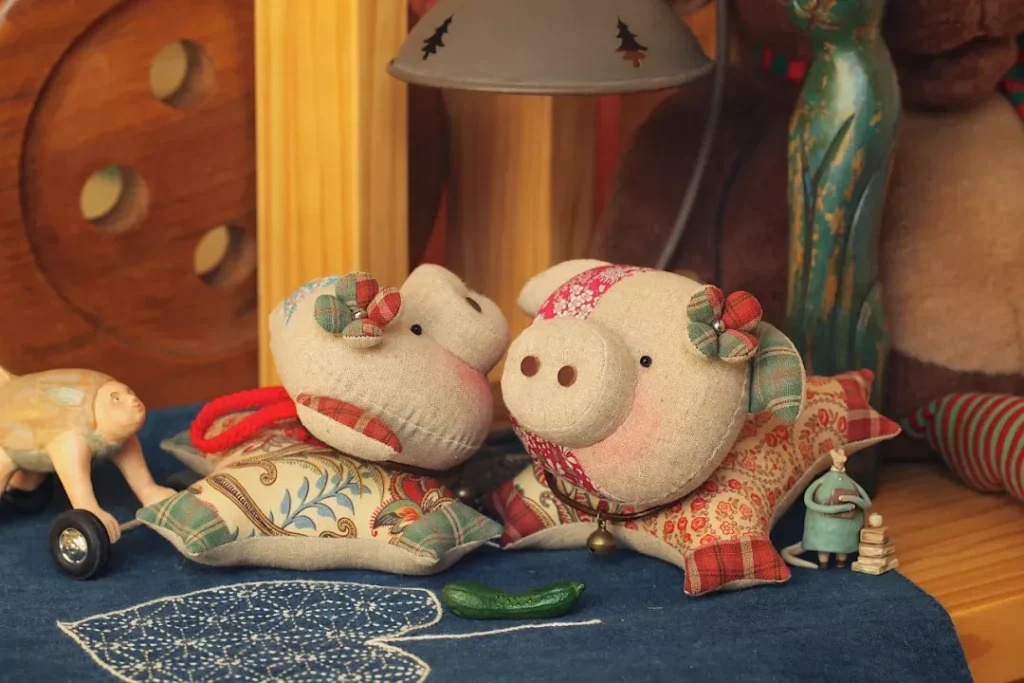
Twelve years ago, I designed a little pig called Huahua Piggy.
It was soft, round, and cheerful—almost overly polite in its cuteness.
Not long ago, an elderly woman even called me specially just to say:
“Among all your dolls, the most beautiful one is still Huahua Piggy.”
I remember smiling for a long time after that call.
Some creations quietly stay in people’s memory longer than we expect.
A Pig for the New Year
This year’s zodiac pig began differently.
It was part of my New Year series, where each animal carries a small cultural motif—something subtle, something playful.
Since I started using painted wooden panels in my work, the form of my plush creatures also began to open up.
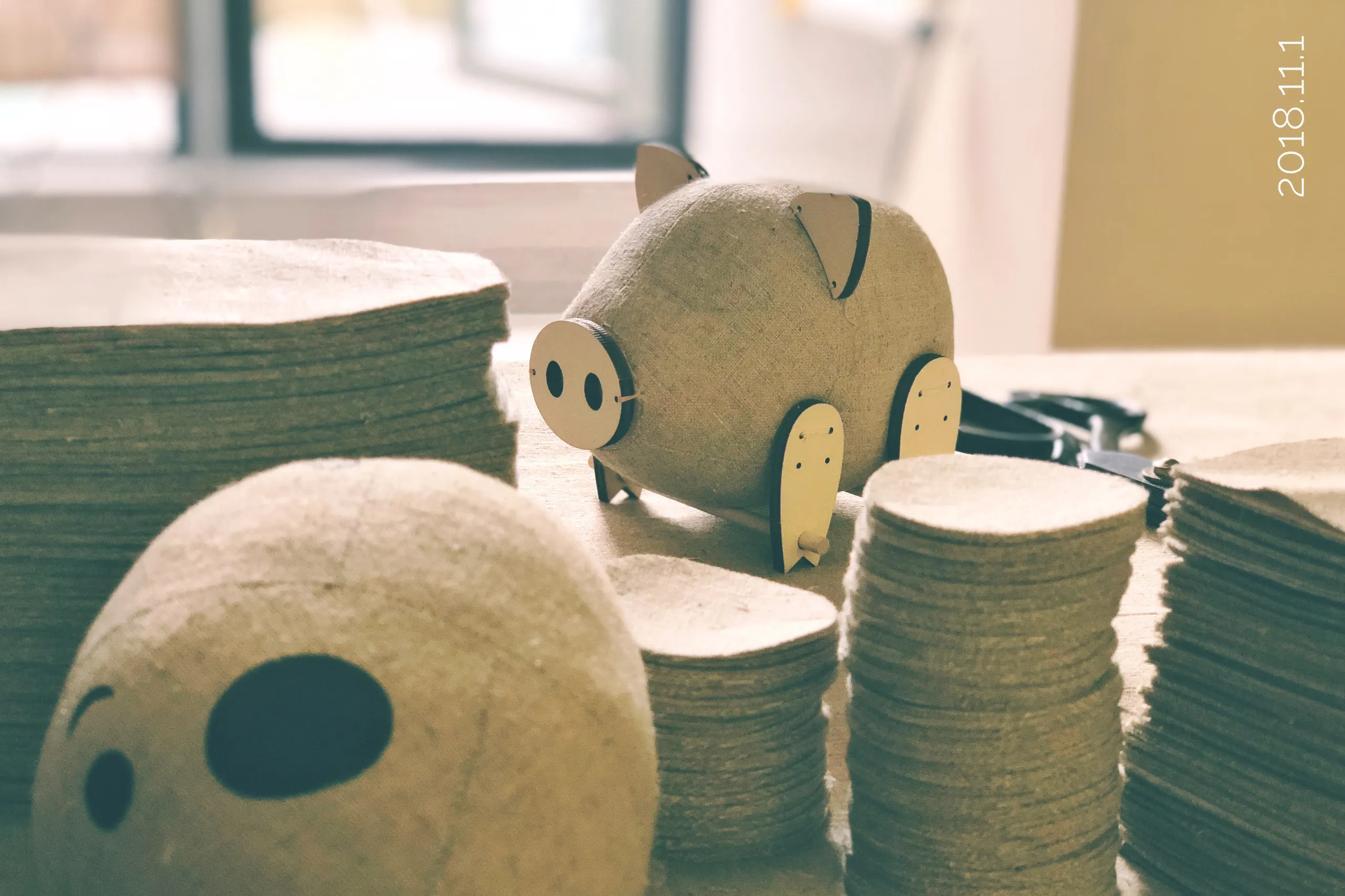
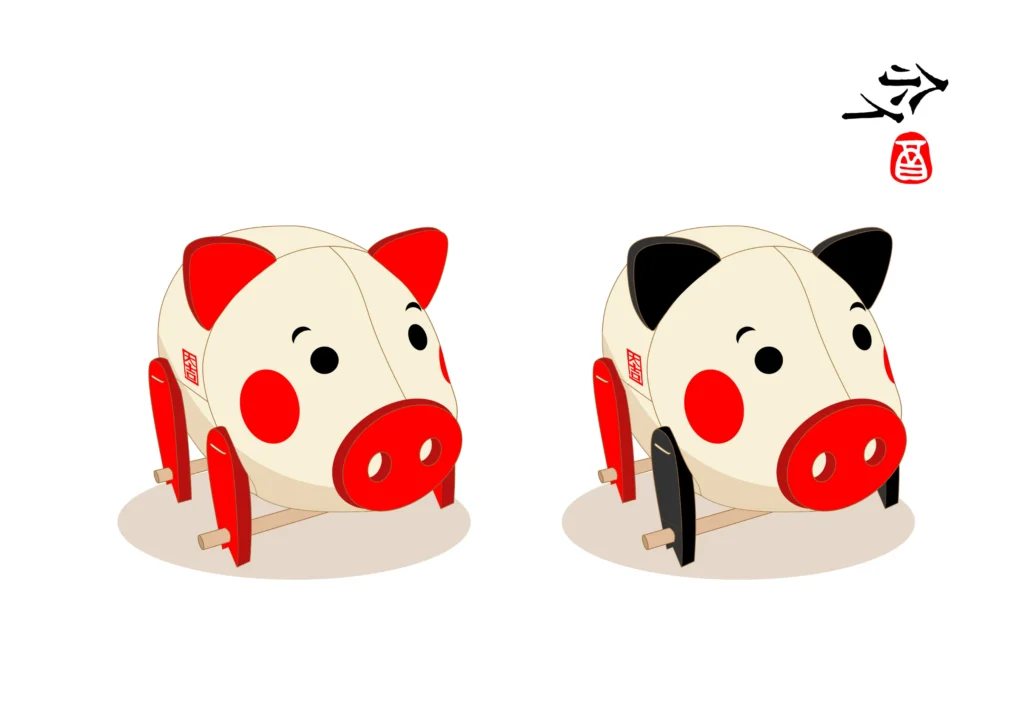
When you remove the wooden structure, the pig’s body suddenly looks like a simple water bottle.
Strangely ordinary.
So I reshaped it again and again—at least five structural revisions.
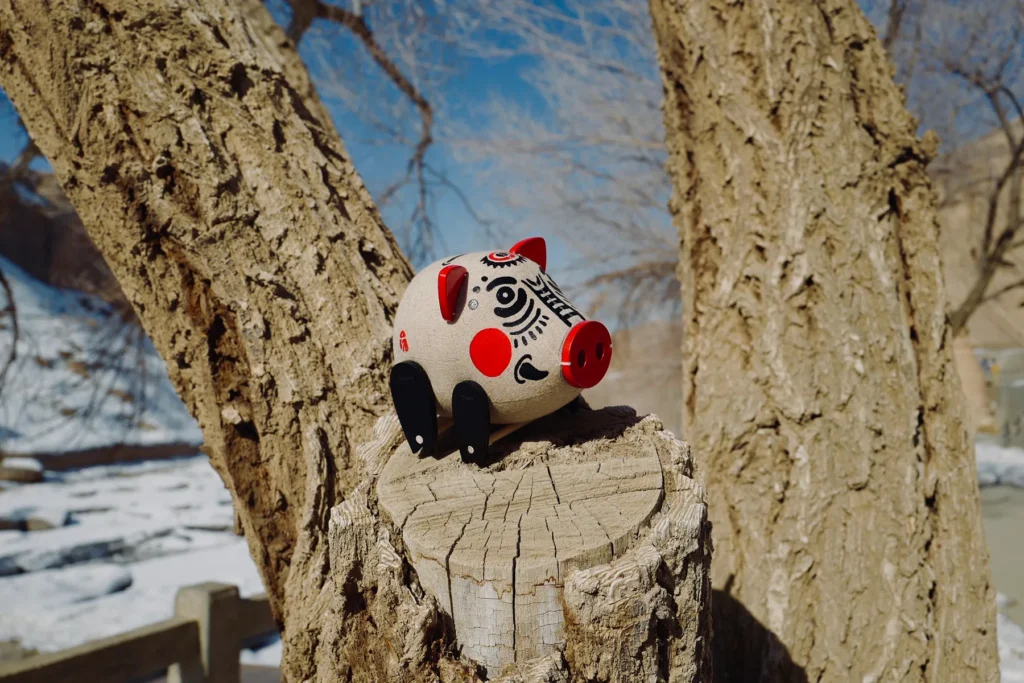
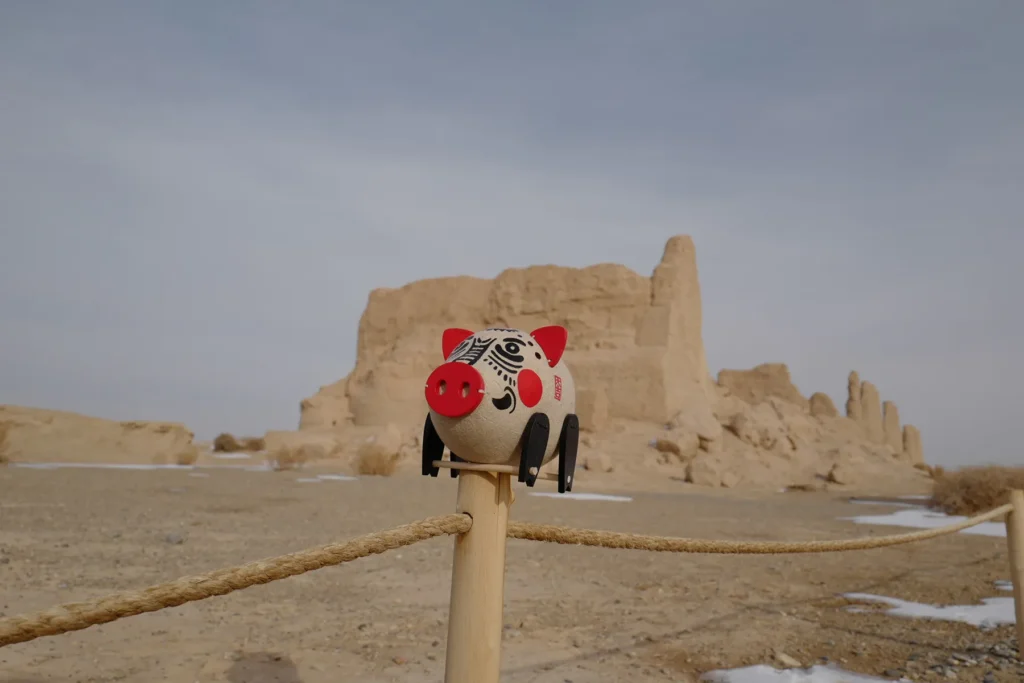
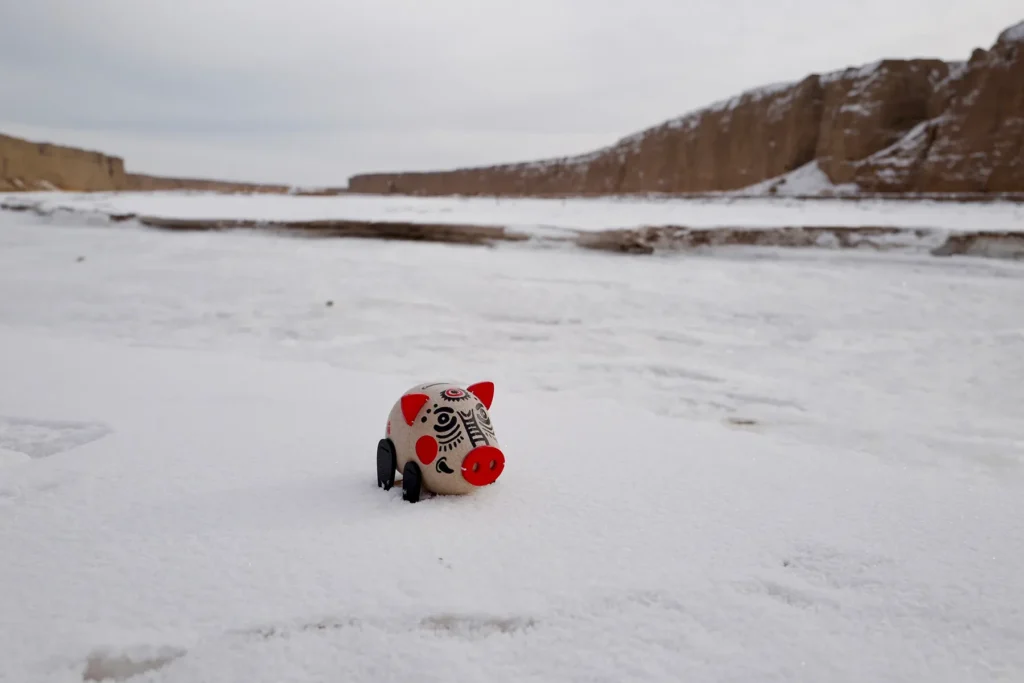
A slightly raised snout.
A round, generous backside.
A body that feels stable, but not rigid.
The pig slowly learned how to exist.
Before the Face Appeared
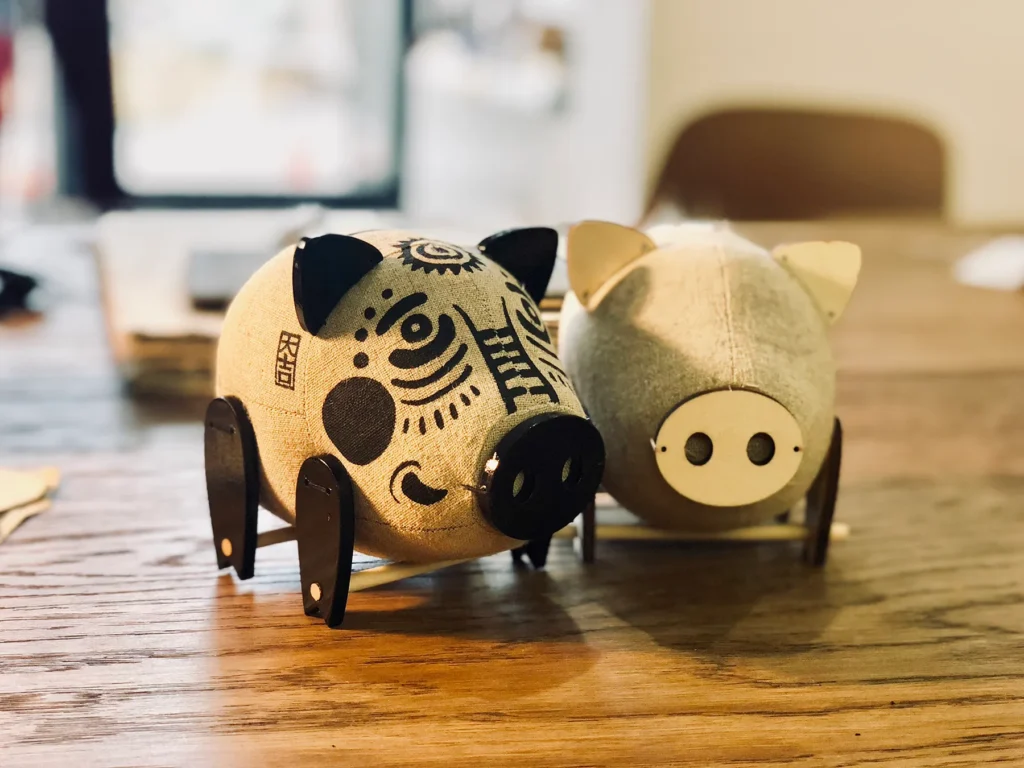
After a long summer break, I finally began working on the pig’s expression.
At first, I planned a very safe design:
rosy cheeks, dot-like eyes, universally “cute.”
A face that anyone could like immediately.
Then I traveled to Montreal.
And everything changed.
The Wild Pig Moment
In Montreal, I visited an exhibition about Picasso and African art.
Something in that visual energy stayed with me.
Roughness.
Distortion.
Directness.
So I began to wonder—
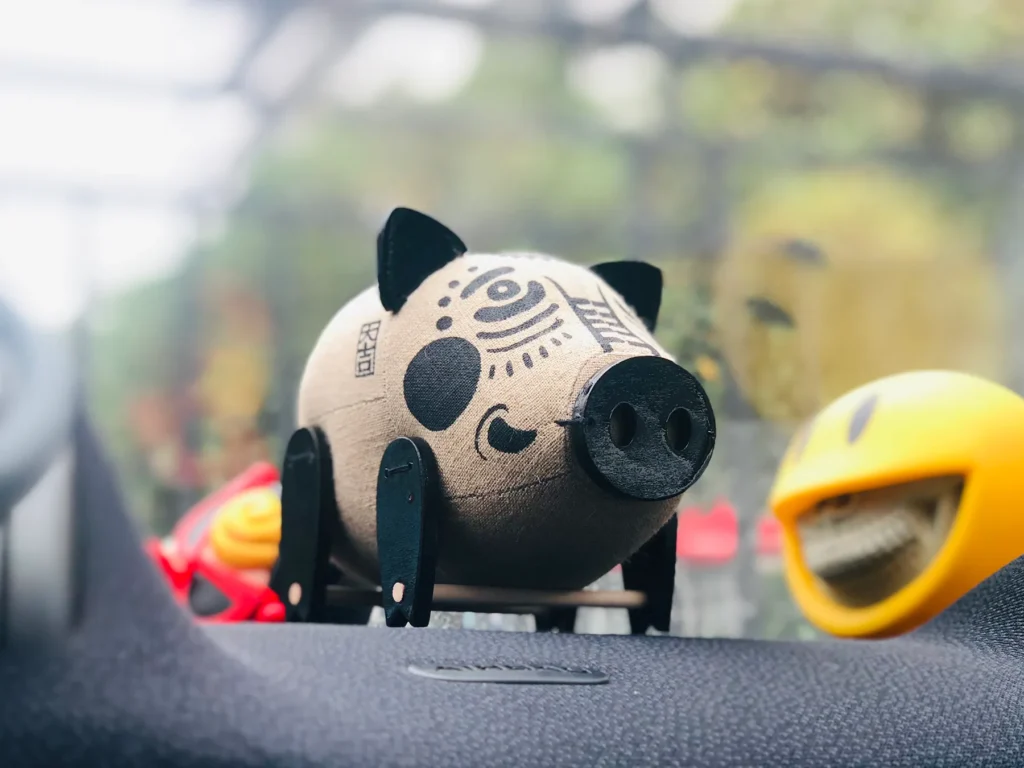
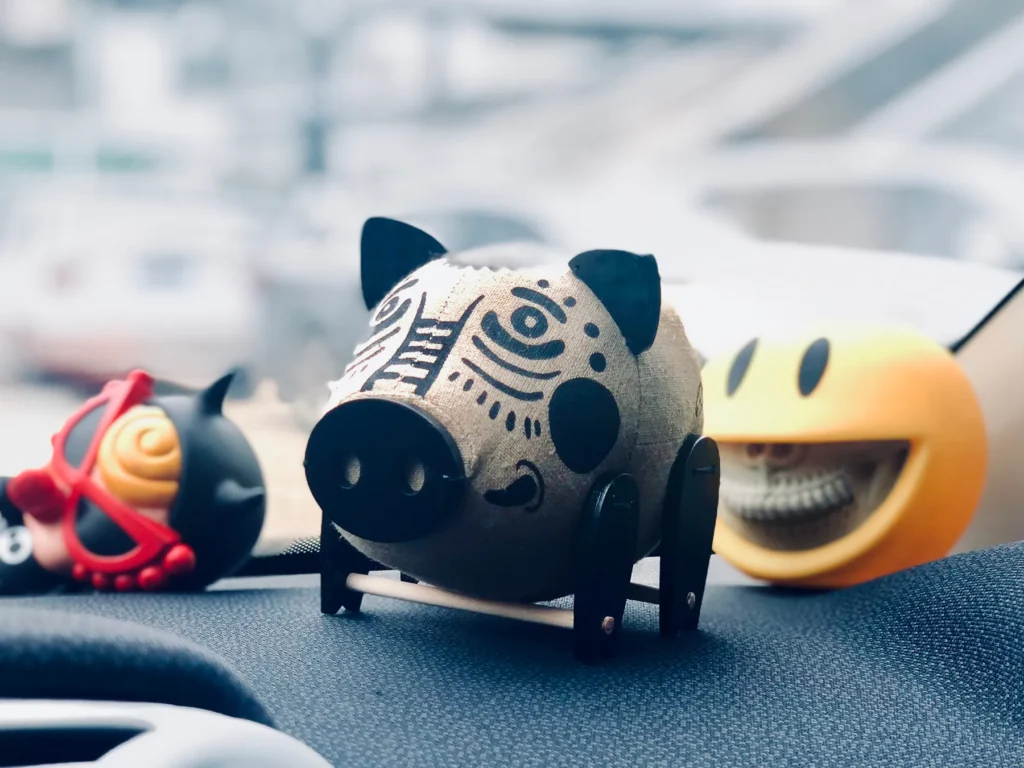
what if this pig was not just cute?
What if it had a wild side?
I even considered learning wood carving in a workshop for a month,
using black walnut wood to sculpt its nose, ears, and legs.
At that moment, I thought:
this might become the pig I truly love.
A few pieces, made only for close friends.
Nothing more.
When the Pig Looked Back at Me
But when I returned and finalized the facial expression,
something unexpected happened.
My “design advisory group” unanimously reacted:
“The wild pig is much more interesting.”
Everyone wanted it.
Not the safe version.
The wild one.
So I followed that instinct.
Symbols Printed on Its Skin
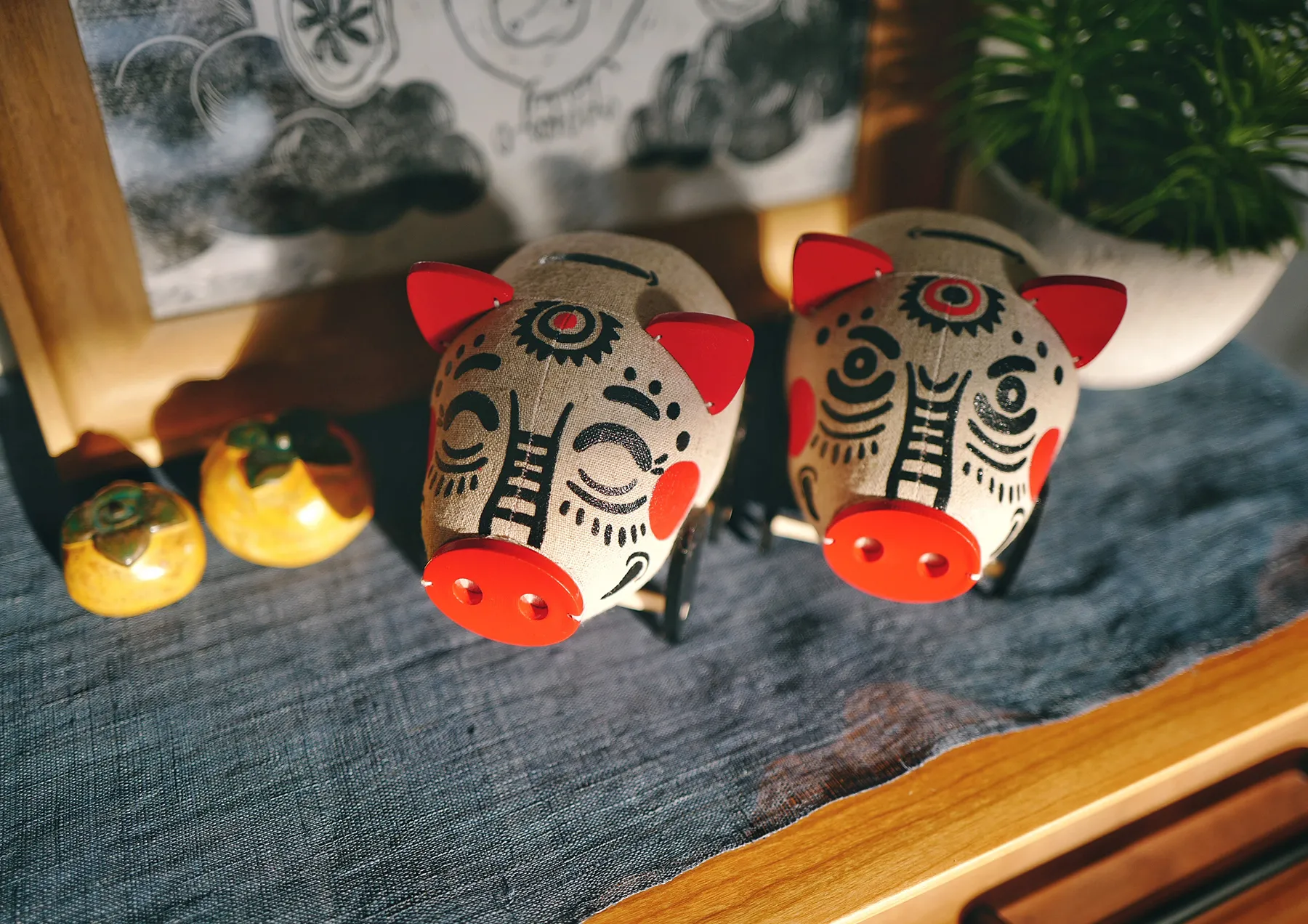
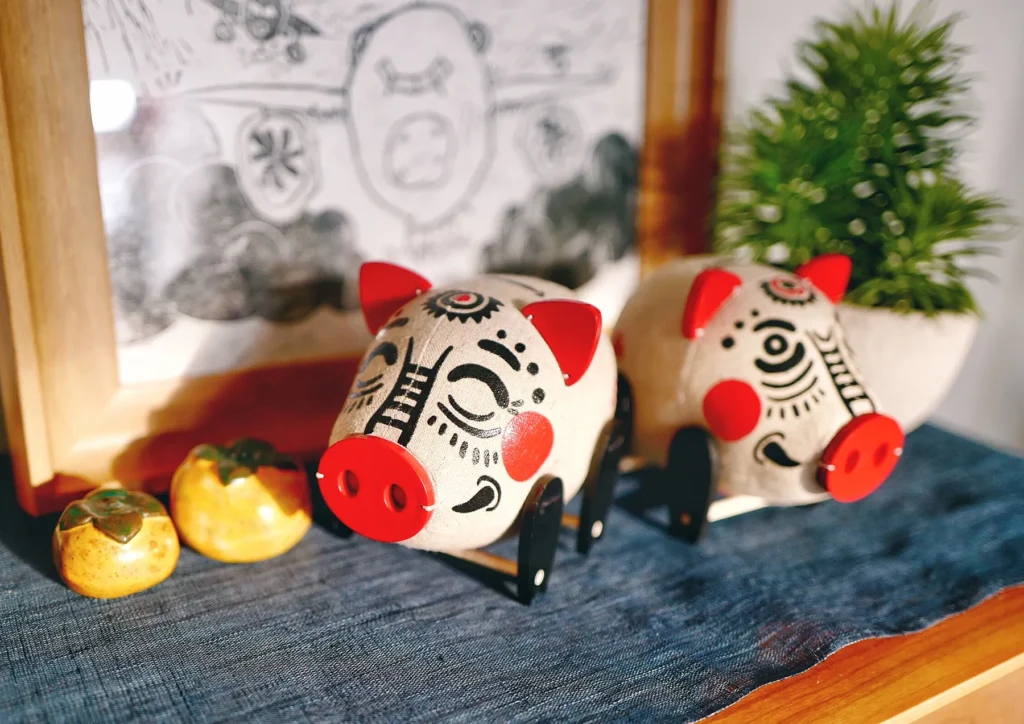
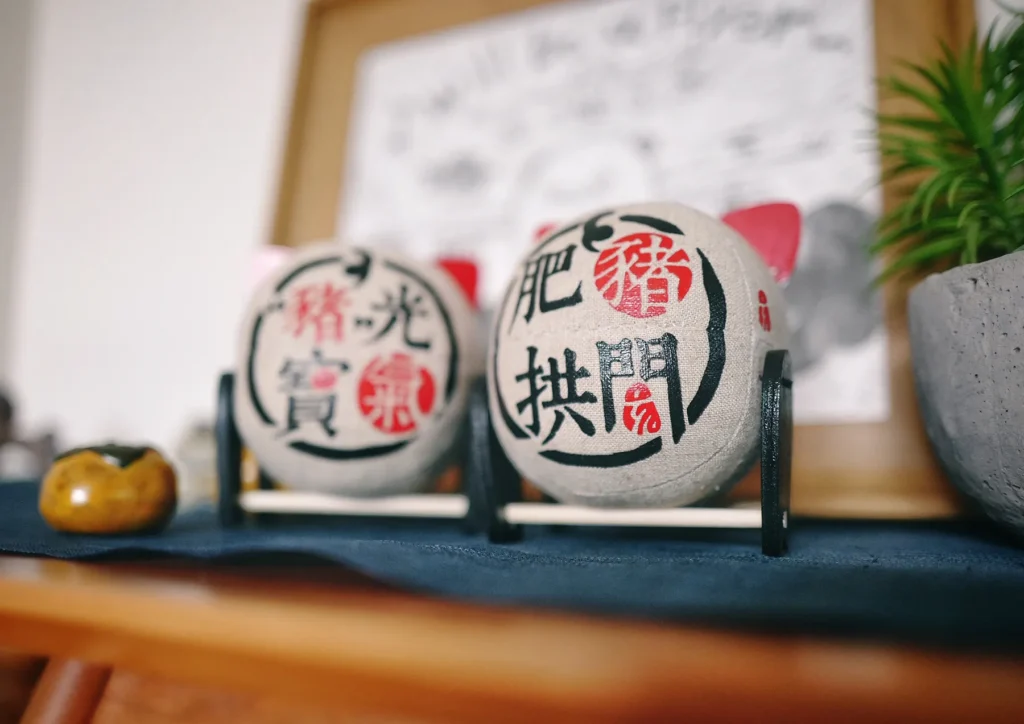
On one side, I printed “Zhuguang Baoqi” (珠光寶氣), paired with a cheerful, smiling face.
On another, “Feizhu Gongmen” (肥豬拱門) comes with the expression of a confident little boss.
May good fortune find its way to your door.
In Chinese paper-cut art, Feizhu Gongmen literally means a fat pig nudging its way through the gate. It is a playful symbol of unexpected fortune arriving at your home all by itself.
A good harvest. Good luck. Prosperity gathered together.
A Pig That Carries Money Inside
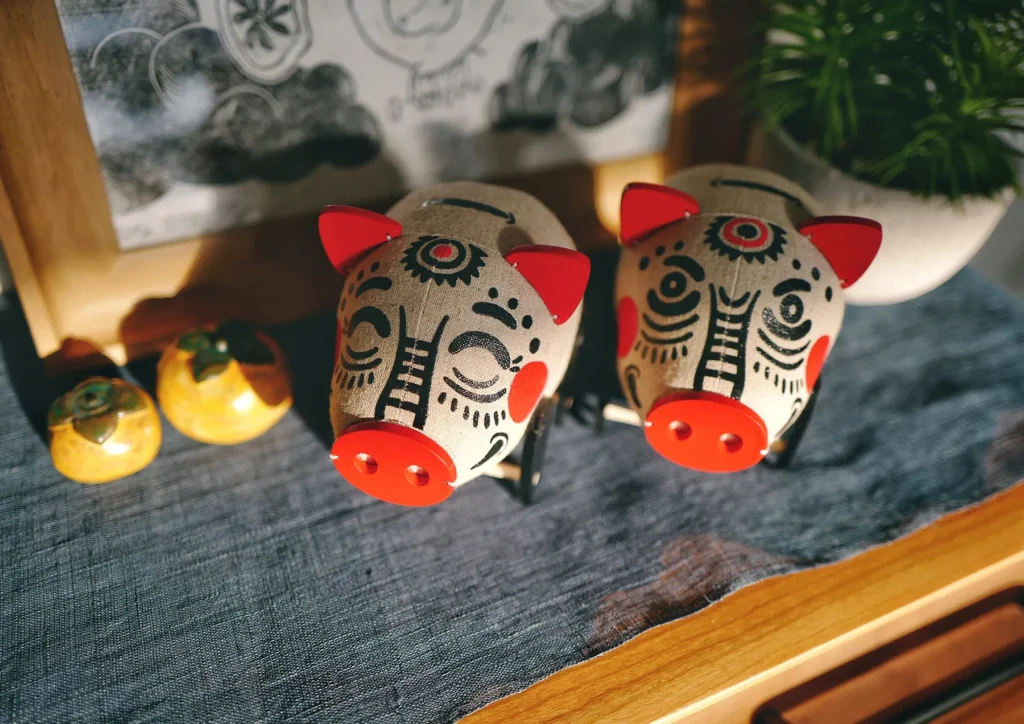
On its back, there is also a small printed detail:
a coin slot.
A playful idea—turning the pig into a small household savings vessel.
Something both symbolic and practical.
A pig that stores luck.
The Making of the Pig’s Nose
One last detail I still love.
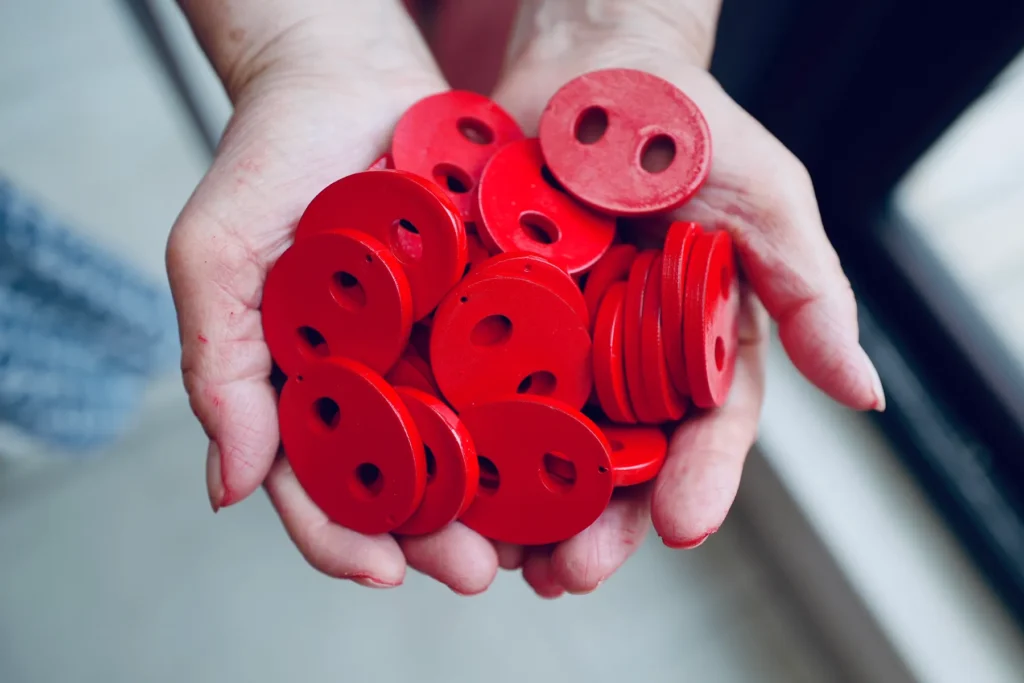
The pig’s noses.
Each one was cut, shaped, and refined individually.
They were made on a breezy October day,
under a sky that could not decide whether it was cloudy or bright.
There is something quietly satisfying about that memory.
Small parts.
Slow work.
No rush to perfection.
A Pig That Changed Its Own Direction
I originally thought I was making a cute New Year pig.
But somewhere along the way,
it became something else entirely.
A pig that carries both humor and wildness.
Both tradition and distortion.
Both sweetness and excess.
Maybe that is what “Fugui Pig” really means.
Not just wealth.
But abundance of character.
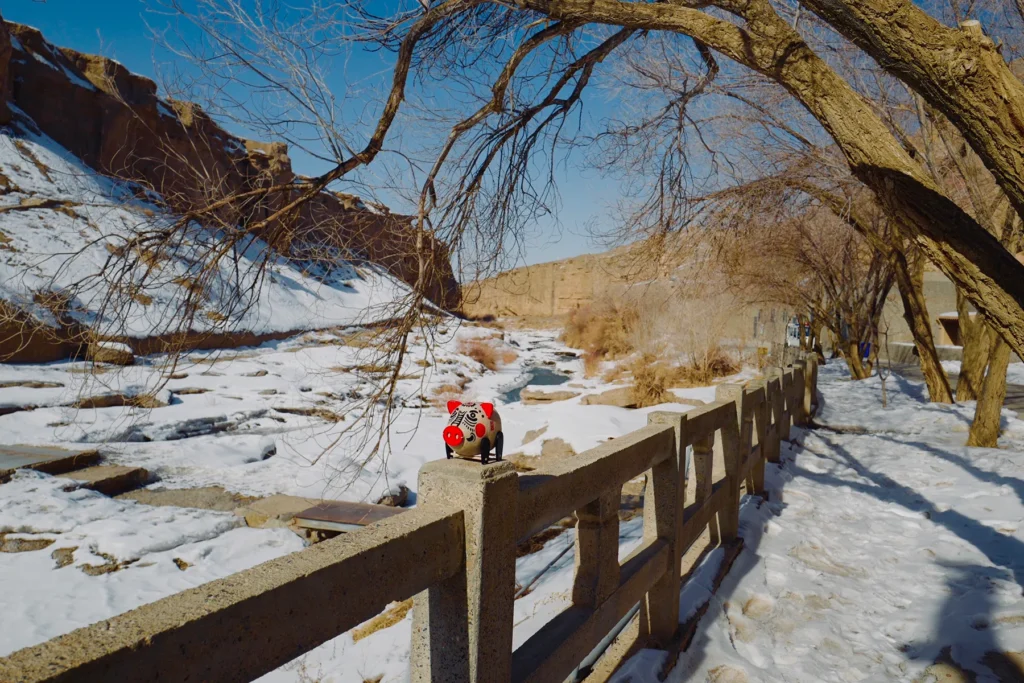
Some pigs are designed to be cute.
Some pigs decide, halfway through, to become something wilder.
This one did the latter.
—— over ——