





This story is also available in 繁體中文.
The Origin of Wangcai
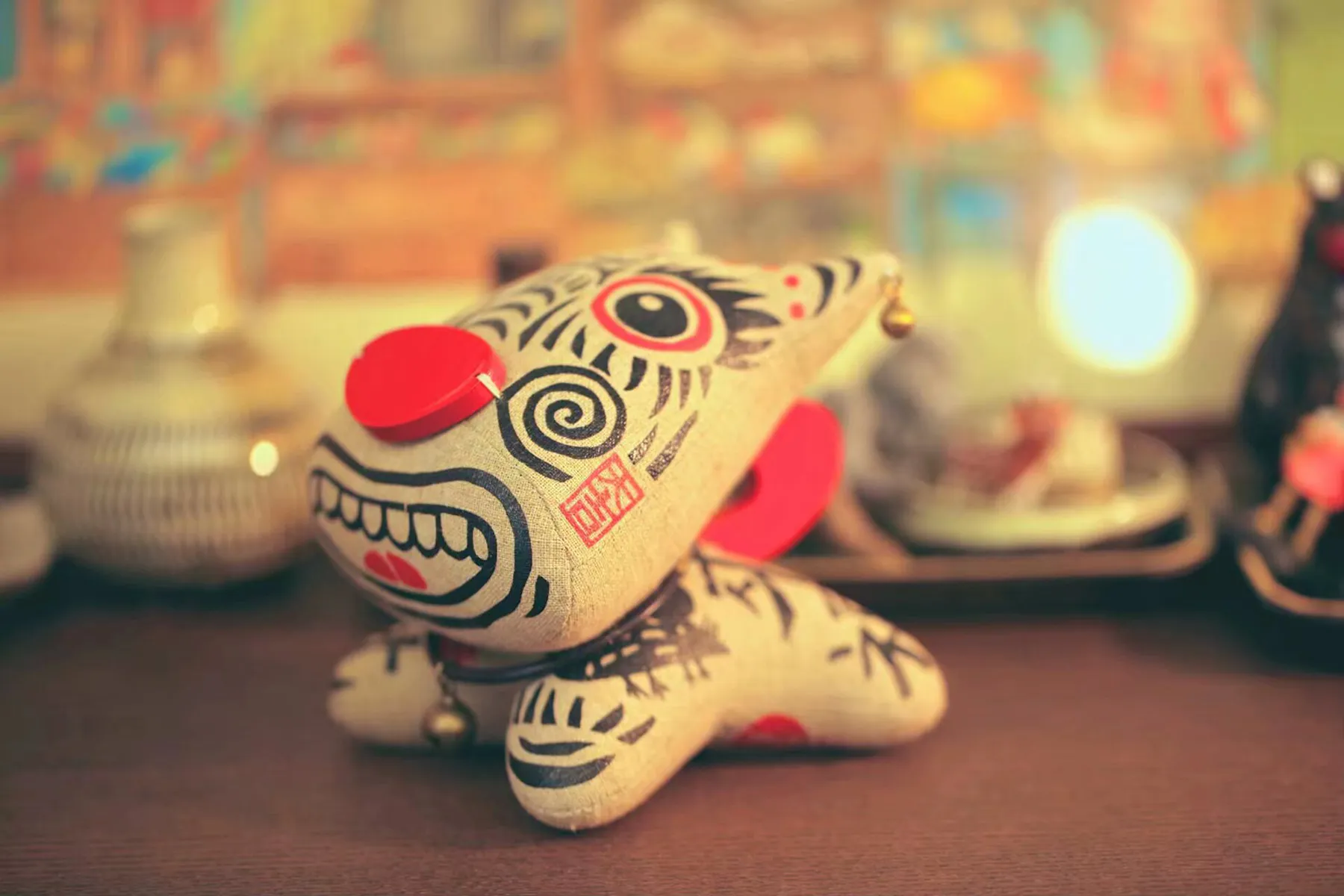
I have always had a special connection with Wangcai (旺財).
Its original inspiration came from my most beloved dog, Dou Dou (豆豆), a little companion who stayed with me for sixteen years.
Wangcai was first designed twelve years ago, on the eve of the Year of the Dog.
At that time, my friend Chunchong (蟲蟲) recommended a folk “Wangcai little dog” design she saw in Computer News.
That New Year, I remember going to the post office every morning, sending out parcels—each one carrying a small Wangcai inside.
I did this again and again, like a quiet ritual.
A Dog That Does Not Need to Look Like a Dog
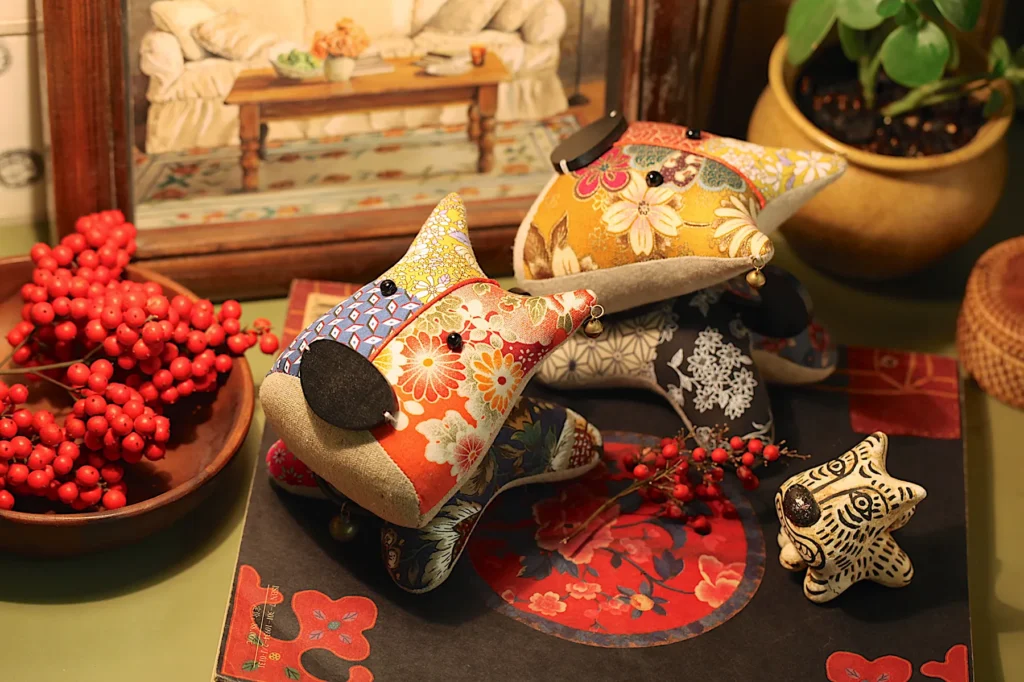
Wangcai never really looked like Dou Dou.
In fact, it didn’t resemble any specific breed at all.
And strangely enough, I have always liked it more because of that.
Over the years, I have made cows that don’t look like cows, bears that don’t look like bears—
and people seemed to like them all the same.
But Wangcai remained the one I was most attached to.
Because whenever I thought about expressing my animals through woodcut, clay, or printmaking—
Wangcai was always the first image that came to mind.
Returning to Wangcai After Twelve Years
This Year of the Dog, I returned to Wangcai again.
Not to redesign it completely—
but to see what it had become inside me after twelve years.
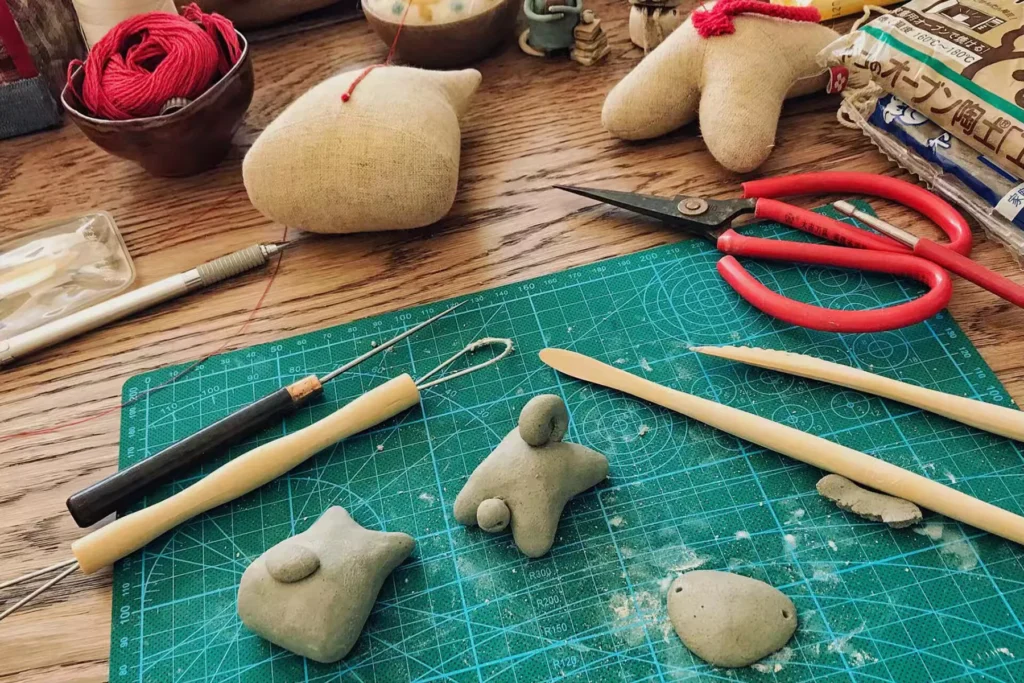
I began, as always, with slow preparation.
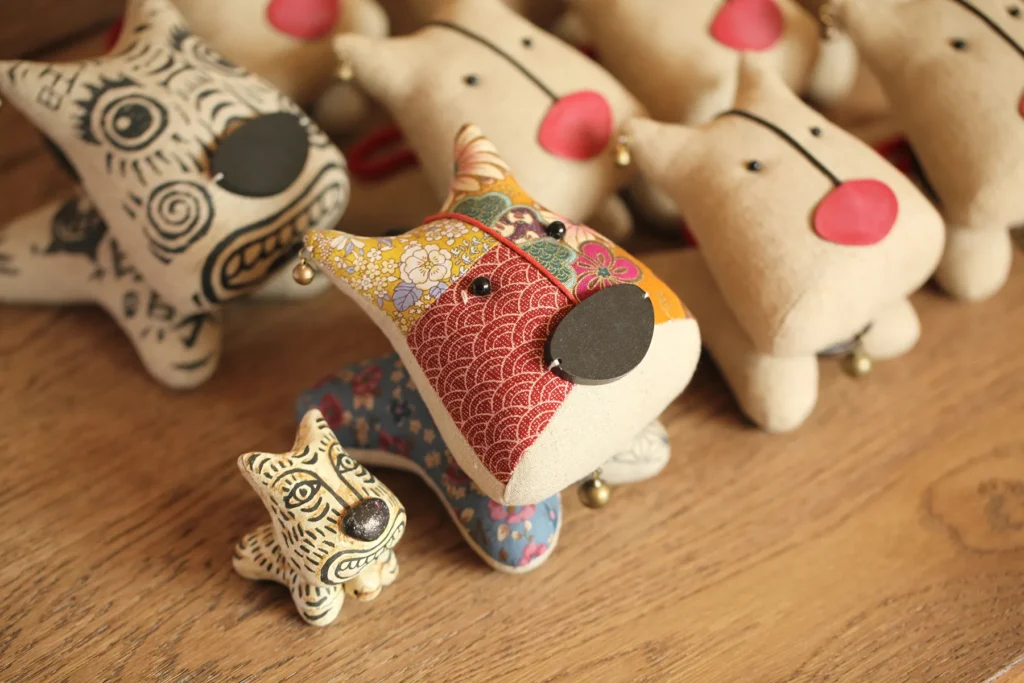
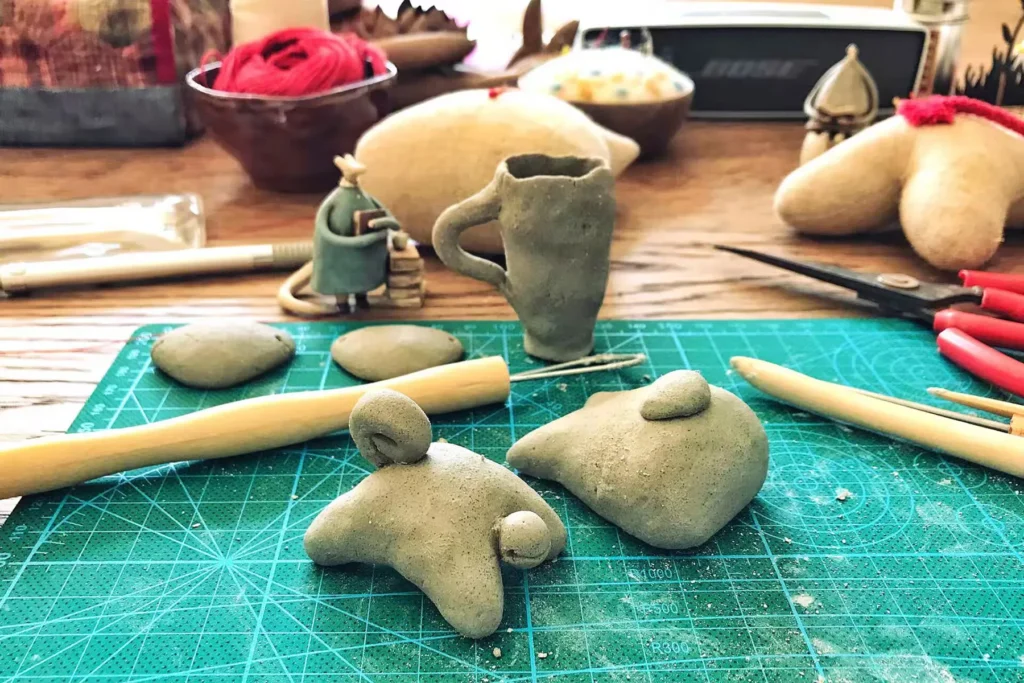
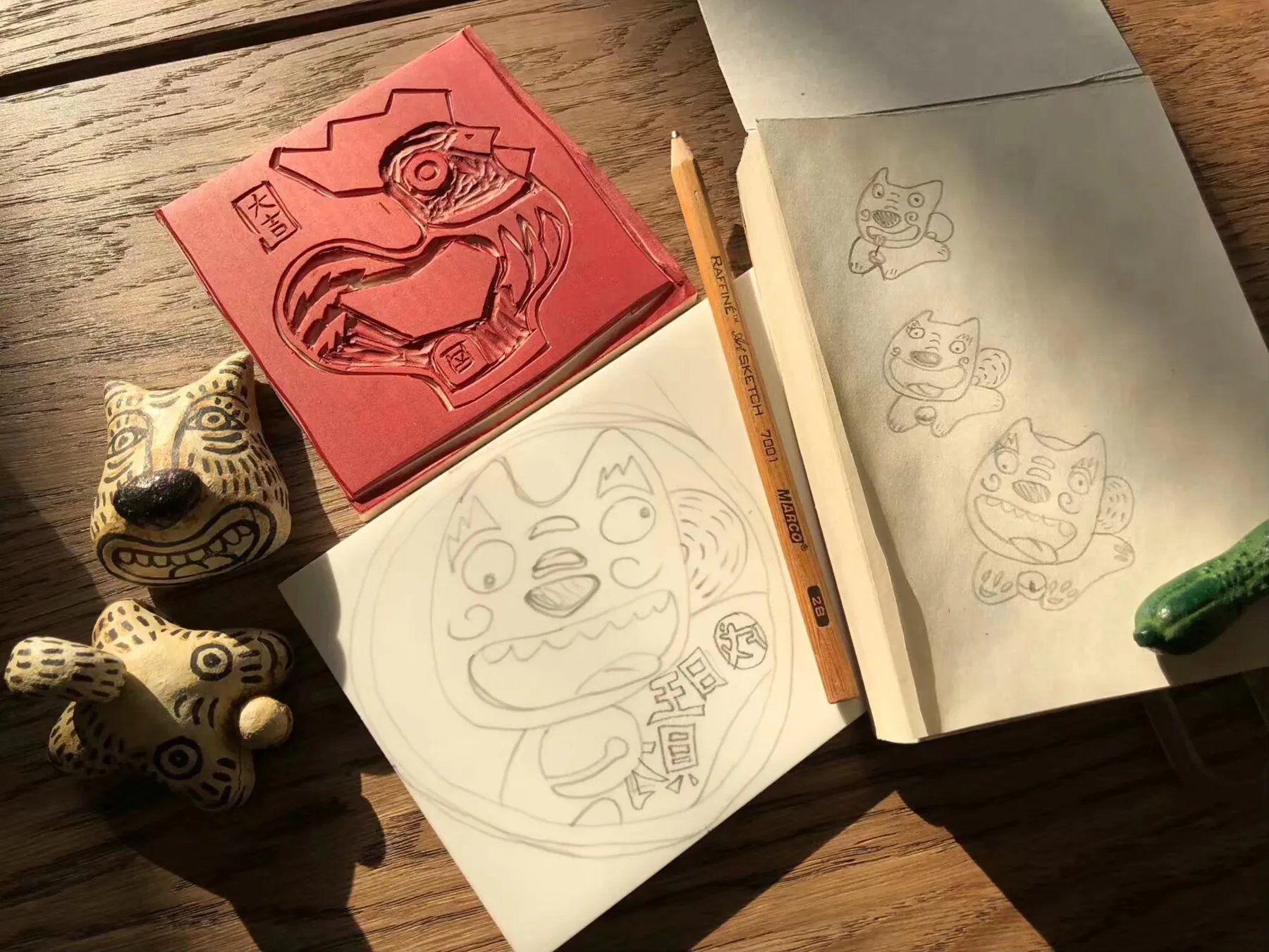
Sometimes I shaped two Wangcai figures in clay just to feel their volume.
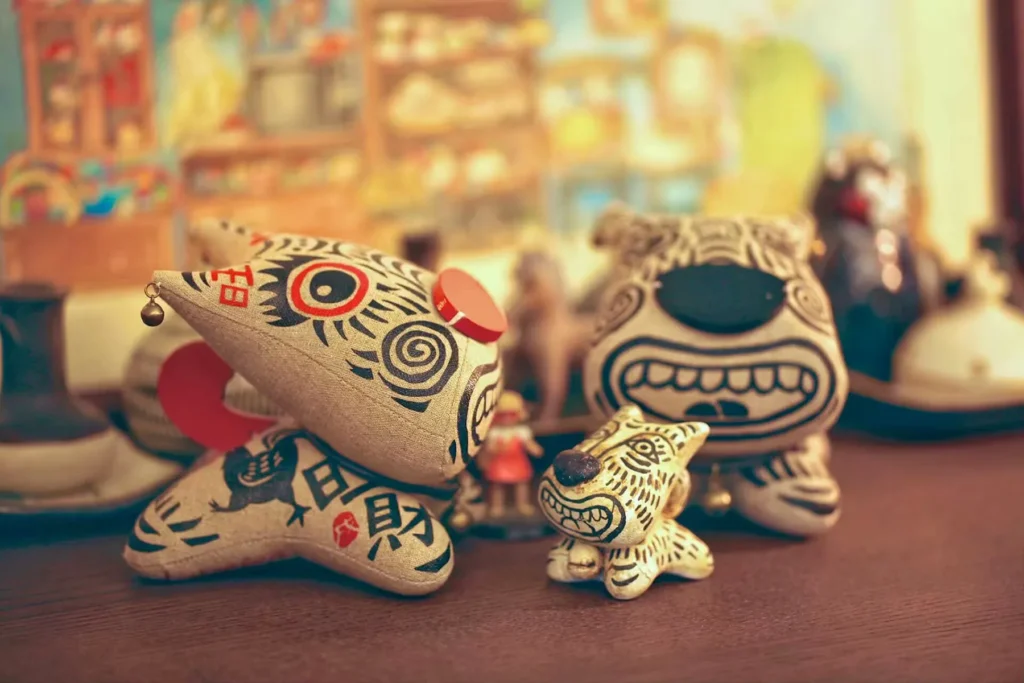
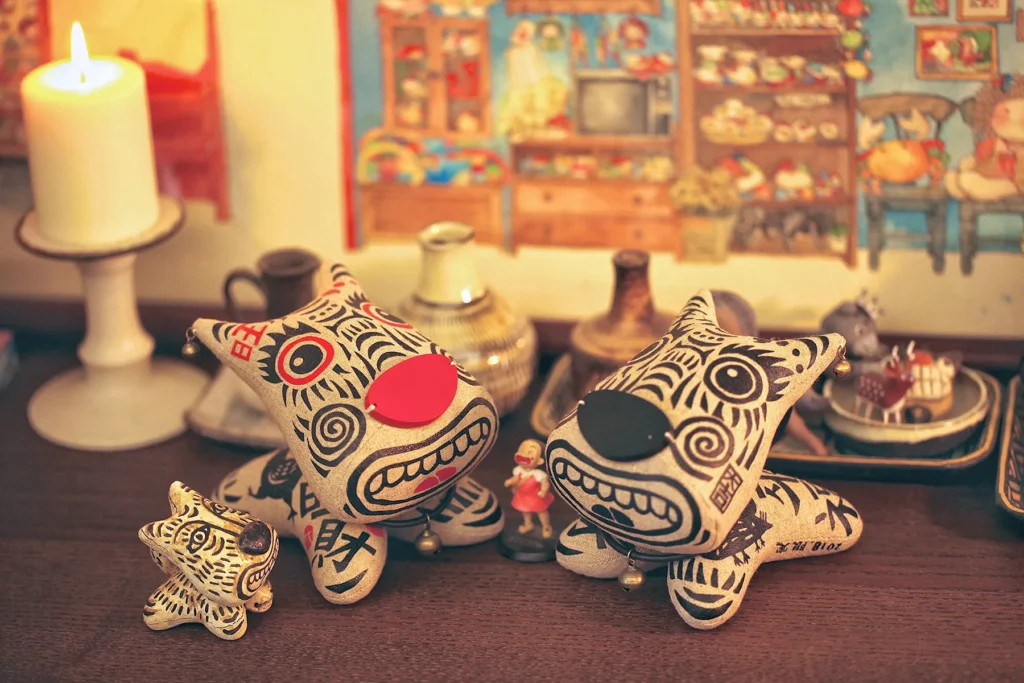
I also tried applying visual symbols from an illustrator I admire onto its face.
The result was completely different from the earlier fabric version—
a slightly feral, mischievous expression, half-grinning, half-barking.
Strangely cute.
It immediately became the most lively “creature” on my desk.
The Desire for Woodcut Lines
For a long time, I wanted Wangcai to carry a more primitive visual language.
Something closer to woodcut printing—
less smooth, less polished, more direct.
A visual texture that feels carved rather than drawn.
I never actually carved a full woodblock version yet,
but I still imagine that one day I will.
Perhaps in linocut.
Perhaps in something more physical and rough.
Because Wangcai does not belong to perfection.
It belongs to texture.
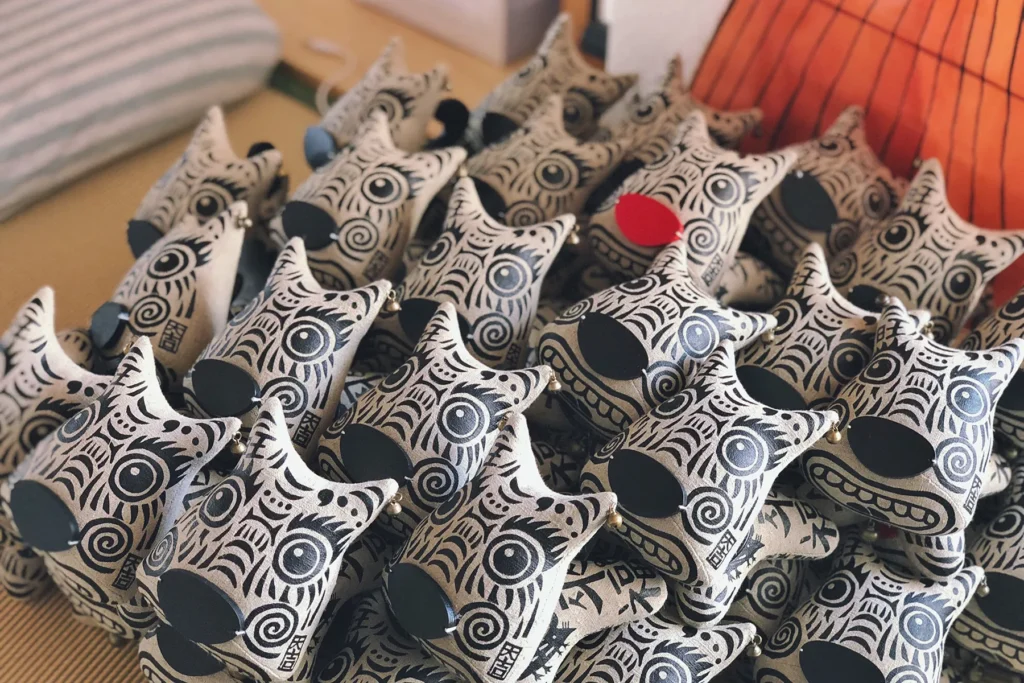
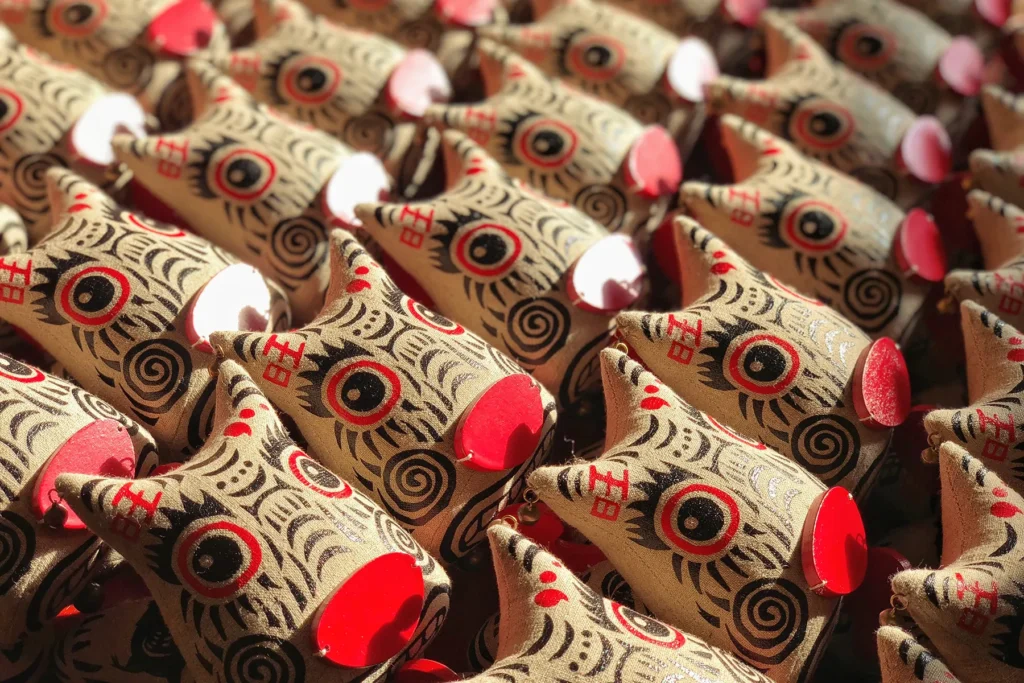
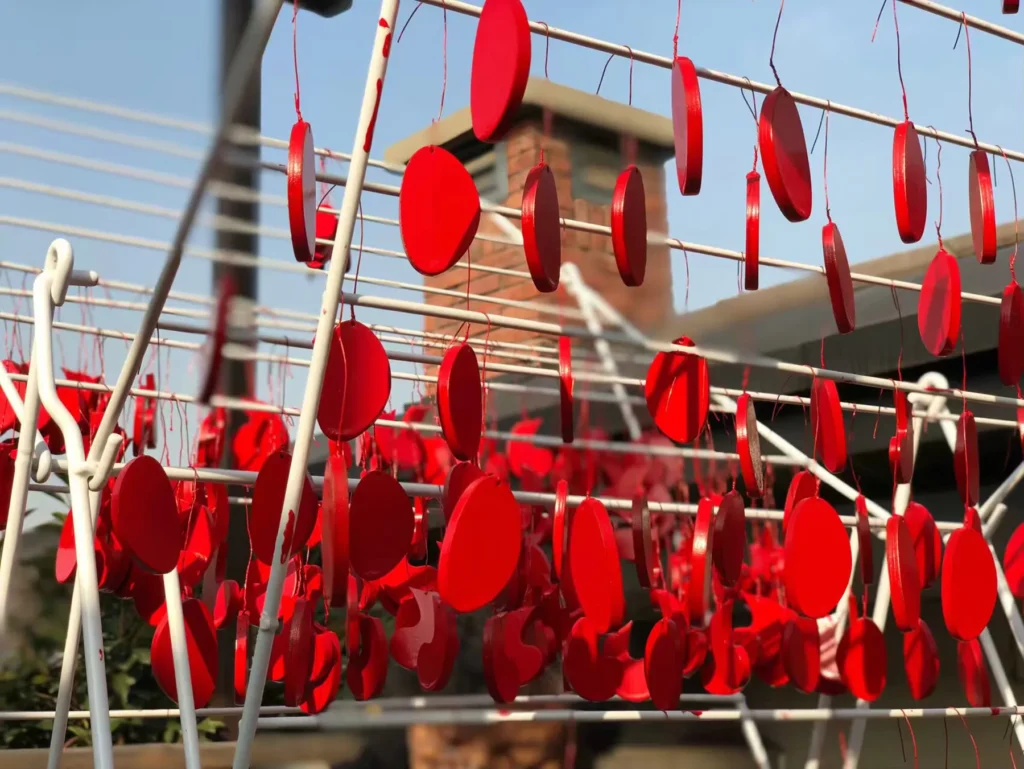
Wangcai “parade formation”
— a ritual photo I take after finishing a batch of dolls, lined up neatly like a small inspection parade.
Why a Dog Has a Chicken and a Mouse
On Wangcai’s body, there are two unexpected companions:
a chicken and a mouse.
At first, this might seem strange.
But in folk language, dogs do not always live inside heroic stories.
Instead, they appear in many humorous expressions:
“chaotic like chickens flying and dogs jumping,”
“a dog catching a mouse,”
“fragmented like chicken bones and dog scraps,”
“stealing chickens and teasing dogs,”
“cockfighting and dog racing,”
“mouse-stealing and dog-thieving,”
“dog-headed and mouse-minded,”
“marry a chicken, follow the chicken; marry a dog, follow the dog…”
And somehow, in all these sayings, the dog’s closest companions are always chickens and mice.
So I placed them there—not as symbols of meaning, but as echoes of language itself.
Folk language becomes pattern.
Pattern becomes story.
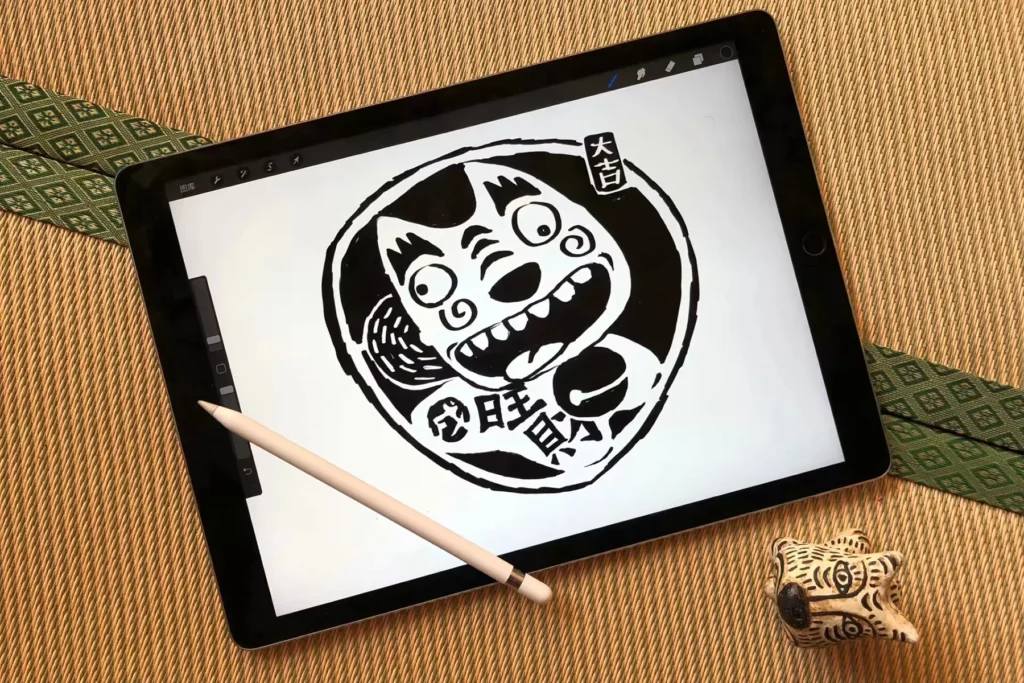
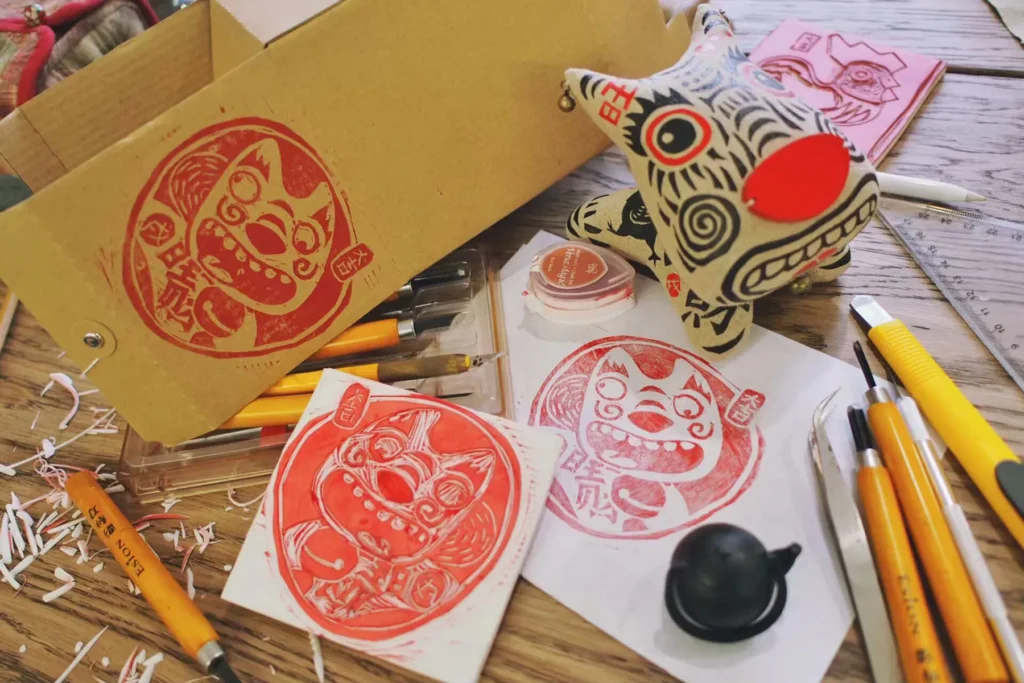
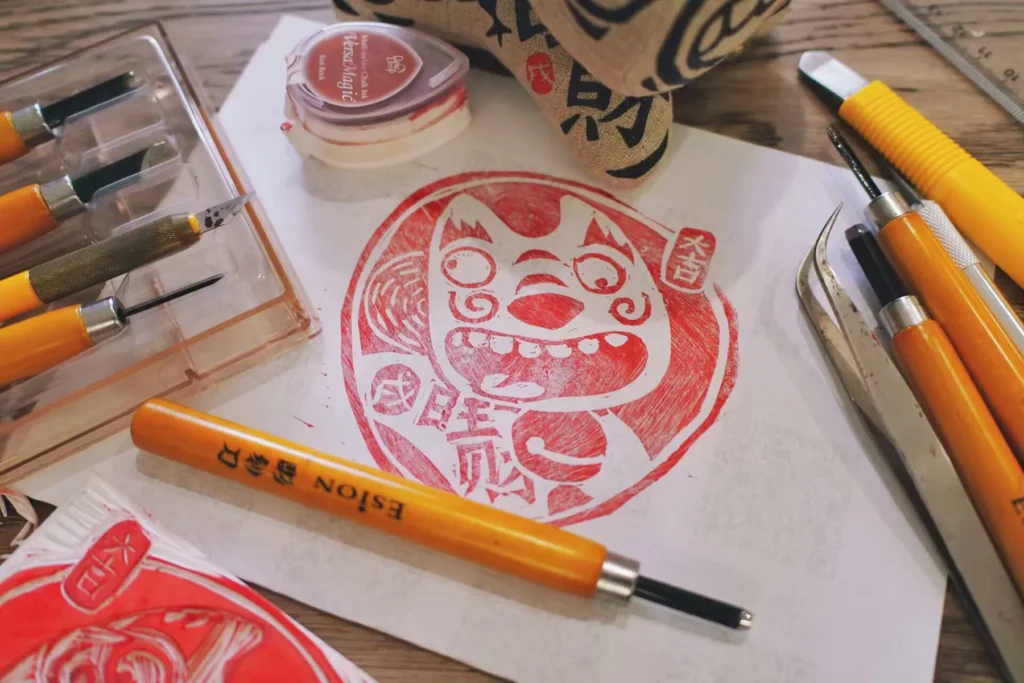
This year’s Wangcai stamp was designed by my son, Harry.
It was drawn in just a few minutes, but somehow it elevated the “slightly silly” energy I always imagined for Wangcai to a whole new level.
While drawing it, Harry said:
“Dogs are cuter when they are a little silly.”
A Dog Called Wangcai
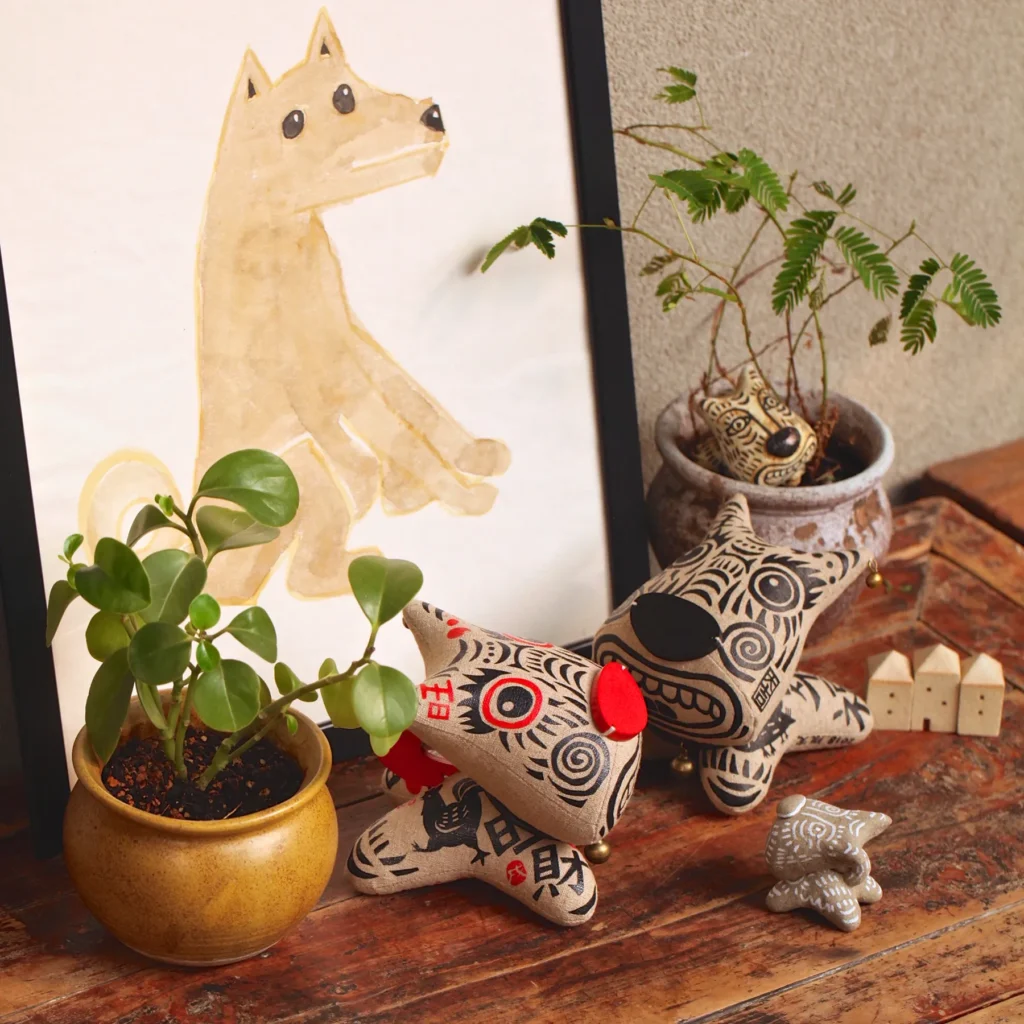
In everyday life, dogs are often given very auspicious names:
Wangcai (旺财),
Laifu (来福),
Xiwang (喜旺)
—all full of wishes for prosperity and good fortune.
Wangcai, in my world, carries all of this—but not in a polished way.
It is slightly messy.
A little strange.
A little stubborn.
And perhaps that is why I love it most.
A Quiet Kind of Luck
Maybe dogs don’t need to be perfect to be meaningful.
Maybe they only need to stay beside you long enough for memory to soften around them.
Wangcai is not a symbol of wealth or success.
It is a reminder that affection often grows in imperfect shapes.
And that is enough.
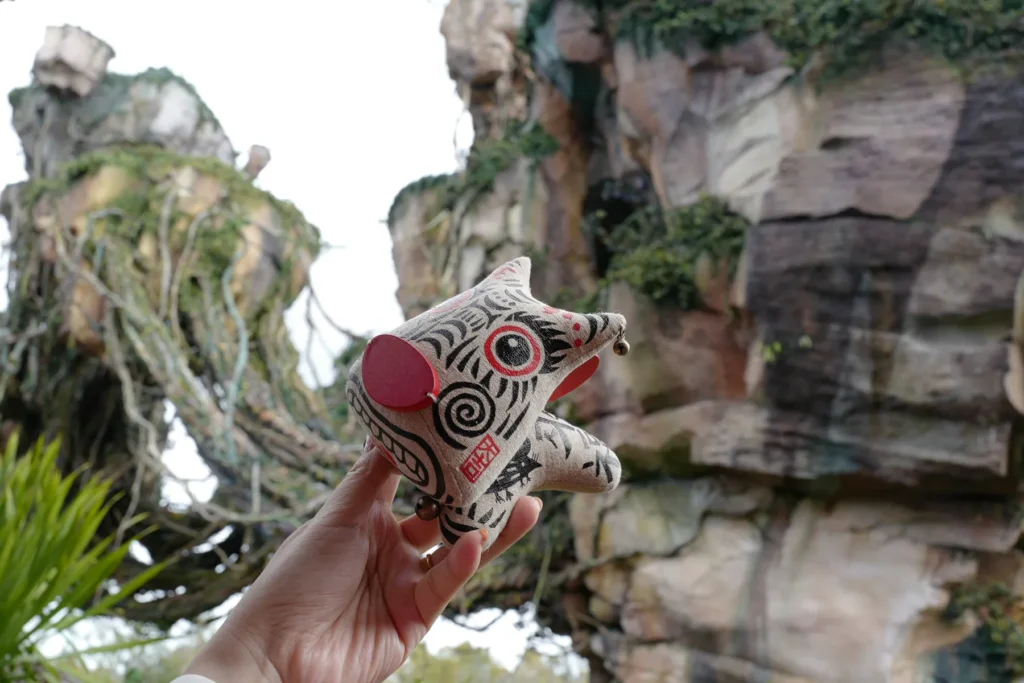
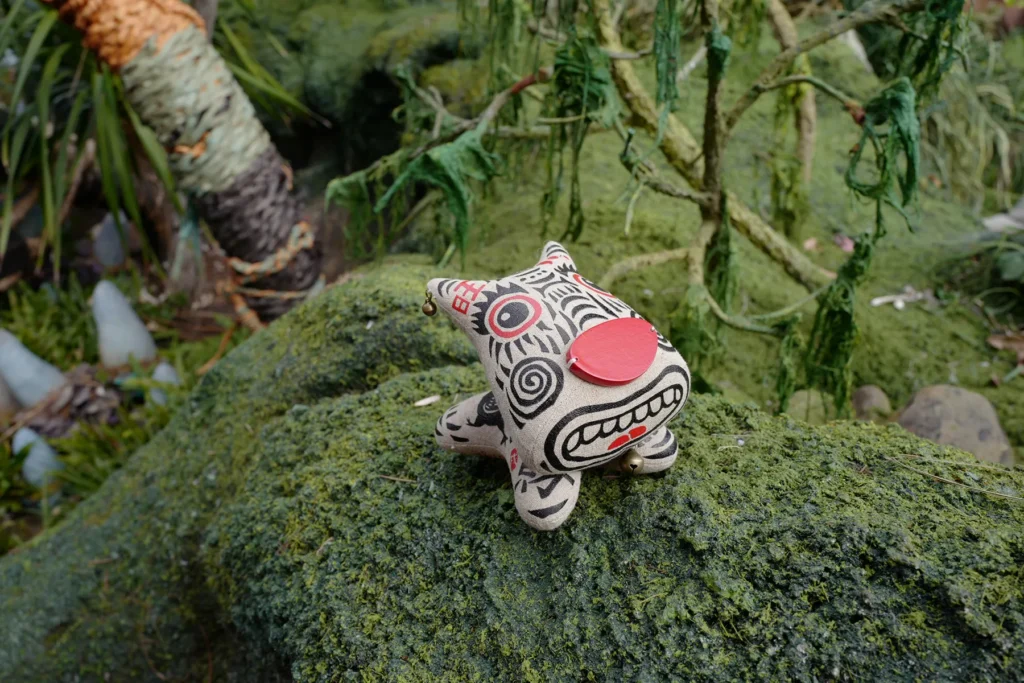
Some animals are designed.
Some are remembered.
Wangcai was never separate from either.
—— OVER ——