





This story is also available in 繁體中文.
This journey was originally recorded in short notes as it unfolded. Looking back now, I’ve gathered them together here as a single travel journa.
— July 2015
Before leaving home, I had spent quite a bit of time studying Van Gogh’s sketches.
His pen strokes fascinated me, especially the reed pen he often used.
I was even tempted to buy one myself.
At least I knew I wasn’t going to paint an oil masterpiece there.
A few sketches would be ambitious enough.
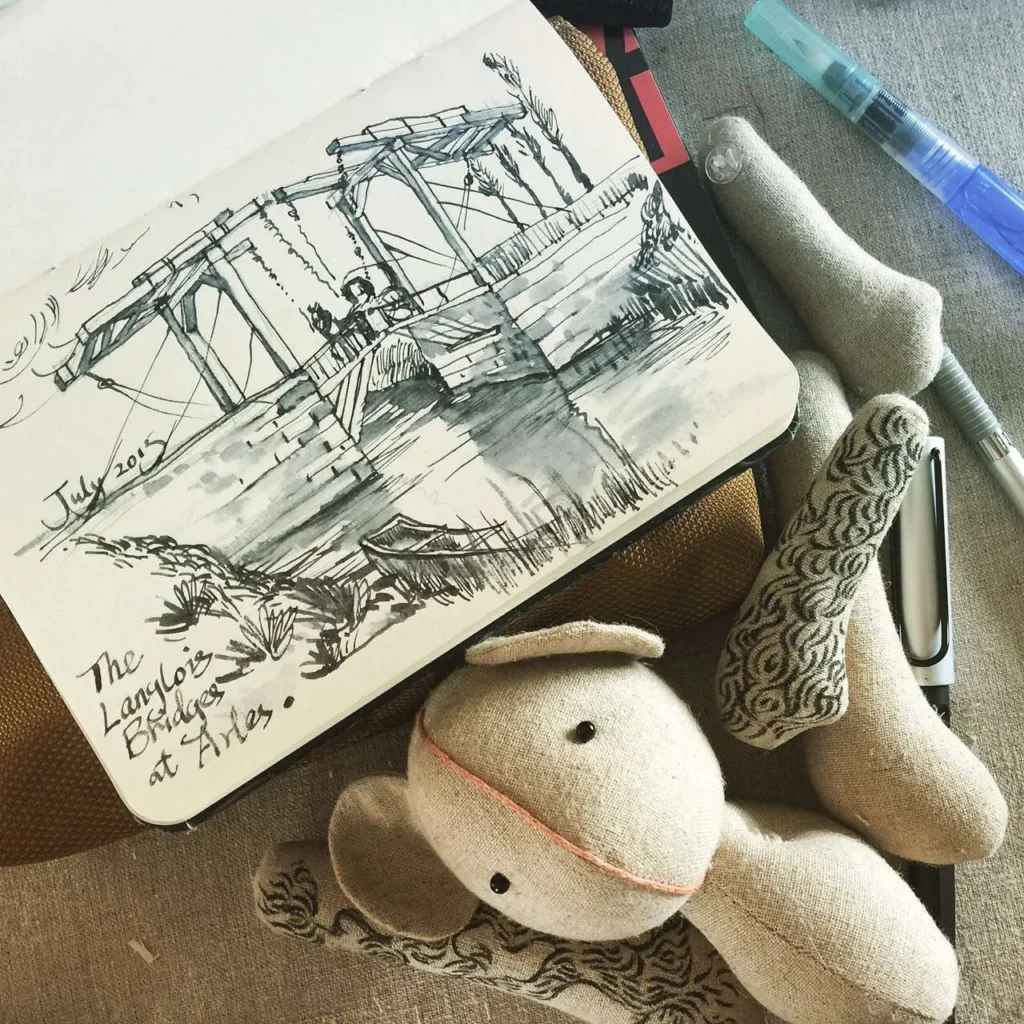
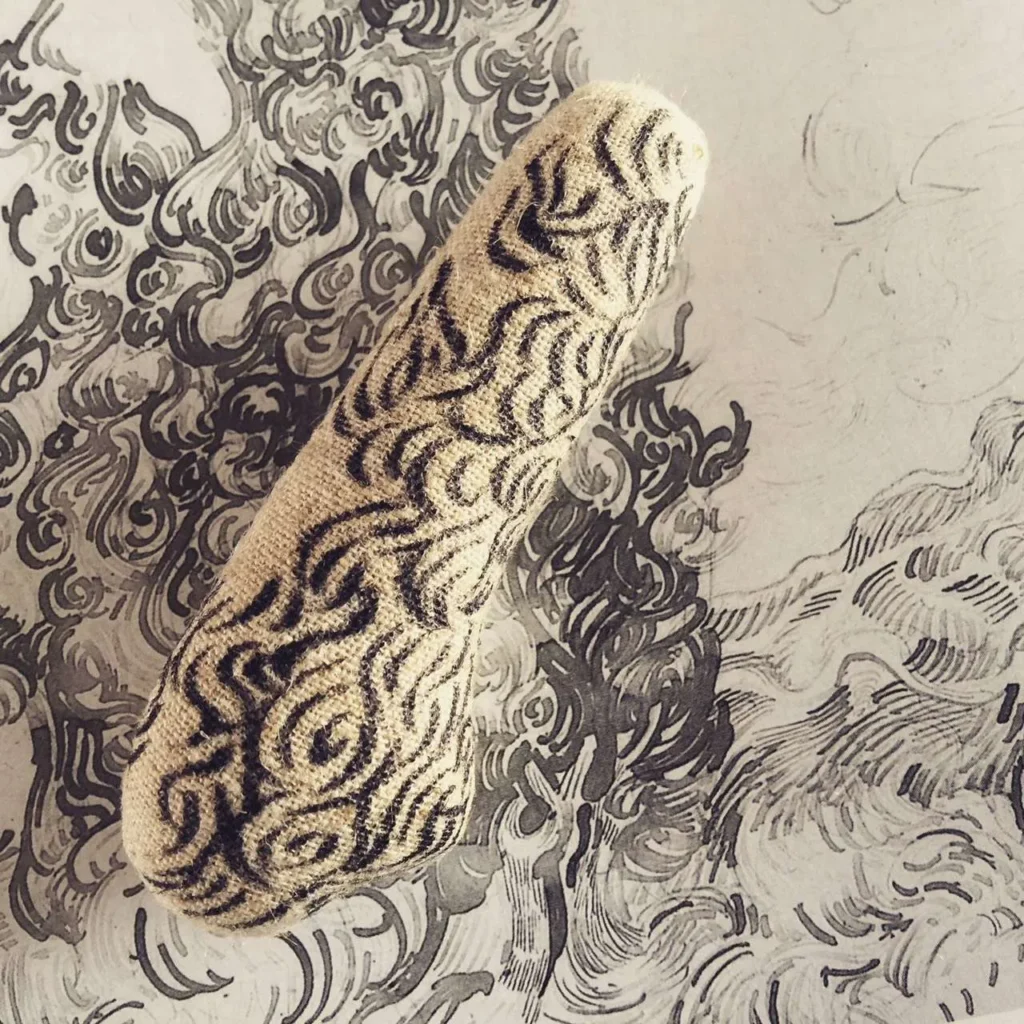
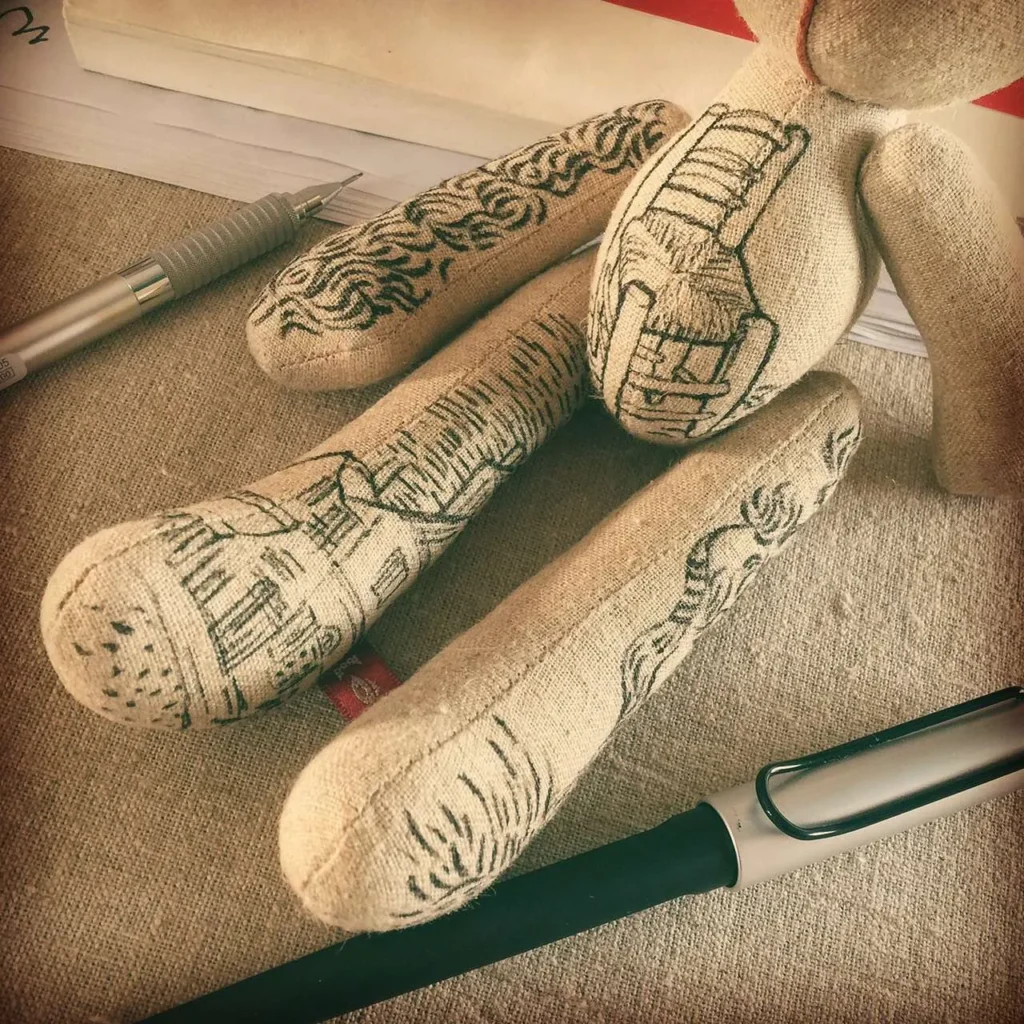
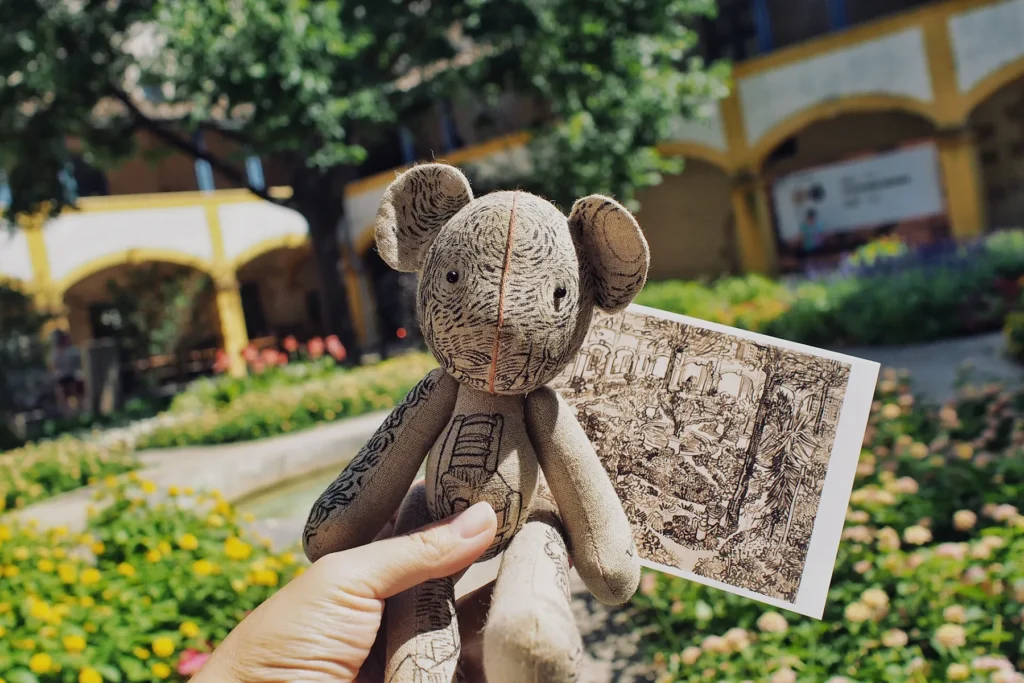
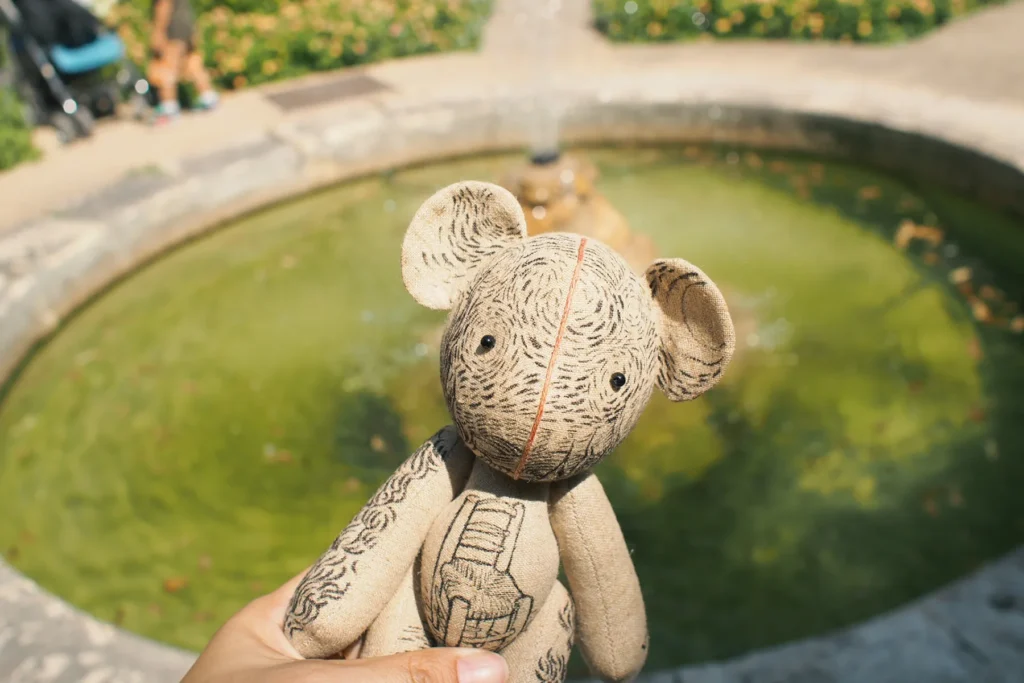
Hand-drawing Van Gogh–inspired details onto the bear: the starry sky, cypress trees, a chair, and the Yellow House.
Reality, however, had very different plans.
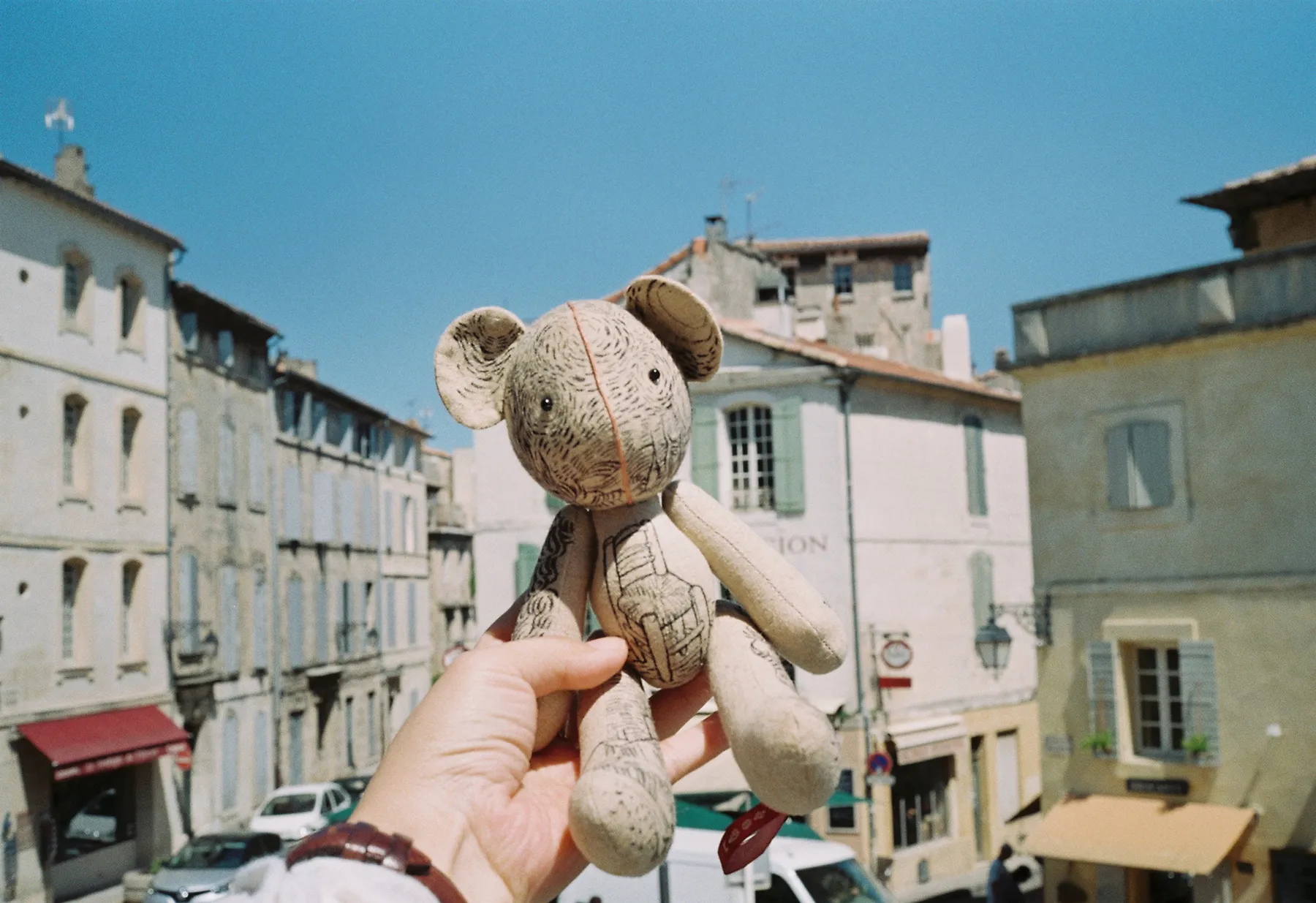
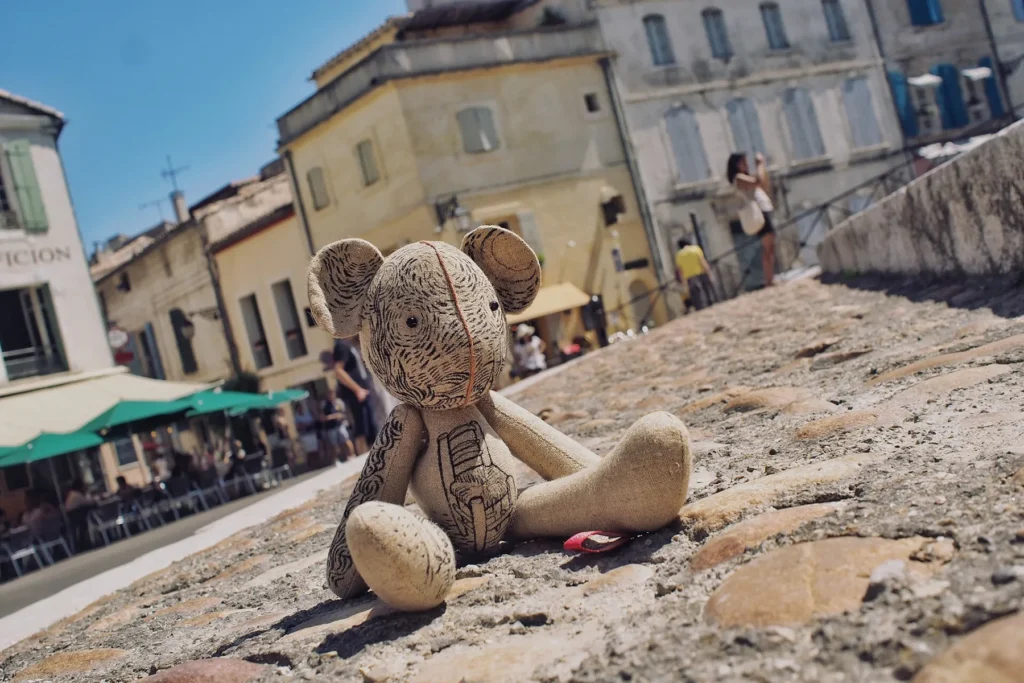
In one hand I carried Van Gogh Bear.
Around my neck hung an my camera.
Another camera carried film.
As we walked, I seemed determined to give every object around me a job to do.
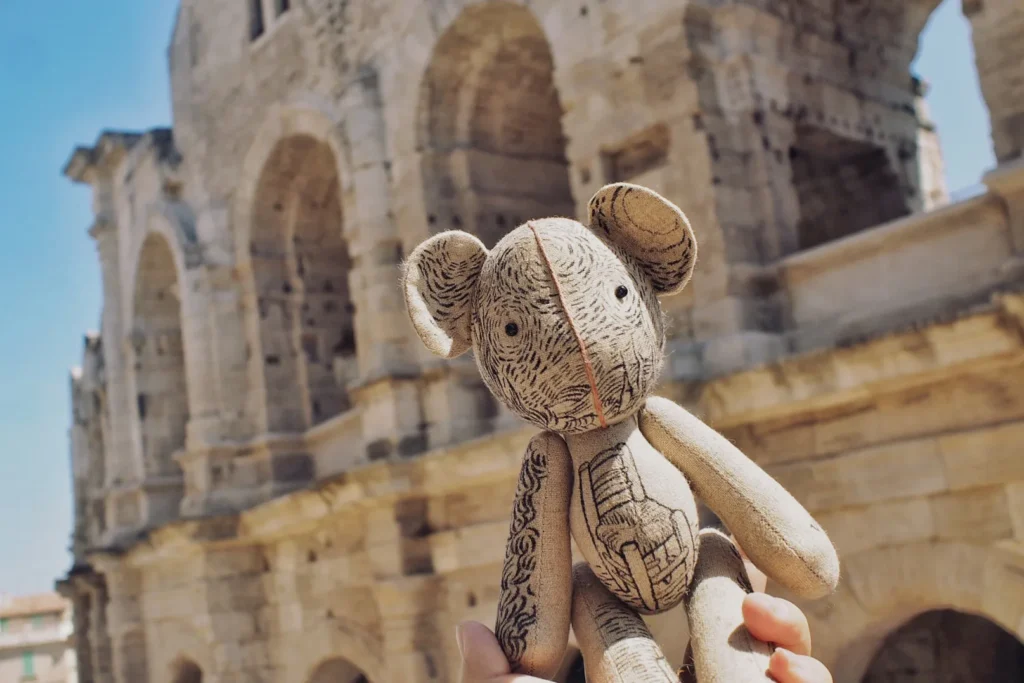
My husband was busy looking after our two boys, so photographing me was completely out of the question.
Meanwhile I kept getting distracted by postcards outside little galleries, stopping to photograph the boys, or chasing after the bear.
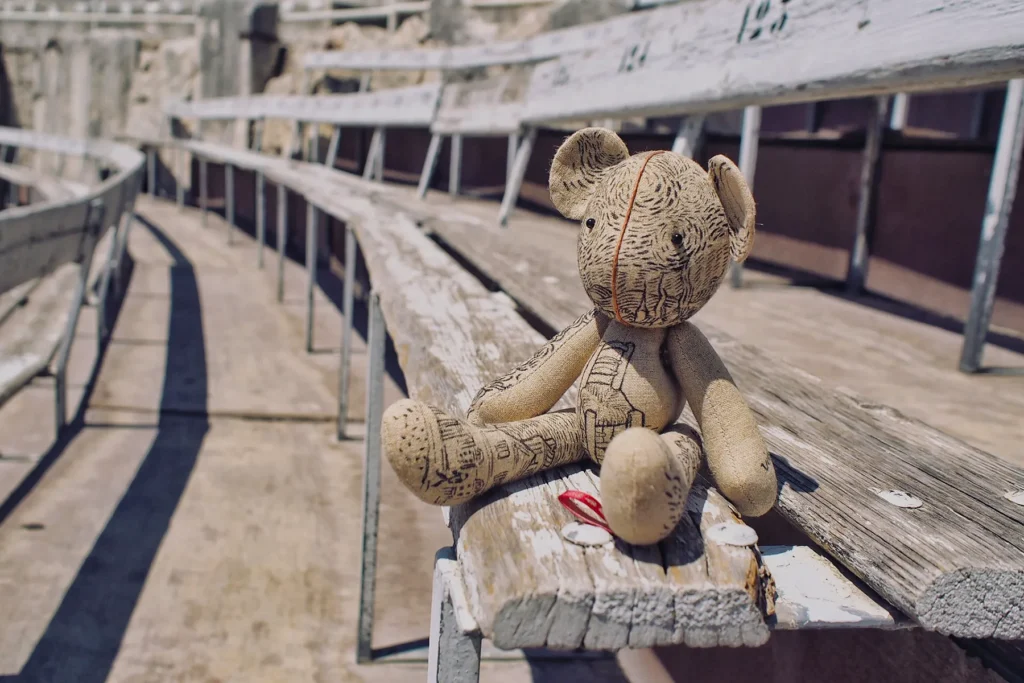
Once I left Van Gogh Bear on a bench outside the Roman Arena.
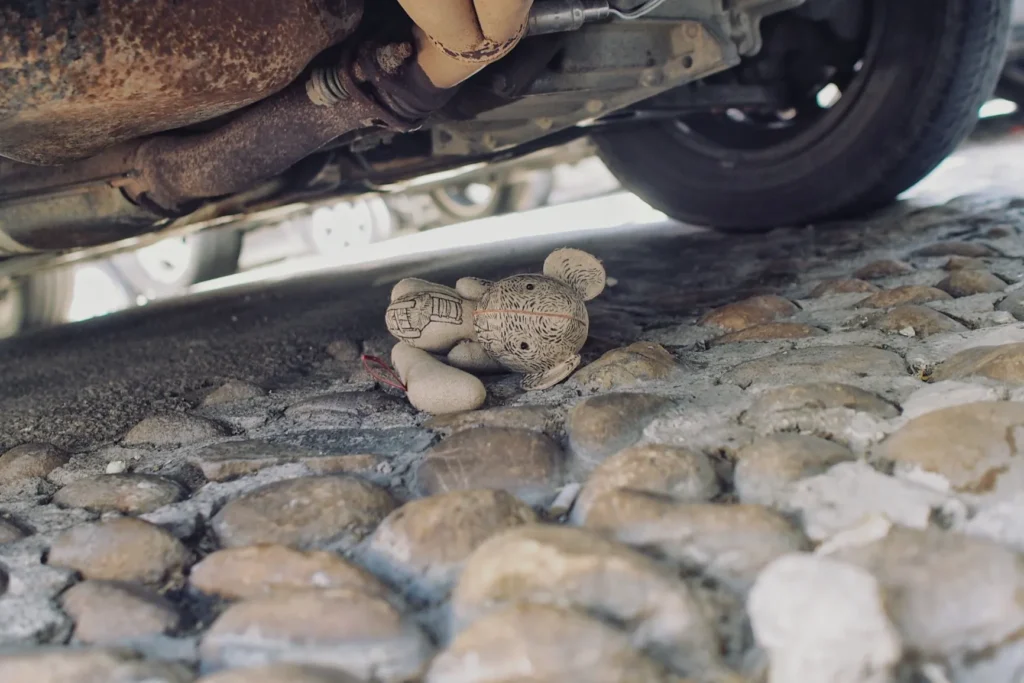
Another time it tumbled over a railing and rolled underneath a parked car.
Fortunately it was Sunday and almost every shop in town was closed.
Otherwise I probably would have found even more reasons to stop.
My husband always says that I never really look at the scenery.
I look at it through a camera, and only truly revisit it later, while looking back through the photographs.
Perhaps he’s right.
I’ve often wanted to travel with nothing but a film camera.
To wait until the film is developed weeks later, and let each photograph quietly bring those memories back.
There’s something wonderfully slow about that.
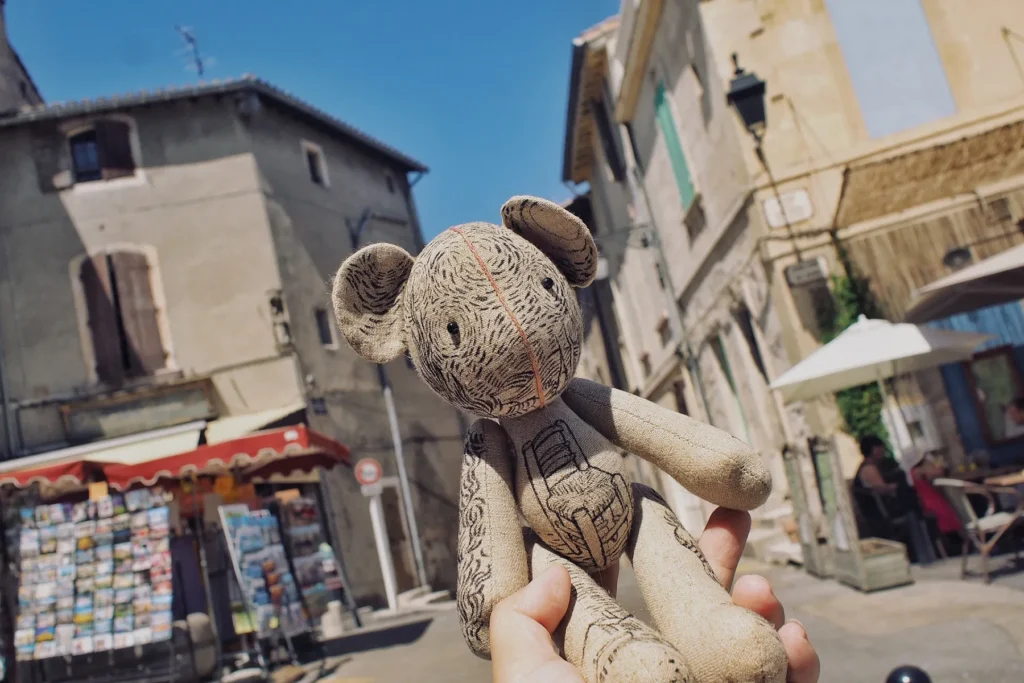
The sun in Arles was intense and generous.
It was a very hot July—dry, bright, and almost relentless.
I remember constantly craving water, glass after glass.
Before we left Arles,we sat down at a bar and ordered something icy and refreshing.
A bright green mint syrup with ice arrived at the table.
The boys each held a large cup of vividly colored blue slush, and soon their tongues were completely dyed blue as they laughed.
Arles was not always kind to Van Gogh.
People once described him as nothing more than “a red-bearded madman.”
And yet today, every corner of the town belongs to him.
Souvenir shops are filled with his colors, and his presence quietly defines the entire place.
Despite the number of tourists, the atmosphere remained calm and unhurried.
People wandered through the streets at their own pace, sitting in cafés, enjoying the holiday.
Some, like me, drifted through narrow alleys in search of traces of Van Gogh—
the hospital, the café, the cultural center.
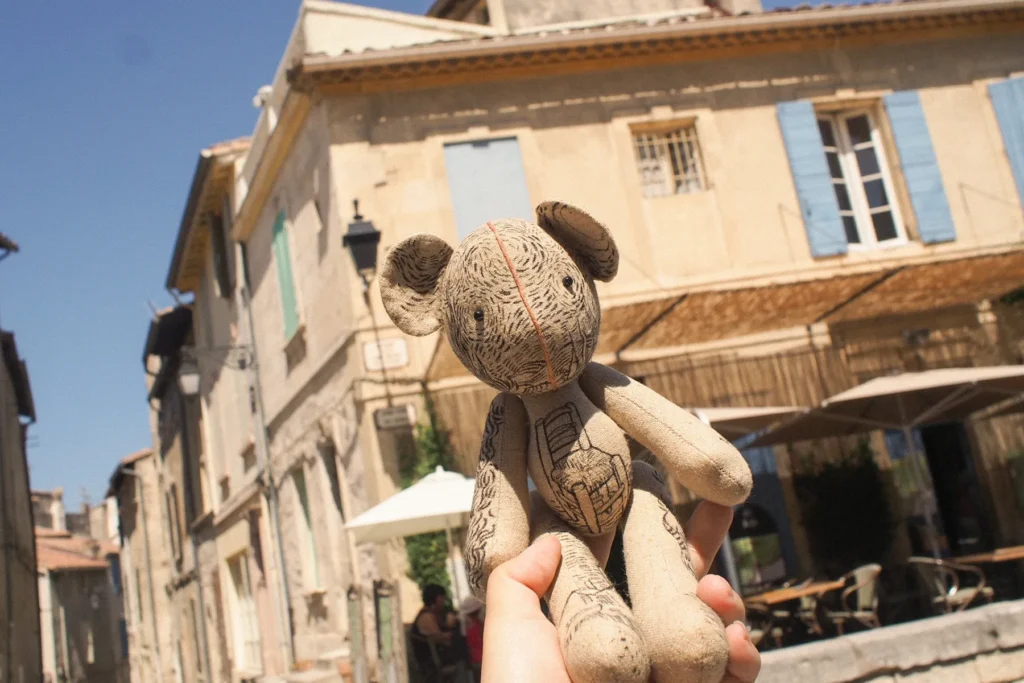
Guidebooks often say there are no original Van Gogh works in Arles.
But that is not entirely true.
At the Van Gogh Center, there are several early sketches on display.
Although there are no major oil paintings, they were still enough to excite me deeply.
Two works related to Arles—the Hospital in Arles sketch and an unfinished painting—were actually loaned from the Van Gogh Museum in Amsterdam.
One of the exhibition rooms introduced Van Gogh’s collection of Japanese ukiyo-e prints.
After his death, it was discovered that he owned more than 400 Japanese prints.
Because of financial difficulties, he had to sell part of his collection in order to buy canvas and pigments.
The rest, most likely, were the ones he could not bear to part with.
His compositions and colors were deeply influenced by Japanese prints.
In fact, Van Gogh admired Japan greatly.
He once dreamed of visiting it in his lifetime.
He even said that Arles felt somewhat like Japan to him—although I personally never quite saw the resemblance.
Sadly, he never made it there.
I bought a manga about Van Gogh’s life, as well as a small illustrated book introducing his works.
Since I already owned a complete collection of his paintings, I also picked up two postcards of the Arles hospital.
I almost bought a beautifully printed, hardcover collection of his Japanese prints.
It cost only 30 euros—printed by a well-known art publisher.
Some books are simply the kind you regret not buying.
But in the end, I didn’t.
My husband looked at me and said,
“Are you crazy? That thing is too heavy.”
The Arles hospital was once where Van Gogh stayed.
Many of his works were created during his time there.
When the weather was harsh, or when his health was unstable, he painted whatever was around him.
He was a painter who painted inside the world he lived in—not from memory, but from presence.
Today, the hospital has become a quiet, beautiful garden.
The corridors on the second floor are especially peaceful.
It feels like a place where recovery could naturally happen.
Johann asked me to take photos of him running there, and I captured him running ten laps.
We didn’t deliberately look for cafés, nor did we accidentally stumble upon them.
And yet, Arles still allowed me to feel Van Gogh’s world through its streets.
Even though the famous Yellow House was destroyed during the war, echoes of it still remain everywhere in the city.
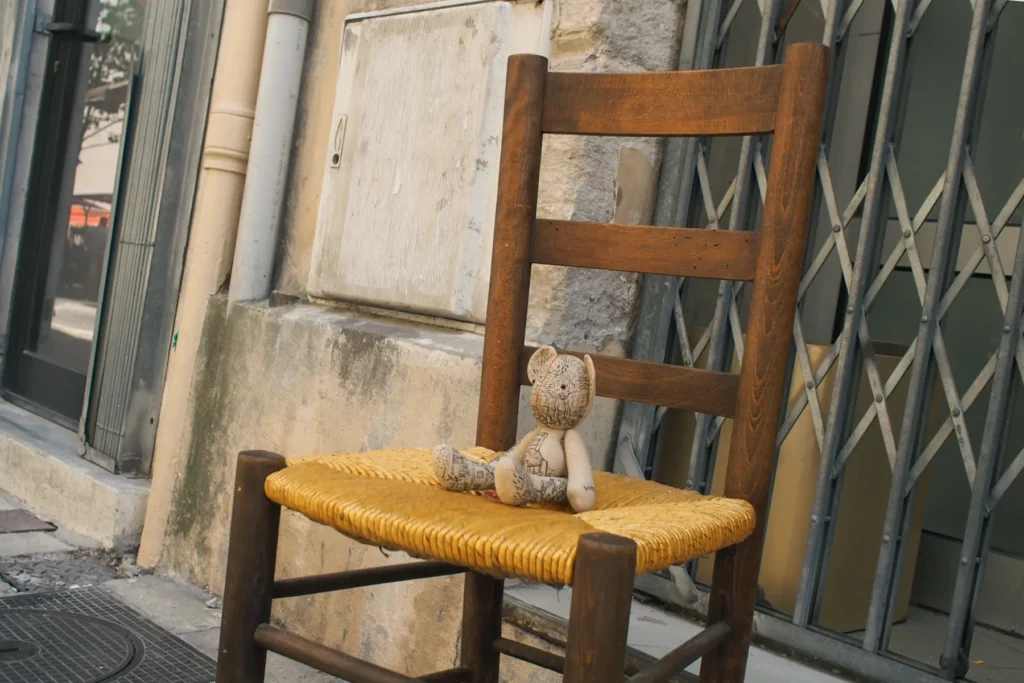
I even saw a chair inspired by Van Gogh by the roadside—the same one depicted in my Van Gogh Bear.
I really wanted to take it home.
We were already getting ready to leave…
Next stop: Cézanne’s studio in Aix-en-Provence.
—— OVER ——