





This story is also available in 繁體中文.
The Year of the Mouse That Refused to Stay Small
This mouse’s design notes arrived later than all the others.
In the winter of 2020, everything was interrupted.
During that unexpected spring, the pandemic brought Wuhan—and many of us—into a state of heaviness and silence that was difficult to put into words.
There were no familiar rhythms.
No quiet planning of new designs.
Only waiting.
It was not until the following year, when life slowly returned to its usual flow, that I finally completed this delayed note.
The Return of the “Boss Mouse”
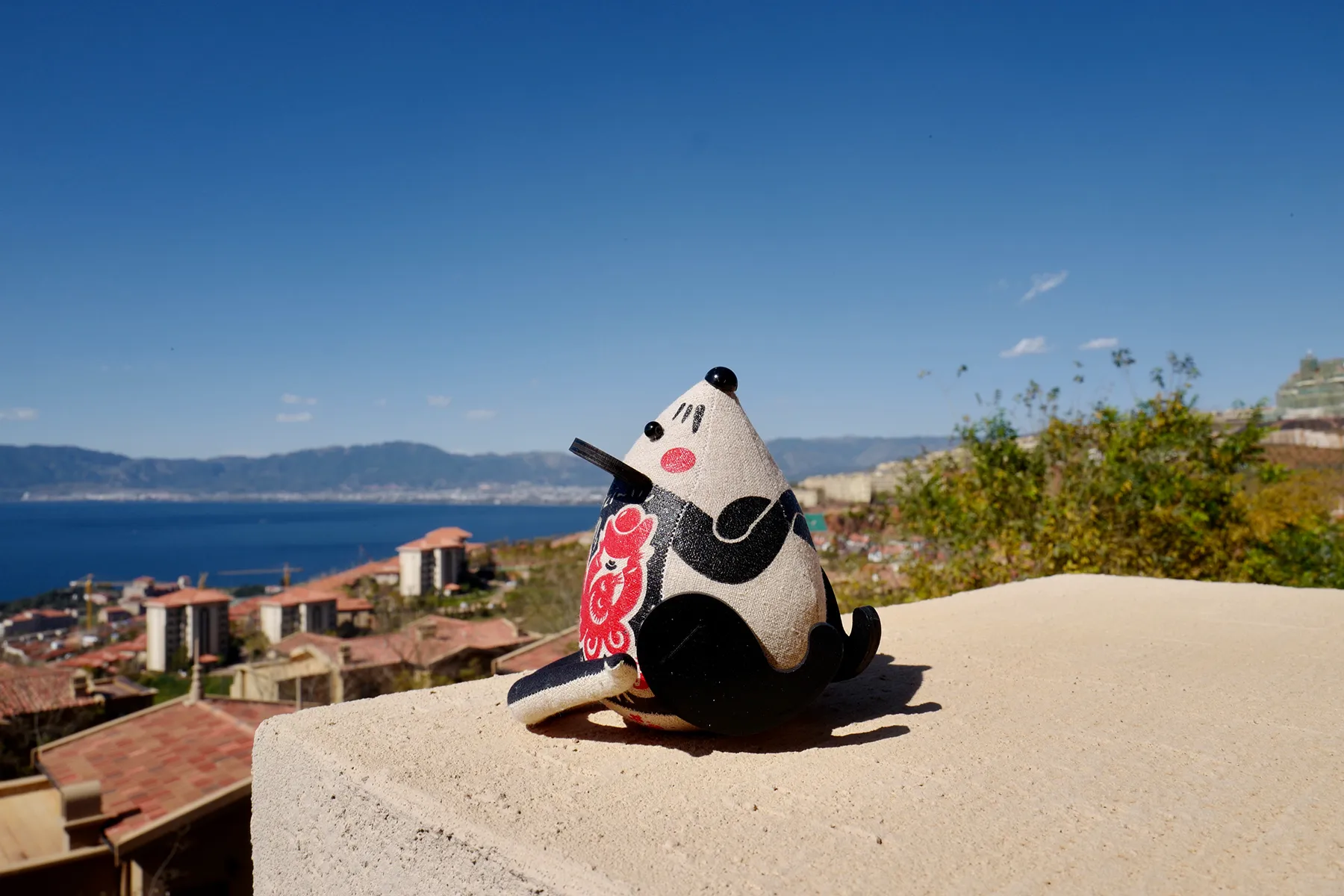
This zodiac mouse began as a continuation of an earlier character I once designed: the Boss Mouse.
A small seated mouse wearing a tie, sitting with exaggerated confidence.
At that time, I already liked the idea of a mouse that was not shy or timid, but slightly arrogant in a humorous way.
So this year, I expanded that idea.
A more abundant version.
A more self-assured version.
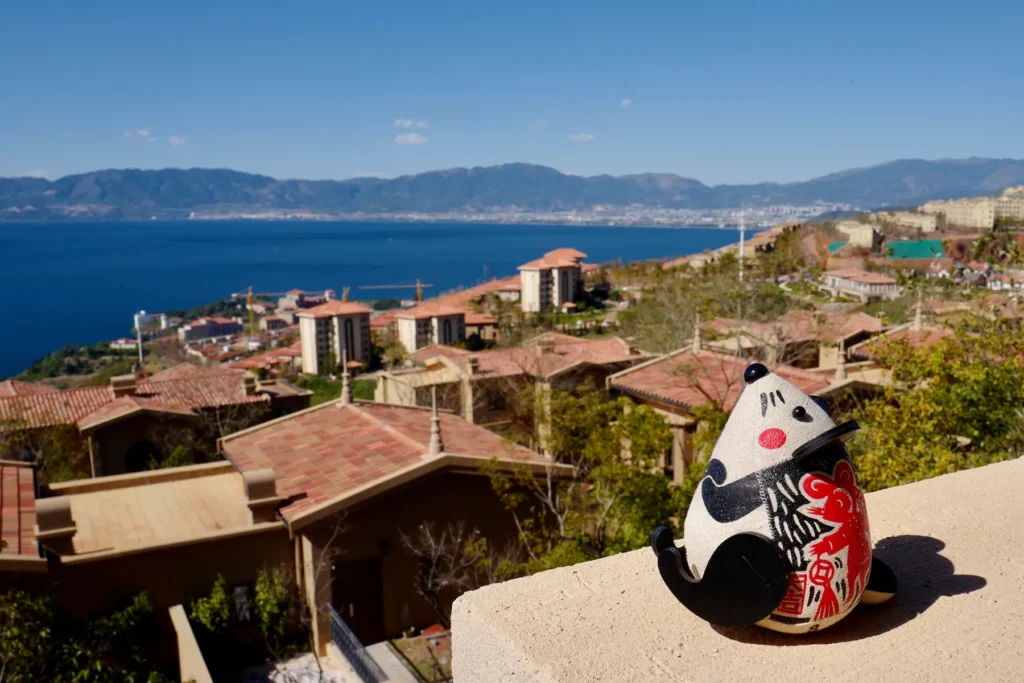
A mouse that is round, full, and completely at ease with itself.
Arms crossed.
Head slightly raised.
As if everything is already under control.
A small creature with a very big sense of prosperity.
The Tail Problem
Every year’s zodiac creature comes with its own small technical obsession.
For the mouse, it was the tail.
I needed to feel the material directly, so I went to the fabric market myself.
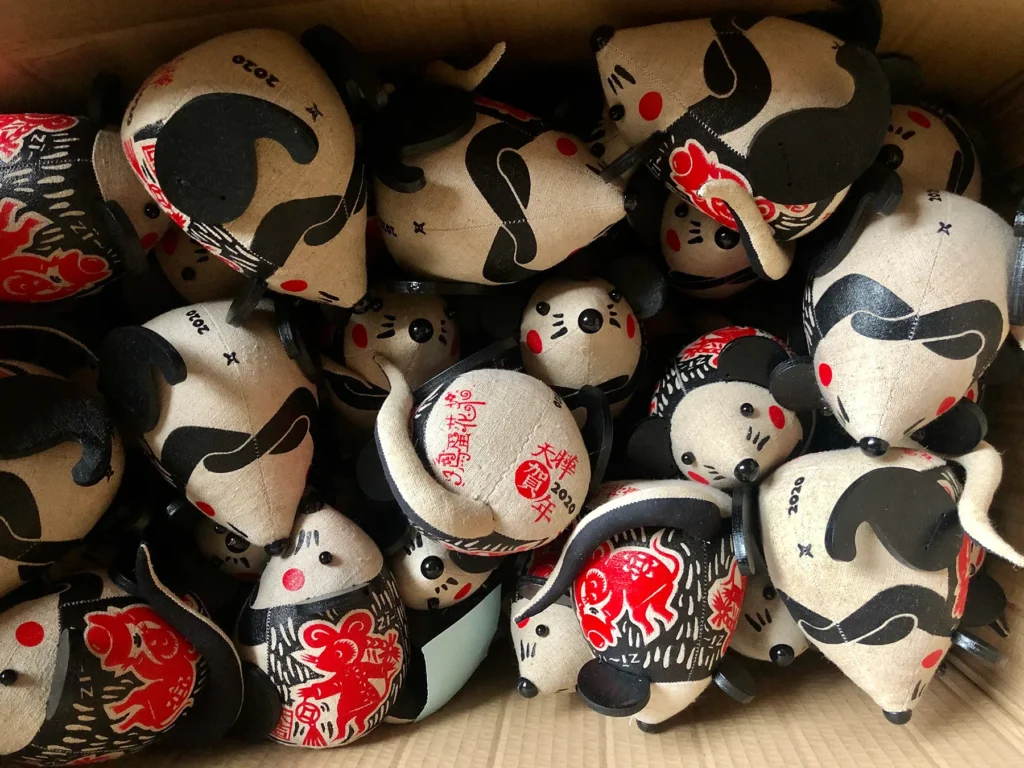
Eventually I found a black cotton fabric that was soft but stable—exactly what I wanted.
Originally, the tail was supposed to be made from a single continuous strip of black cloth.
But I only had two meters left.
Not enough.
So I made a decision on the spot:
one side black, one side raw cotton tone.
A slightly imperfect tail.
But with more tension.
More life.
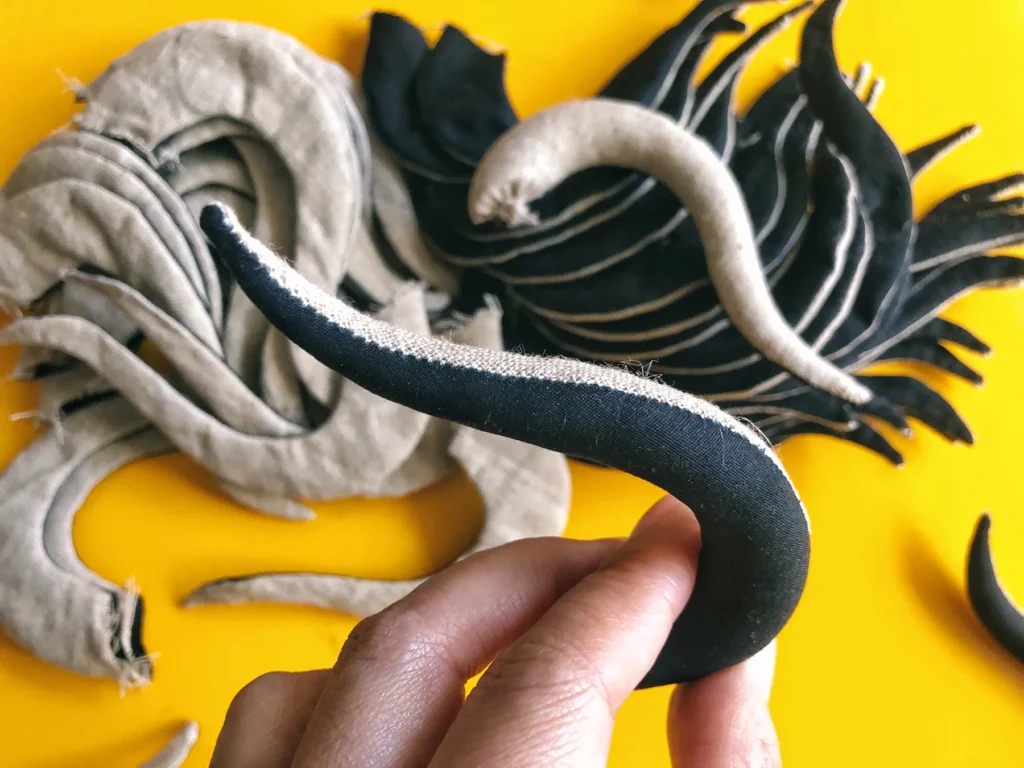
Thankfully, these are only tails for handmade mice.
The Nose That Almost Didn’t Exist
The mouse’s nose turned out to be unexpectedly difficult.
What I wanted was a perfectly smooth, rounded surface.
At first, I considered painting it with acrylic.
But I knew it would never feel truly three-dimensional.
Then I thought about clay.
But clay is fragile, and production consistency would be a problem.
I even considered making tiny fabric spheres by hand—
which works for one piece,
but becomes emotionally unbearable at scale.
Then, by chance, I found something on Taobao:
small glossy semi-spherical buttons with a black lacquer surface.
I ordered several sizes.
And surprisingly, one of them fit perfectly.
Sometimes the solution is not invented.
It is found.
Folk Images on Its Back
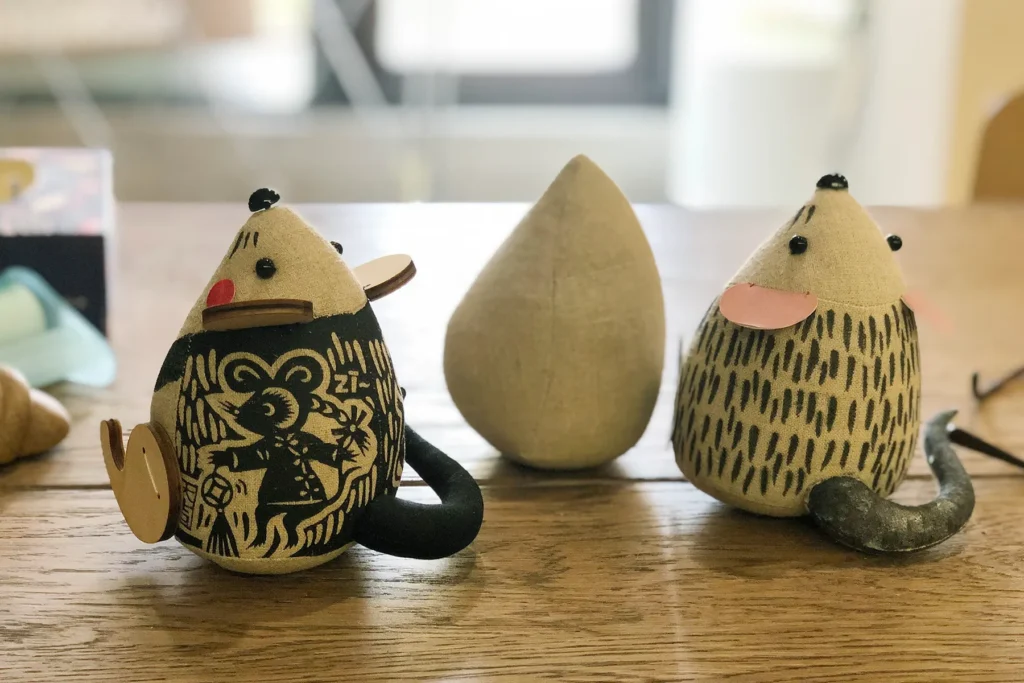
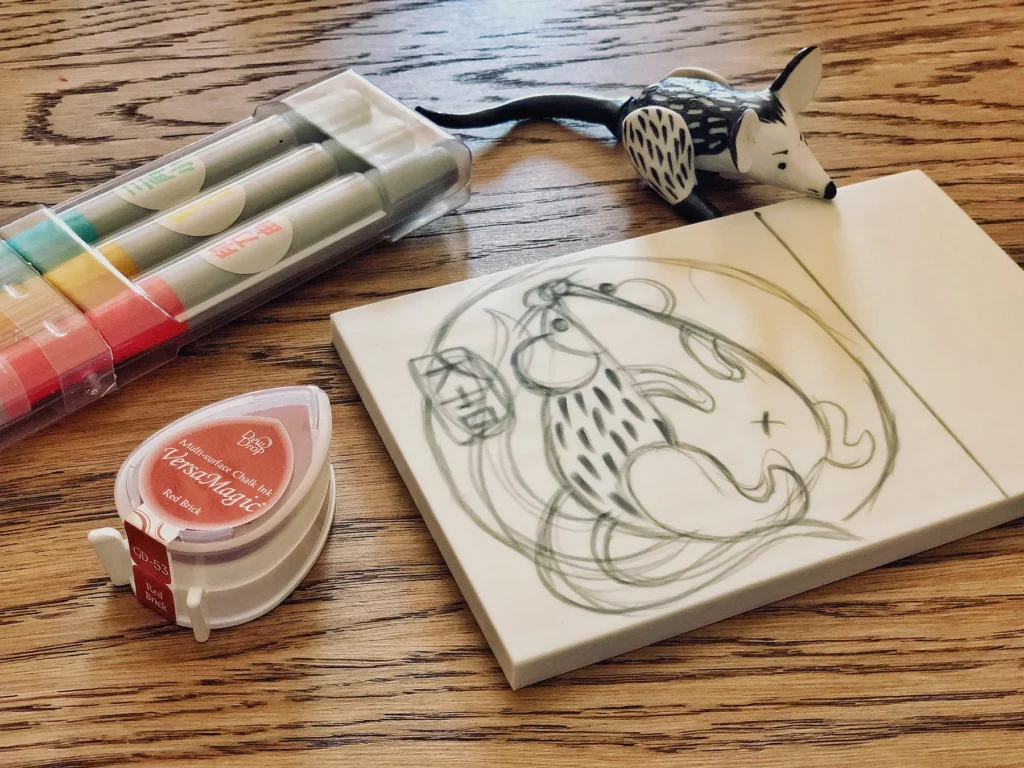
On the mouse’s back, I printed two folk paper-cut inspirations:
One is a little mouse holding a coin ornament.
The other is a joyful mouse rolling on the ground, holding a gold ingot.
One collecting wealth.
One celebrating it.
Together they form a small narrative of abundance.
The Poem That Follows the Mouse
In classical Book of Songs, there is a line:
“Shuò shǔ shuò shǔ, wú shí wǒ shǔ.”
(O rat, O rat, do not eat my grain.)
Originally, it is a complaint—an anxious farmer speaking to the mouse stealing his harvest.
But in this zodiac version, I always imagine it differently.
Not as anger.
But as a kind of playful confrontation.
A small dialogue between humans and the creature that lives closest to their food, their homes, and their fears.
And in a strange way, this mouse is no longer just a thief of grain.
It becomes a symbol of grain itself.
A reminder of both loss and abundance.
The Meaning of “Fengdeng”
My friend Huazhuzhu named it:
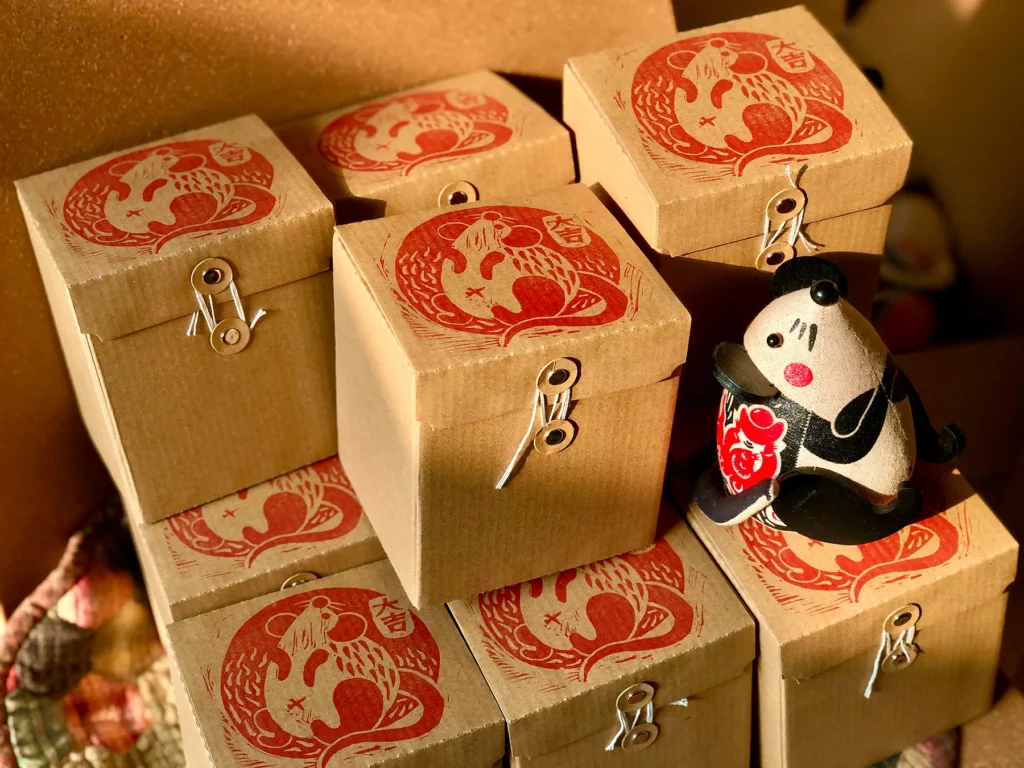
Fengdeng Mouse — the Mouse of Harvest.
A wish for abundance.
A wish for a good year.
A wish that what is taken will also return.
A Mouse That Learned to Be Full
This mouse is not shy.
Not hidden.
Not small in spirit.
It is round, present, and slightly exaggerated—
as if it has already eaten its fill of the world and decided to stay.
Perhaps that is its real meaning.
Not survival.
But fullness.
Some mice steal grain.
Some mice become grain itself.
Fengdeng Mouse chose the second path.
—— over ——