





This story is also available in 繁體中文.
Five Years in the Making
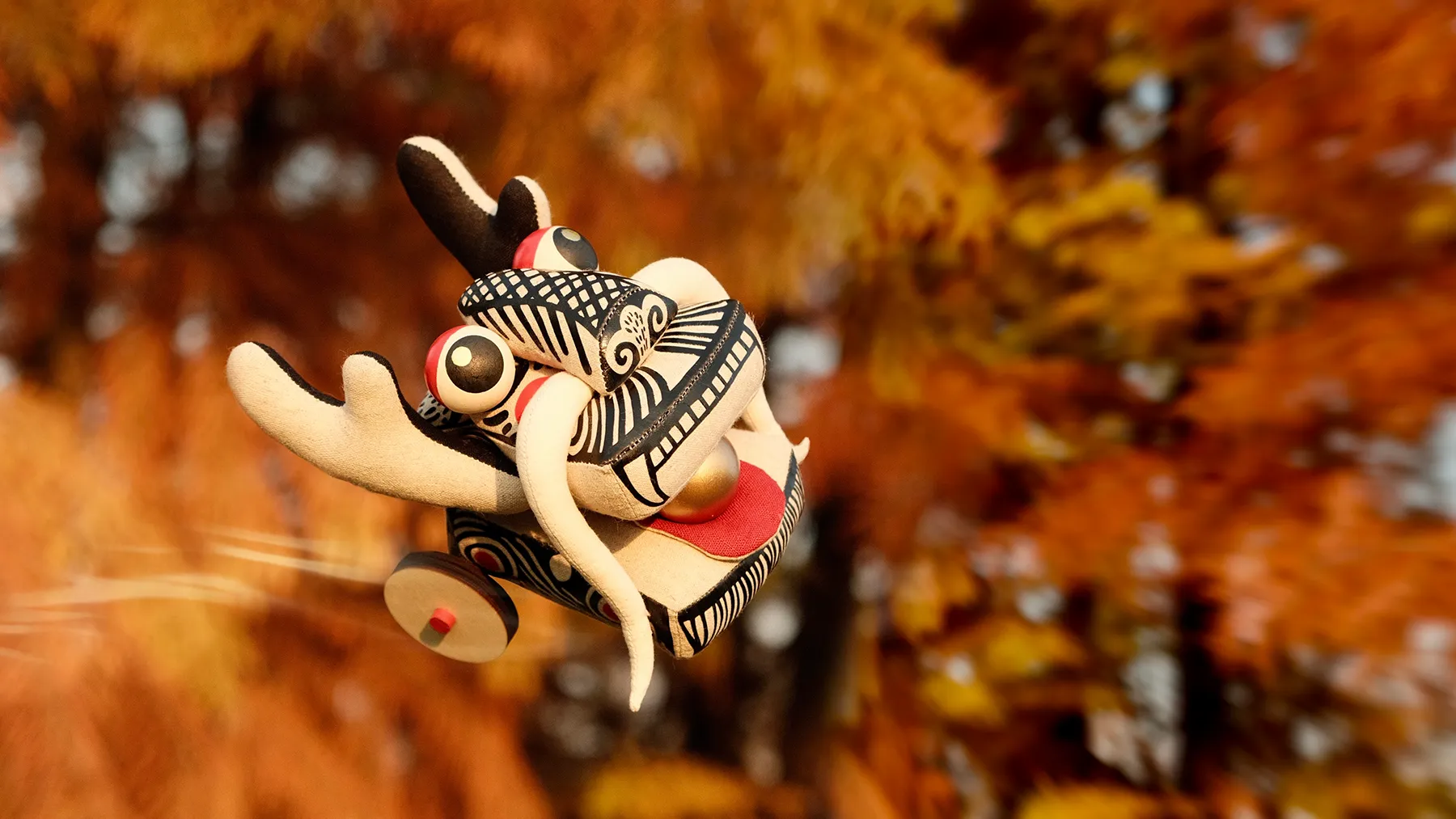
This dragon lived in my mind for nearly five years before it became a creature in cloth.
My father once told me:
“If you can make a dragon, nothing will be too difficult after that.”
I never doubted I would make one.
When the Year of the Dragon arrived, the dragon would arrive too.
Some things simply have their time.
In quiet moments, I sketched dragons again and again.
Every drawing began differently, as if I had never drawn one before.
But the real work never started until the dragon year approached.
Only then would I sit down with fabric and thread, gather all the ideas that had been fermenting for years, and allow the dragon to emerge through making itself.
Because handmade work is never fully designed in advance.
Half of the design happens during the act of making—
through the conversation between hands, cloth, and imagination.
Why a Dragon Is Difficult
A tiger can be simplified.
A rabbit can be playful.
But a dragon?
A dragon seems to lose itself if even one thing is missing.
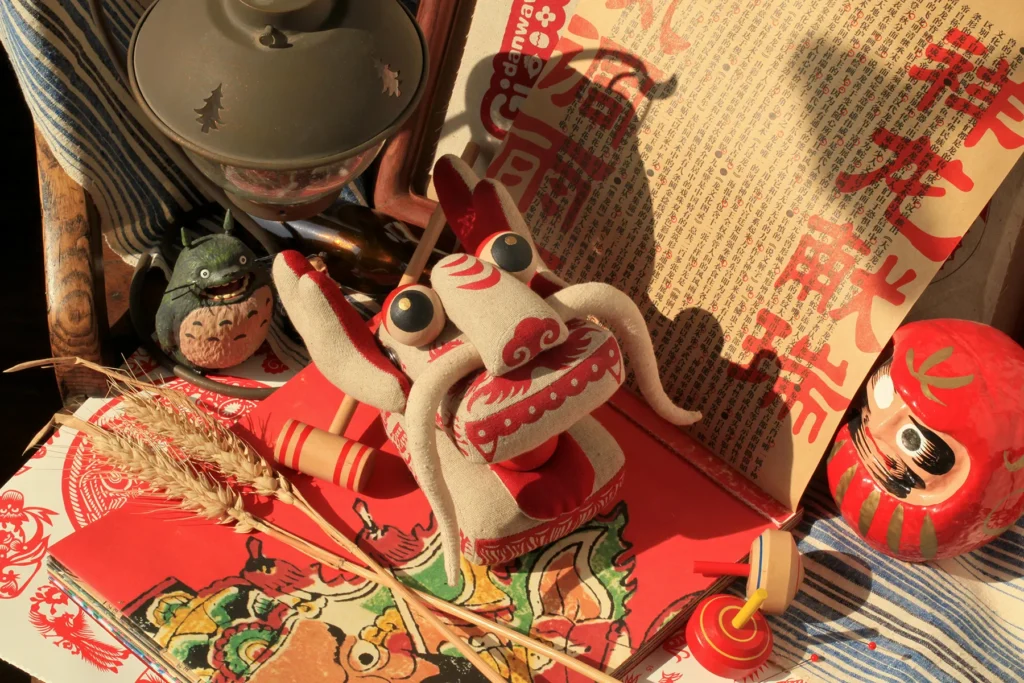
Its whiskers.
Its horns.
Its teeth.
Its nose.
Its eyes.
Its pearl.
Take away too much, and it is no longer a dragon.
That was the difficulty.
And the fascination.
Because in Chinese imagination, a dragon is not merely an animal.
It is power, spirit, ceremony.
During Lantern Festival celebrations across China, dragon dances are everywhere. And in every dragon dance, the most important part is always the dragon head.
The spirit of the dragon lives there.
A Dragon Lantern from Childhood
When thinking about dragons, one memory always returned.
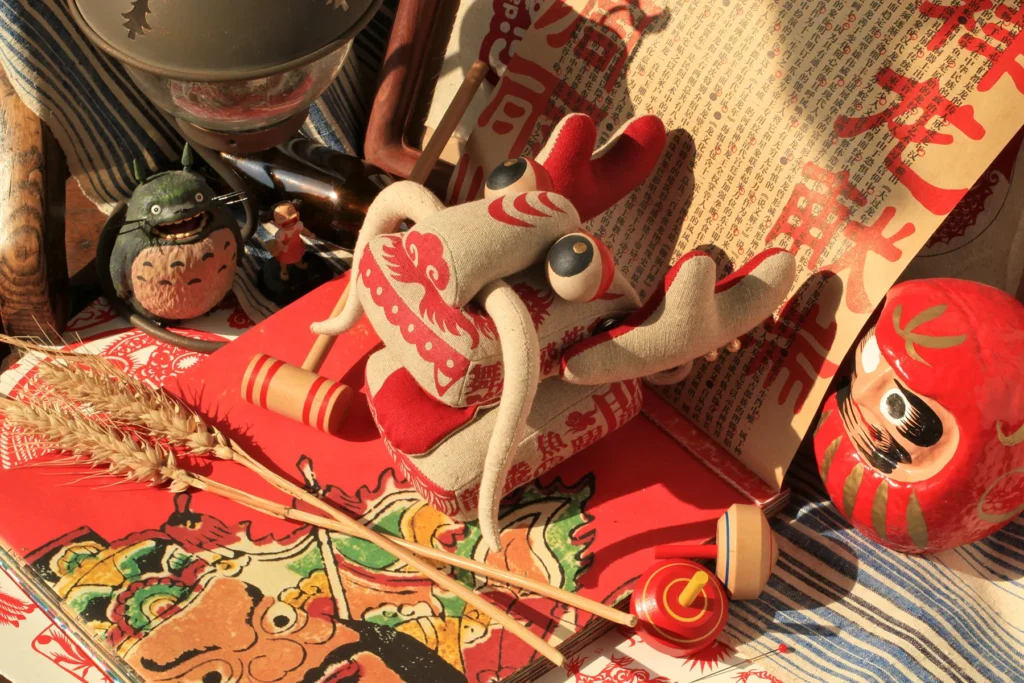
Before a Lantern Festival in a dragon year, I made a dragon-head lantern with a childhood friend.
I remember almost nothing about the bamboo structure beneath it—our parents must have helped build it.
We only papered and decorated the dragon head ourselves.
It stood on a long bamboo pole.
We worked until two in the morning.
Completely thrilled.
That memory never left me.
And many years later, it became the seed of Wuxiang Dragon — Auspicious Dancing Dragon.
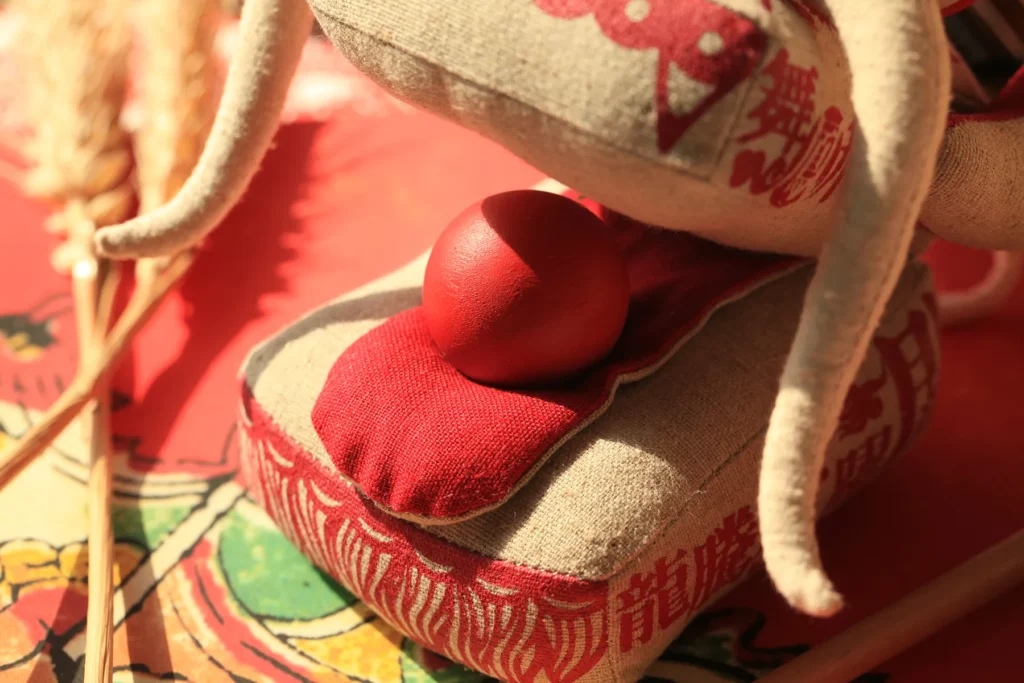
Giving Ancient Patterns Back to the Dragon
For this dragon, I found a new path.
I began wondering—
what if the symbols painted by ancient Chinese ancestors on Neolithic pottery could travel across thousands of years—
and return,
not on clay,
but on a dragon head?
Those early patterns were never merely decoration.
They carried rhythm.
Ritual.
Belief.
They were among the earliest visual languages people made to speak to forces larger than themselves.
That felt close to what a dragon is.
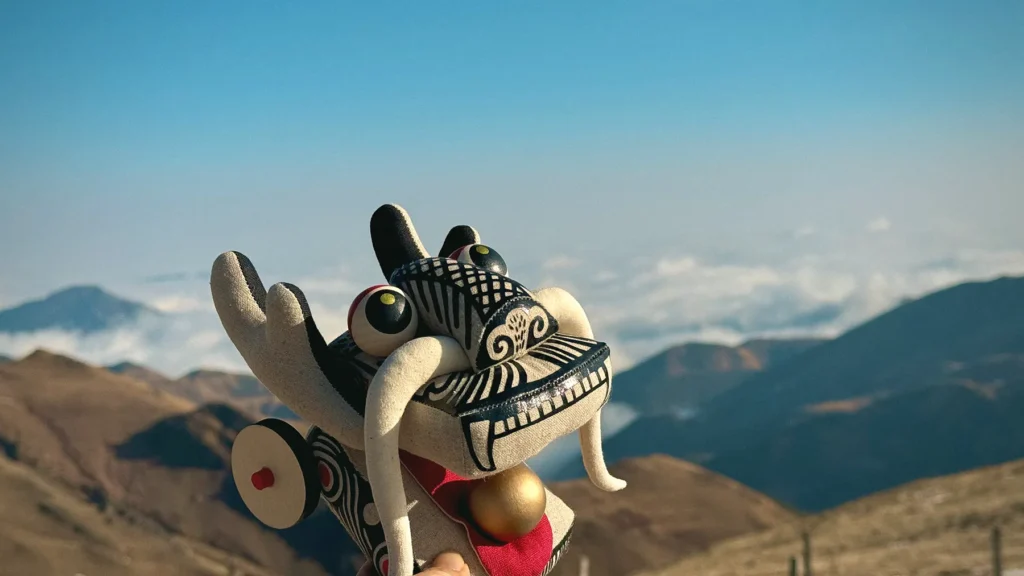
So I brought those primitive motifs onto the surface of the dragon.
Not as historical quotation.
But as something living.
Something continuing.
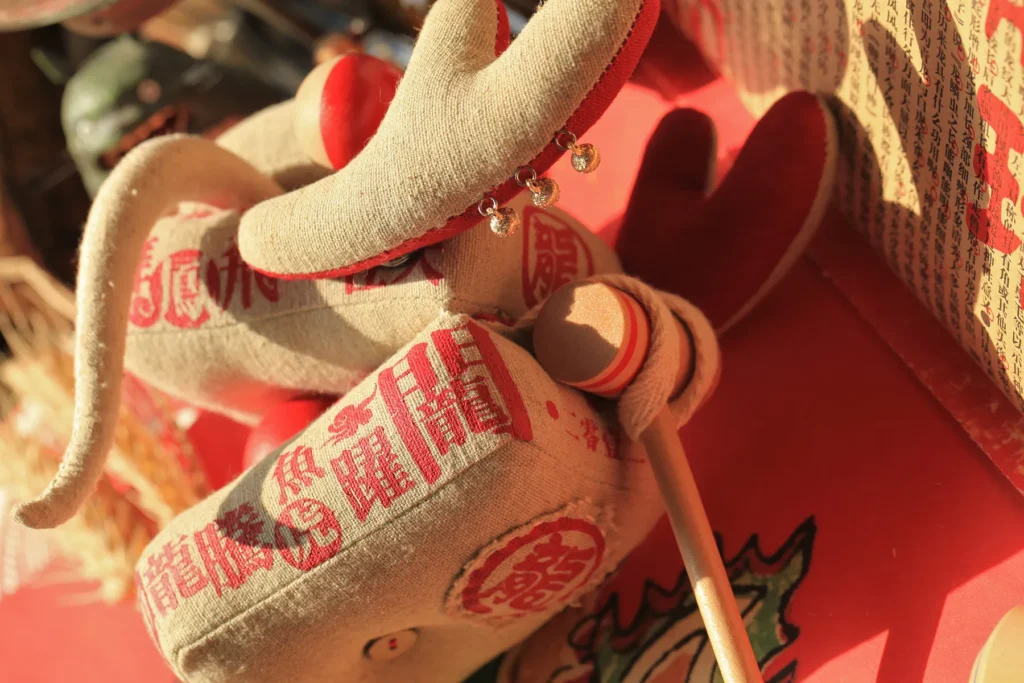
Compared to the earlier version, shaped by delicate paper-cut traditions, this dragon became rougher.
Older.
Wilder.
Less ornamental—
more elemental.
As if some ancient memory had surfaced through cloth.
Making the Dragon’s Eyes
Of all twelve zodiac creatures, this was the most complex to make.
And much of the labor lived in details people might not even notice.
The eyes.
The pearl.
The whiskers.
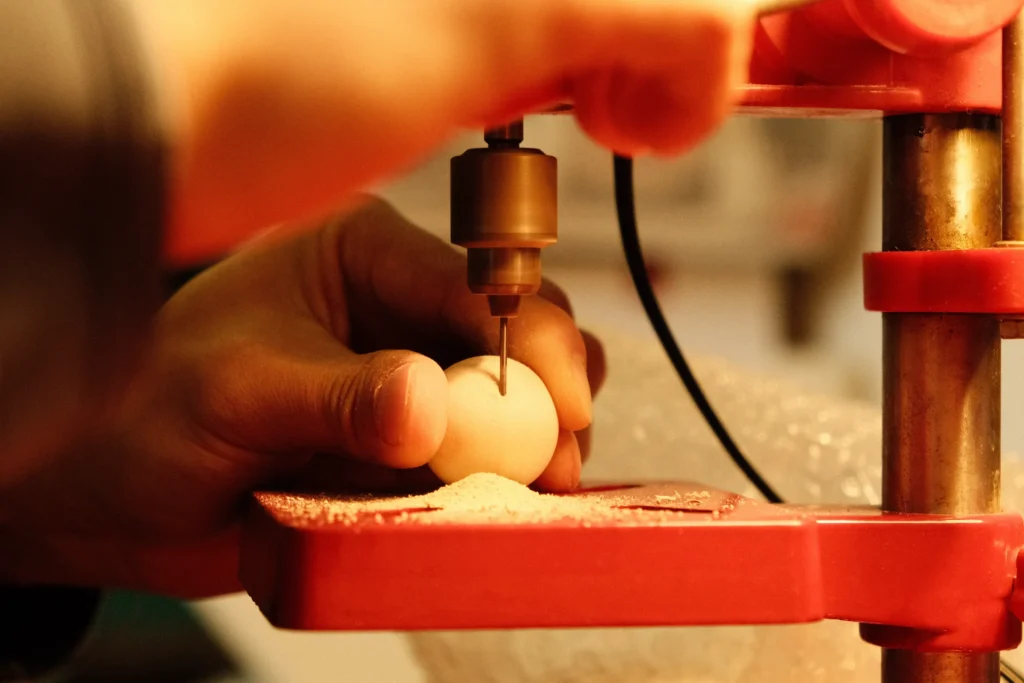
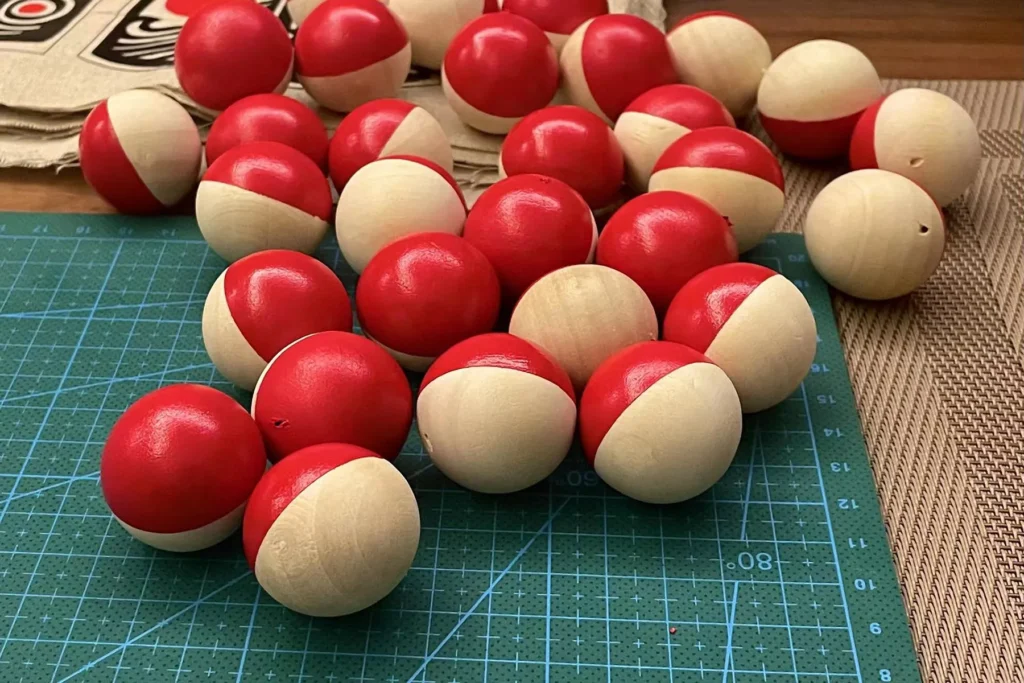
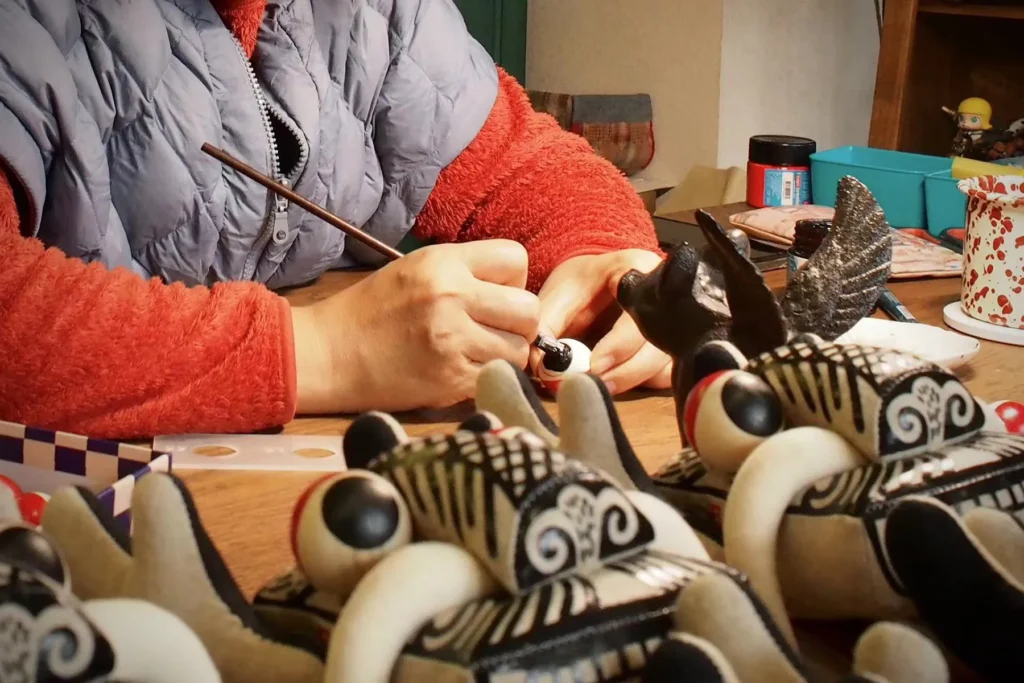
I bought unfinished wooden spheres for the dragon’s eyes and pearl.
Drilled tiny needle holes into them.
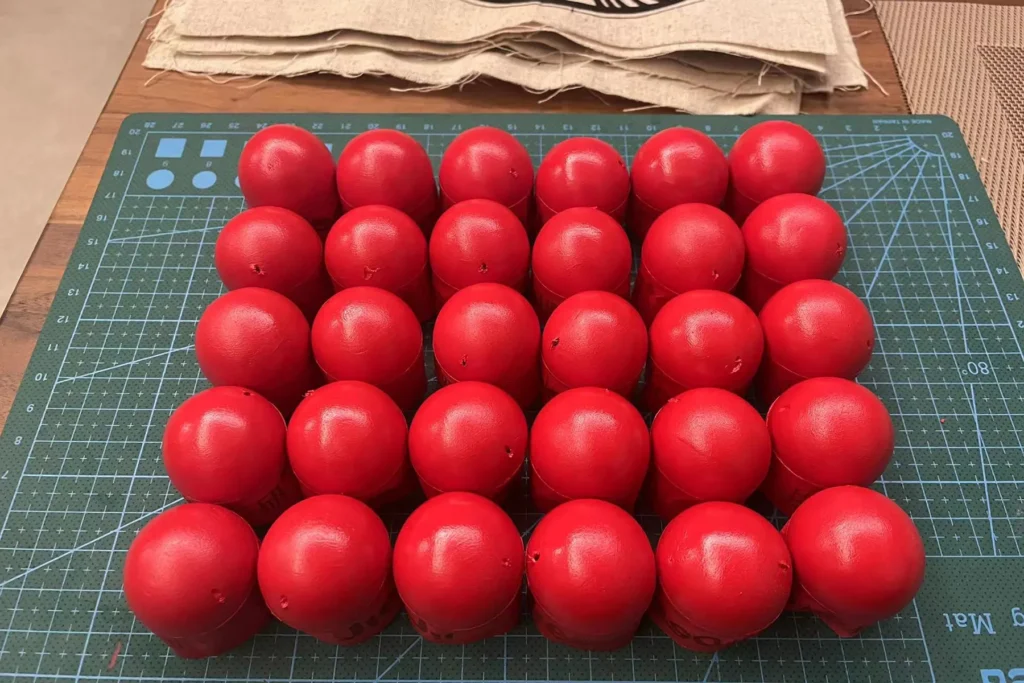
Masked half the surface with tape.
Painted layers of acrylic primer to seal the wood grain.
Then I built a rotating spray box and sprayed the spheres again and again, one layer every hour.
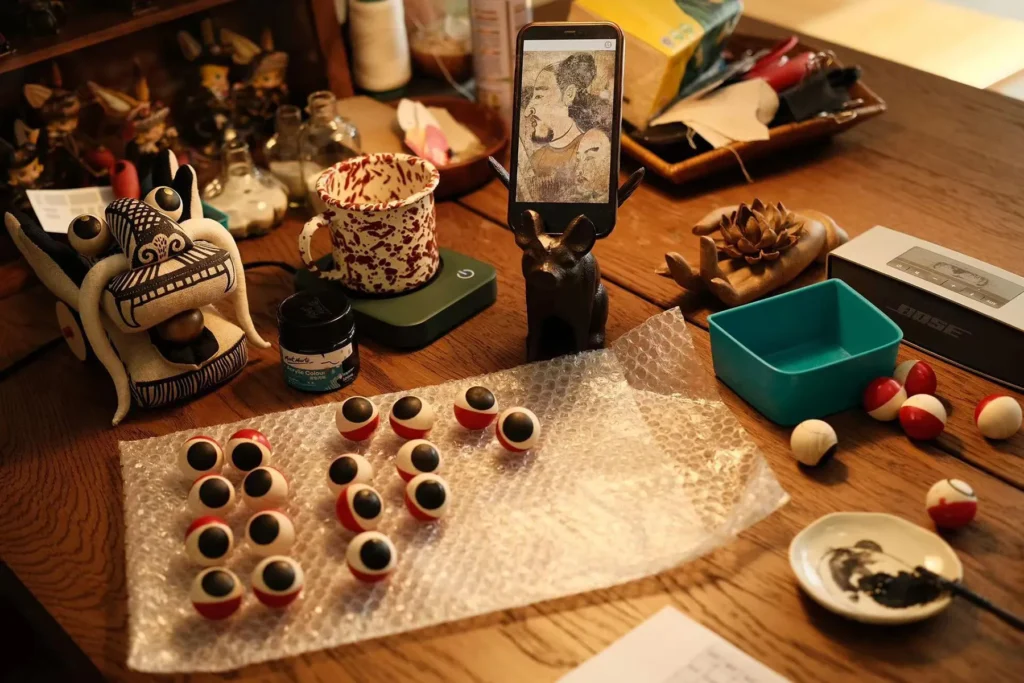
Five or six coats later, I peeled away the tape and revealed glossy red eyelids beneath.
Only after that did I paint the pupils by hand.
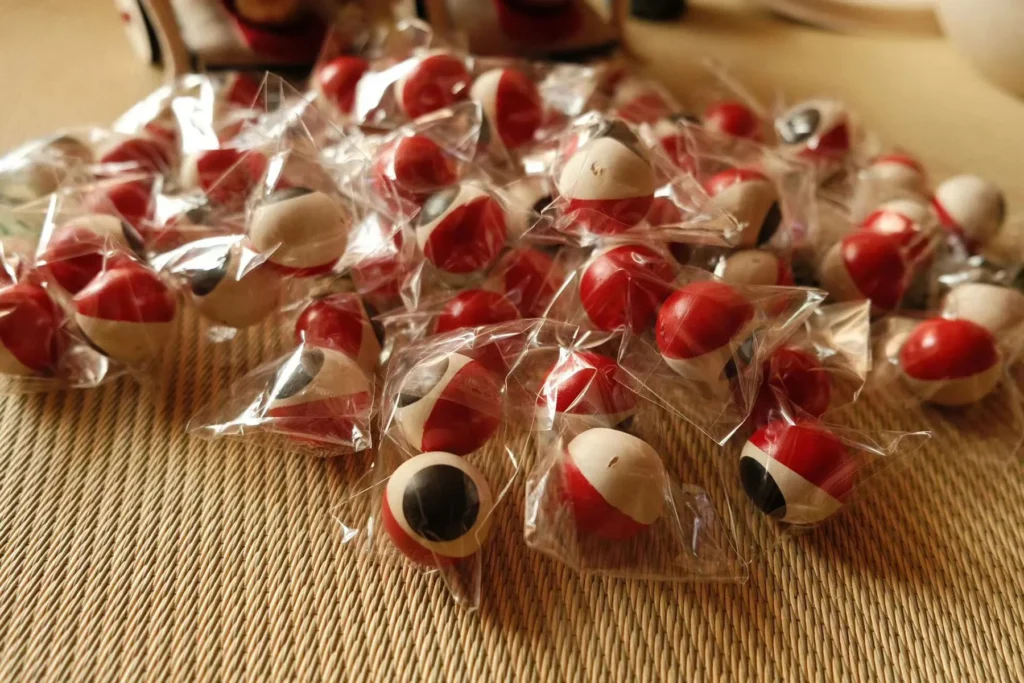
Pair by pair.
And seal them carefully into small bags.
Like preserving something alive.
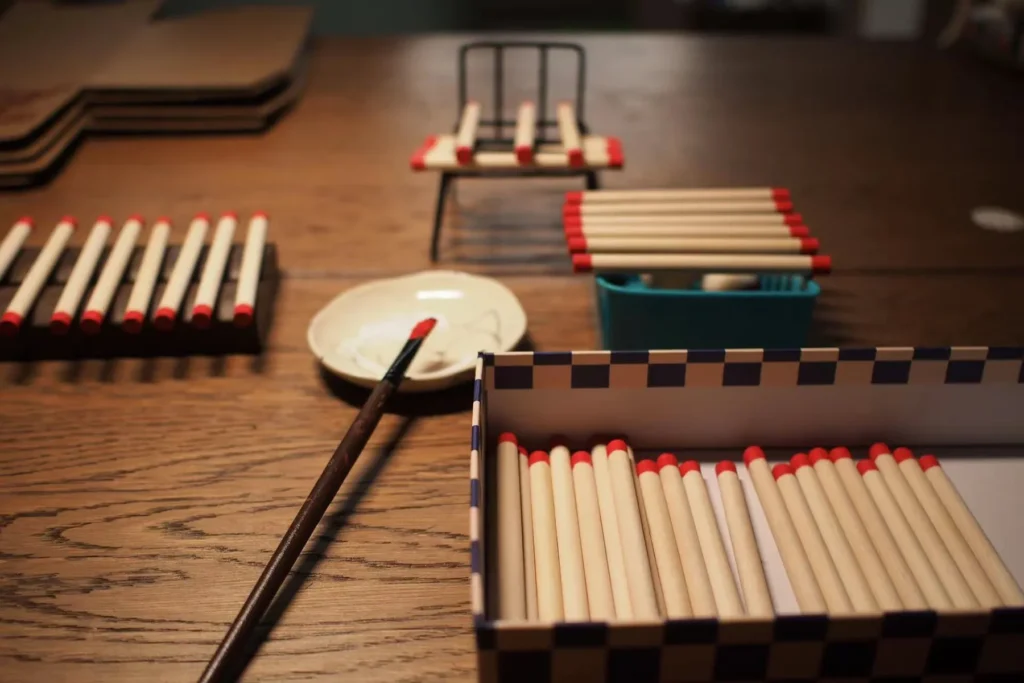
The whiskers required another kind of patience.
They had to be turned gently, stuffed slowly, adjusted little by little until the curves felt full and flowing.
Too stiff, and the dragon lost movement.
Too soft, and it lost spirit.
The Dragon Must Stand
Even the structure beneath the dragon had to change.
The old wooden hammer support no longer felt right.
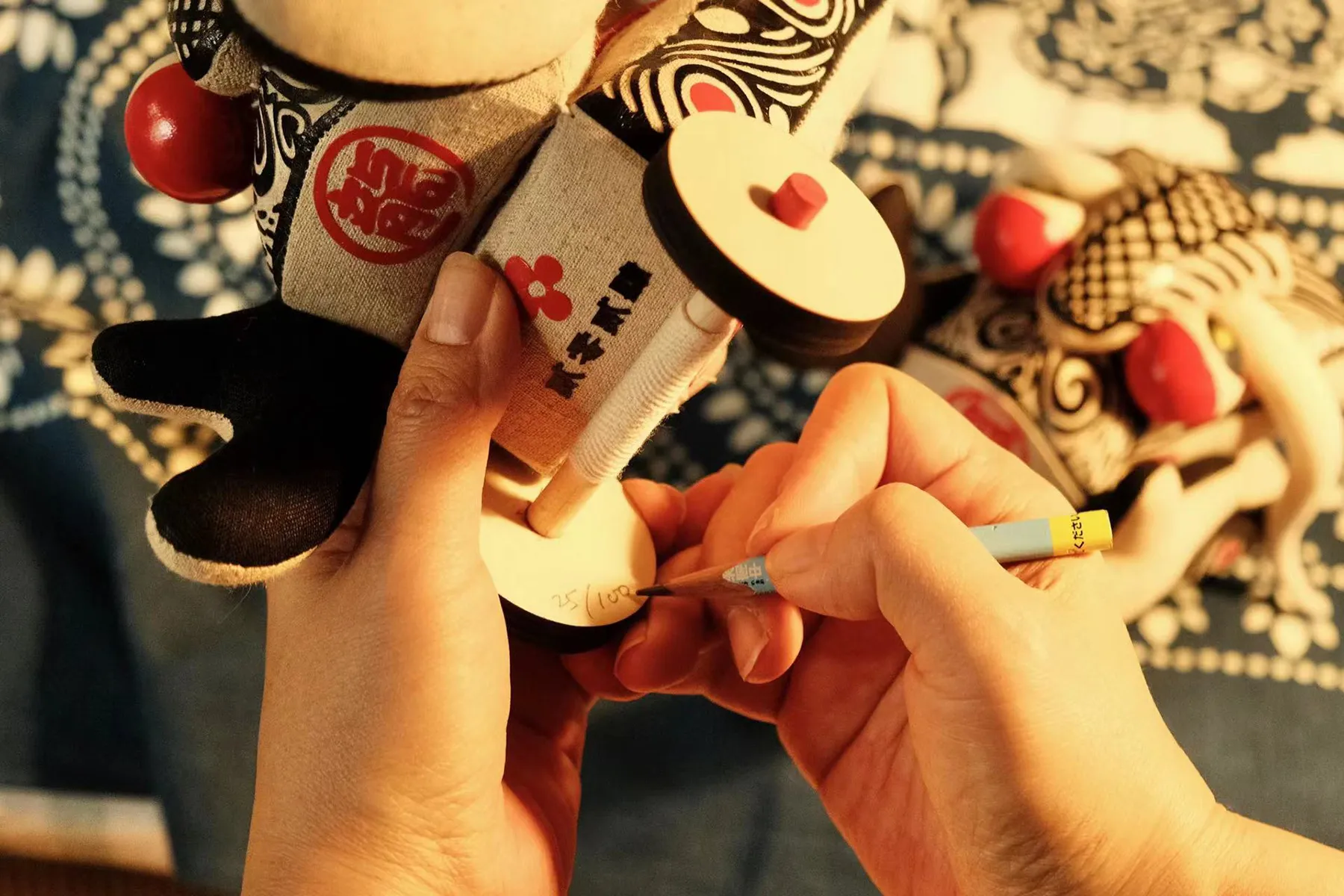
This time I placed the dragon head on two large wheels.
A better echo of a festival dragon.
A better way for it to stand.
Steady on a desk or bookshelf—
as if waiting to move.
Hua Long Dian Jing · 画龙点睛
The very last step is also the most meaningful.
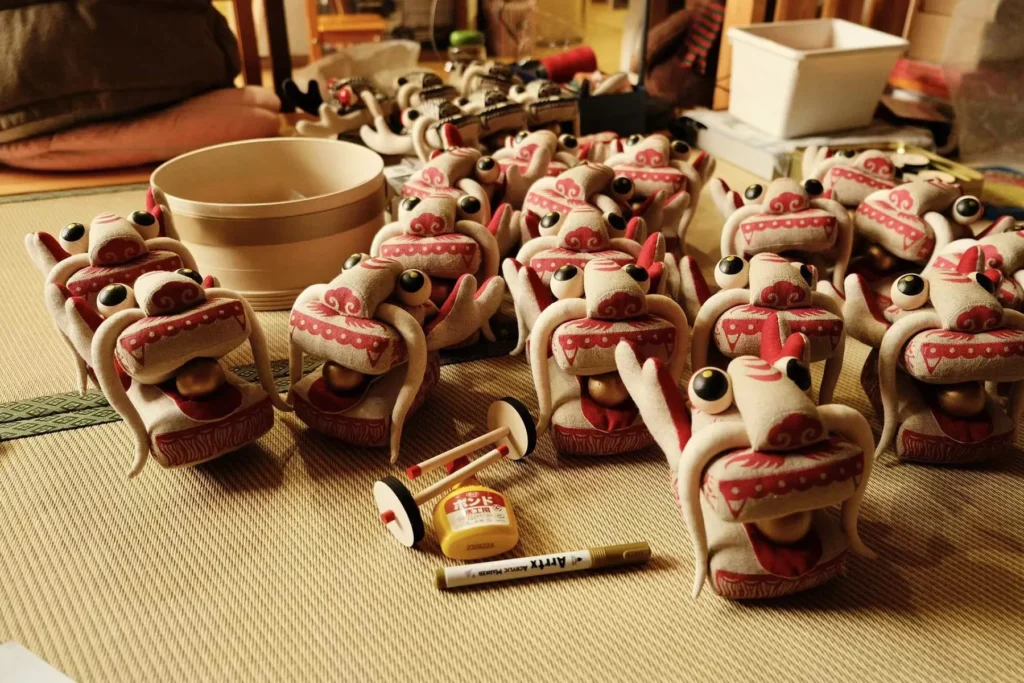
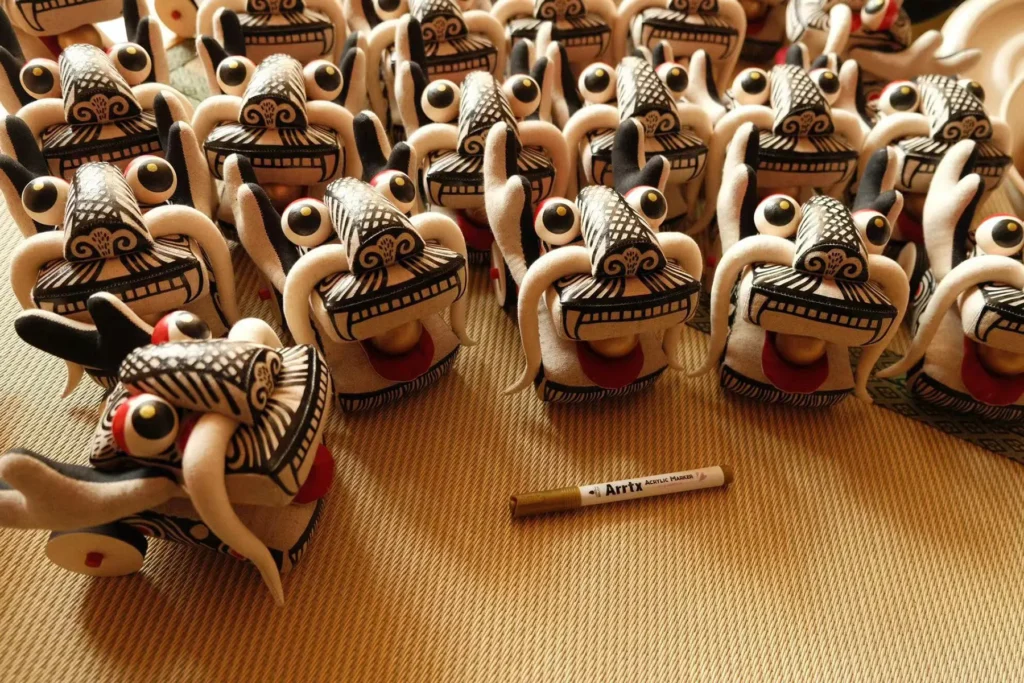
After the wooden eyes are painted, polished, and carefully stitched onto the dragon, I use a fine gold pen to place a tiny golden pupil at the center of each eye.
In Chinese, there is an old idiom, Hua Long Dian Jing (画龙点睛) — “painting the dragon’s eyes.” It tells the story of a dragon that remained lifeless until the final touch was added to its eyes. With that single stroke, the dragon awakened.
Every year, I wait until the very end to paint that tiny golden dot. It is only a single stroke, yet it feels like the moment the dragon finally opens its eyes and comes to life.
Where the Story Continues
There are still many stories inside these twelve zodiac creatures.
Too many for one journal entry.
Perhaps they belong in the comic book I have long imagined making.
So this New Year, I leave myself a large promise—
at the head of the dragon.
Of course.
Where else would a bold promise begin?
Some zodiac creatures are made.
Some are wrestled into being.
The dragon was the second kind.
—— over ——